


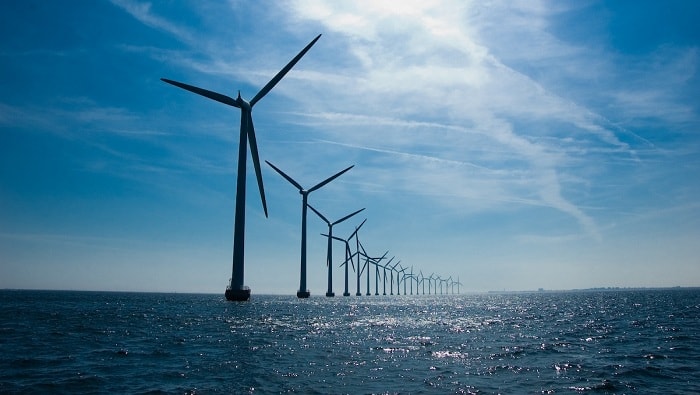




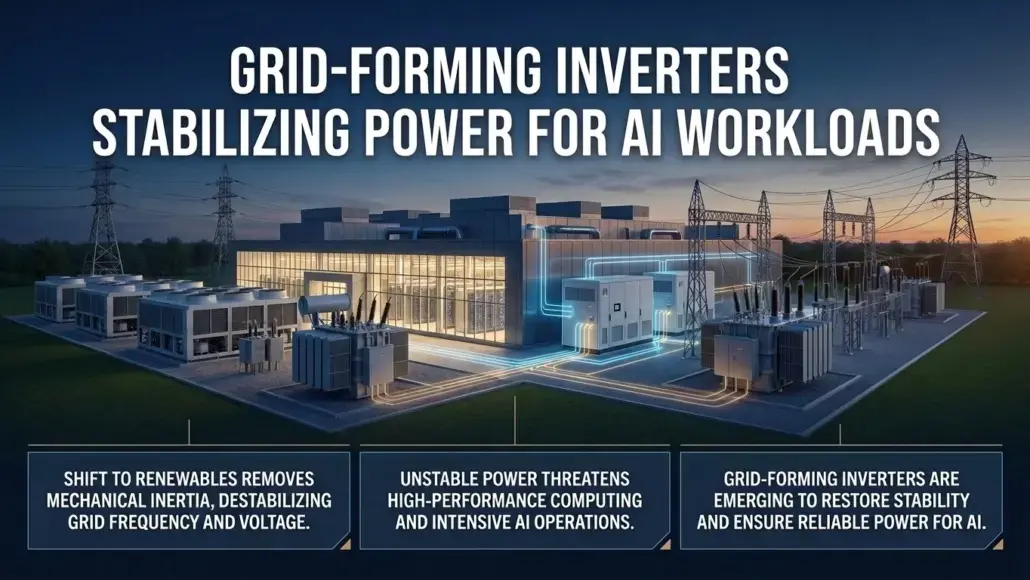
The global energy transition is fundamentally changing the way power is generated, transmitted, and consumed. As traditional fossil fuel-based power plants, which provide mechanical inertia through large rotating turbines, are retired in favor of inverter-based renewable sources like solar and wind, the grid is losing its natural ability to maintain frequency and voltage stability. For high-performance computing environments, particularly those running intensive artificial intelligence workloads, this lack of stability is a significant risk. In this evolving landscape, PowerGen Advancement notes that grid forming inverters stabilize AI power supplies by providing the synthetic inertia and voltage control necessary to keep modern data centers operational during grid disturbances.
The Challenge of an Inverter-Based Grid
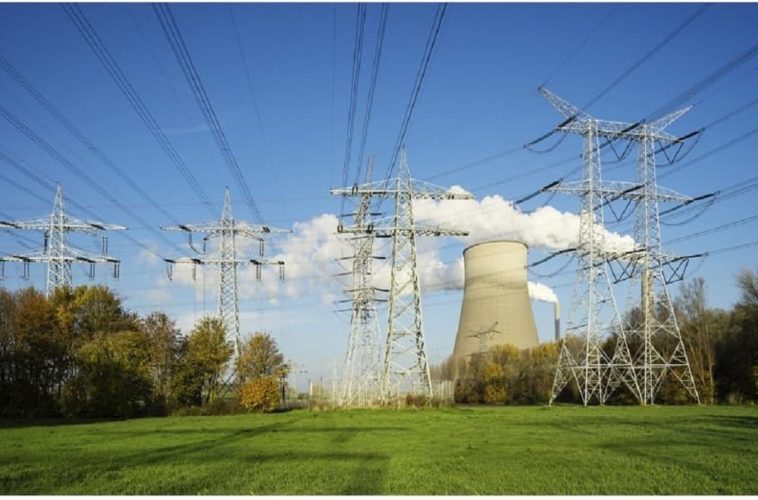
Traditional power grids were designed around synchronous generators. When a large load suddenly comes online or a generator trips, the massive physical momentum of these rotating turbines prevents the grid frequency from changing too rapidly, giving control systems time to react. However, solar panels and wind turbines connect to the grid through power electronics—inverters. Standard grid-following inverters simply track the existing grid frequency and inject power accordingly. They do not contribute to stability. In fact, if the grid becomes too unstable, they may shut down to protect themselves, leading to a cascading failure.
Why AI Clusters Are Particularly Vulnerable
AI clusters are among the most demanding loads on the modern electrical grid. A single rack of modern GPUs can draw tens of kilowatts, and a large AI data center can consume hundreds of megawatts. These loads are not just large. They are dynamic. The power draw of an AI model during inference can spike and drop in milliseconds. These rapid fluctuations can cause local voltage dips and frequency swings that standard power systems are ill-equipped to handle. Without intervention, these power quality issues can lead to GPU crashes, data corruption, and premature hardware failure. This is why the adoption of technology where grid forming inverters stabilize AI power supplies has become a top priority for infrastructure engineers.
Synthetic Inertia: Mimicking the Old Grid
The breakthrough of grid forming (GFM) technology lies in its ability to act as a voltage source rather than a current source. By using advanced control algorithms, grid forming inverters stabilize AI power supplies by mimicking the behavior of traditional synchronous generators. They create their own internal reference frequency and voltage, allowing them to instantly provide power to the grid (or the local data center) when a drop is detected. This synthetic inertia provides the critical buffer needed to bridge the gap between a disturbance and the activation of slower backup systems like gas turbines or large-scale battery storage.
The Technical Mechanisms of Grid Forming Technology
Grid forming inverters differ from their grid-following counterparts primarily in their software and control architecture. While a grid-following inverter waits for the grid to tell it what the frequency and phase are, a grid-forming unit essentially introduces itself as the grid and forces the connected system to synchronize with it. This allows it to support weak grids and even operate in black start mode, where it can restart a local power network after a total blackout without external assistance.
Droop Control and Virtual Synchronous Machines
The two most common methods for achieving this are droop control and Virtual Synchronous Machine (VSM) modeling. Droop control allows multiple inverters to share the load proportionately without needing a central controller, much like how multiple generators work together in a traditional power plant.
VSM goes a step further by mathematically simulating the physical physics of a rotating turbine within the inverter’s digital signal processor. By applying these methods, grid forming inverters stabilize AI power supplies with a level of precision that was previously only possible with multi-ton mechanical equipment.
High-Speed Response to AI Transients
The response time of an inverter is measured in microseconds, whereas mechanical systems respond in milliseconds or seconds. This high-speed capability is perfectly matched to the needs of AI hardware. When an AI training run enters a high-compute phase and the power demand spikes, a grid-forming system can inject energy from its internal capacitors or connected batteries almost instantaneously. This prevents the voltage sag that often plagues high-density racks, ensuring that the sensitive silicon within the GPUs receives a perfectly steady stream of electricity.
Integration Strategies for Data Center Operators
For a data center operator, implementing grid-forming technology is not just about replacing a few components; it is about redesigning the entire power path. This often involves integrating grid-forming capabilities into the Uninterruptible Power Supply (UPS) systems and the on-site renewable energy arrays.
The Role of Microgrids in AI Infrastructure
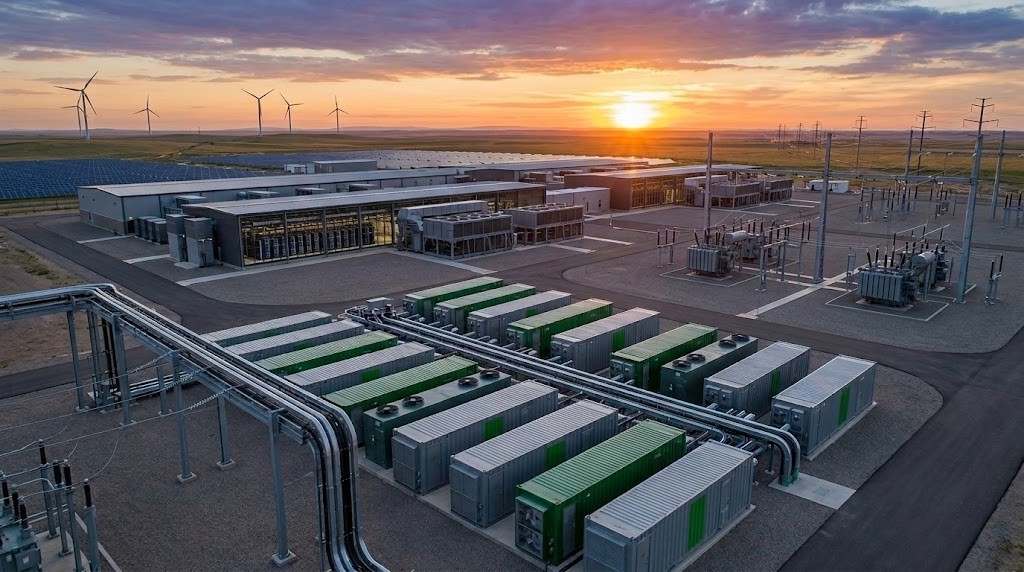
Many AI developers are now opting for microgrid architectures to ensure total energy sovereignty. In a microgrid, grid forming inverters stabilize AI power supplies by acting as the primary anchor for the local network. While inverters provide stability, the base-load resilience often requires the integration of portable micro-reactors provide portable power for AI edge hubs. This combination of a steady nuclear or geothermal source with a fast-acting grid-forming inverter creates an nearly bulletproof energy ecosystem, capable of surviving both grid failures and local equipment malfunctions.
Retrofitting Existing Facilities
While new builds are being designed with GFM from the ground up, there is also a significant market for retrofitting existing data centers. Modern UPS systems can often be upgraded with new firmware or control modules to enable grid-forming functionality. This allows legacy facilities to stay competitive in an era of increasing grid instability and higher power densities. By investing in these upgrades, operators can extend the life of their infrastructure and improve the overall reliability of their AI services.
Economic and Environmental Benefits
Beyond the technical reliability, the use of grid-forming technology offers significant economic advantages. By stabilizing the local power supply, operators can reduce the wear and tear on expensive cooling systems and power distribution units, which are often stressed by poor power quality. Furthermore, a stable power supply reduces the likelihood of costly downtime.
Enabling Higher Renewable Penetration
From an environmental perspective, grid-forming technology is a key enabler for 100% renewable data centers. Because grid forming inverters stabilize AI power supplies without needing a fossil-fuel-backed grid, they allow data centers to rely entirely on local wind, solar, and storage. This removes the inertia barrier that has previously limited how much renewable energy a single site could safely use. As more data centers adopt this technology, the demand for firming fossil fuel plants will decrease, accelerating the transition to a carbon-free economy.
Revenue Generation Through Grid Services
Data centers equipped with grid-forming inverters can also turn their power infrastructure into a profit center. By providing stability services to the public utility—such as frequency regulation and fast frequency response—they can earn significant payments from grid operators. The fast response of the inverters means they can provide these services more effectively than traditional power plants, making them highly valuable assets in the modern energy market. This transforms the power system from a pure cost center into a strategic financial asset.
Challenges and the Path Forward
Despite the clear benefits, there are still hurdles to the widespread adoption of grid-forming technology. One of the primary challenges is the lack of standardized testing and certification. Grid operators are often cautious about allowing third-party inverters to take control of frequency and voltage, fearing that poorly tuned algorithms could cause instability.
Software Complexity and Cyber Security
The reliance on complex software also introduces new risks. A bug in a grid-forming algorithm could have disastrous consequences for a multi-million-dollar AI cluster. Furthermore, as these systems become more integrated with the wider grid, they become potential targets for cyberattacks. Ensuring the security and robustness of the control software is just as important as the hardware itself. Developers are now utilizing AI—ironically—to monitor and secure the very systems that power AI, creating a self-reinforcing loop of reliability.
The Need for Collaborative Standards
The path forward requires close collaboration between data center operators, inverter manufacturers, and utility regulators. Groups like the UN-Energy and the IEEE are working to define the standards for how grid-forming systems should behave. As these standards mature and more successful case studies emerge, the adoption of technology where grid forming inverters stabilize AI power supplies will move from the early-adopter phase to the industry standard.
Grid-Forming Inverters and Medium-Voltage Systems Unify Power Electronics to Stabilize AI Loads
To insulate public grids from the sudden multi-megawatt demand swings characteristic of generative AI workloads, power technology leaders are deploying grid-forming conversion hardware and medium-voltage buffering systems. GE Vernova engineered a medium-voltage UPS platform integrating utility-grade power converters and battery storage, isolating the external grid from sharp data center load fluctuations while maintaining instantaneous frequency and voltage integrity. In lockstep, Sungrow Power Supply unveiled a dedicated AIDC energy architecture pairing grid-forming battery storage with solid-state transformers to actively counteract grid disturbances and smooth out computational surges.
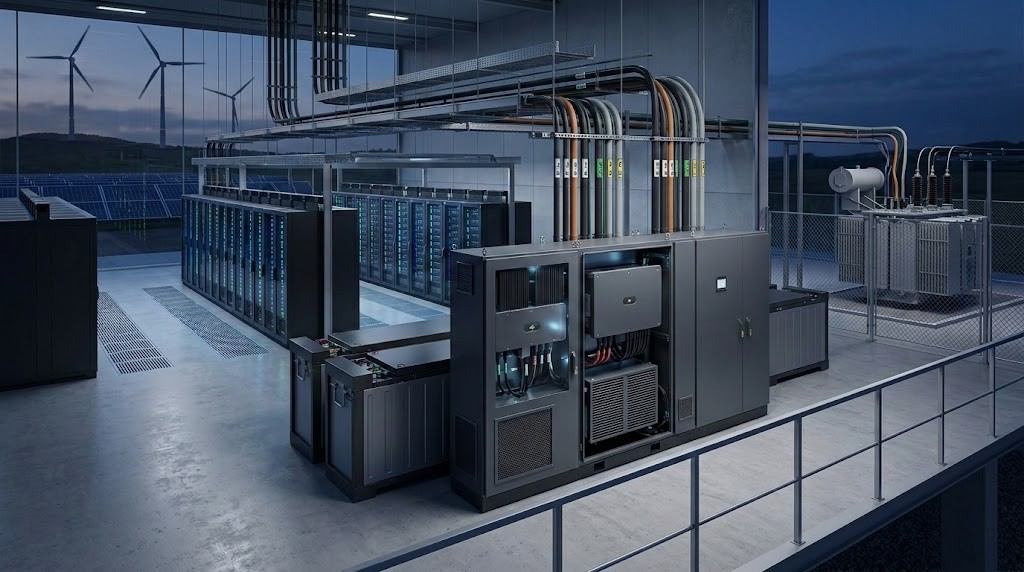
Concurrently, SMA Solar Technology launched its GridLink DC platform to deliver intelligent grid-forming and voltage-stabilization capabilities directly into native 800 VDC architectures, accelerating utility interconnect approvals. Strengthening the silicon core of this transition, ABB deployed its Infinitus direct current portfolio, leveraging solid-state electronics to eliminate conversion steps and establish resilient microgrid links, while Huawei Digital Power integrated AI-managed grid-forming storage systems to deliver synthetic inertia and active frequency control directly at the data center boundary.
The Foundation of Resilient Intelligence
The future of artificial intelligence is inextricably linked to the future of the power grid. We cannot have a world of ubiquitous, real-time AI without a power infrastructure that is equally advanced. Grid-forming technology represents a critical bridge between the mechanical grid of the past and the electronic grid of the future. PowerGen Advancement believes that by providing the stability and speed required by modern computing, grid forming inverters stabilize AI power supplies and ensure that the digital revolution can continue unabated.
As we continue to push the boundaries of what is possible with machine learning and large-scale data processing, the underlying hardware must keep pace. The transition to grid-forming systems is more than just a technical upgrade. It is a fundamental shift in how we manage the lifeblood of our digital civilization. In the years to come, the quiet hum of power electronics will replace the roar of turbines, providing a steady and sustainable foundation for the intelligence that will define the 21st century. The investment in these resilient power systems today is the insurance policy for the AI-driven world of tomorrow.
References
-
Huawei Digital Power — Huawei Digital Power Showcases Multi-Scenario Solutions at IDEE 2026, Accelerating Energy Transition with Grid-Forming and AI
-
Sungrow Power Supply Co., Ltd. — Sungrow Unveils Full-Scenario Solution to Address Emerging Global Energy Challenges
-
SMA Solar Technology AG — SMA Introduces Dedicated Solutions to Accelerate Time-to-Power for AI-Driven Data Centers
-
GE Vernova Inc. — GE Vernova Introduces Medium-Voltage UPS to Help Accelerate the Buildout of AI Factories and Energy-Intensive Industries
-
ABB Ltd. — ABB’s New Direct Current Portfolio Aims to Rewire AI Data Center Energy Infrastructure