




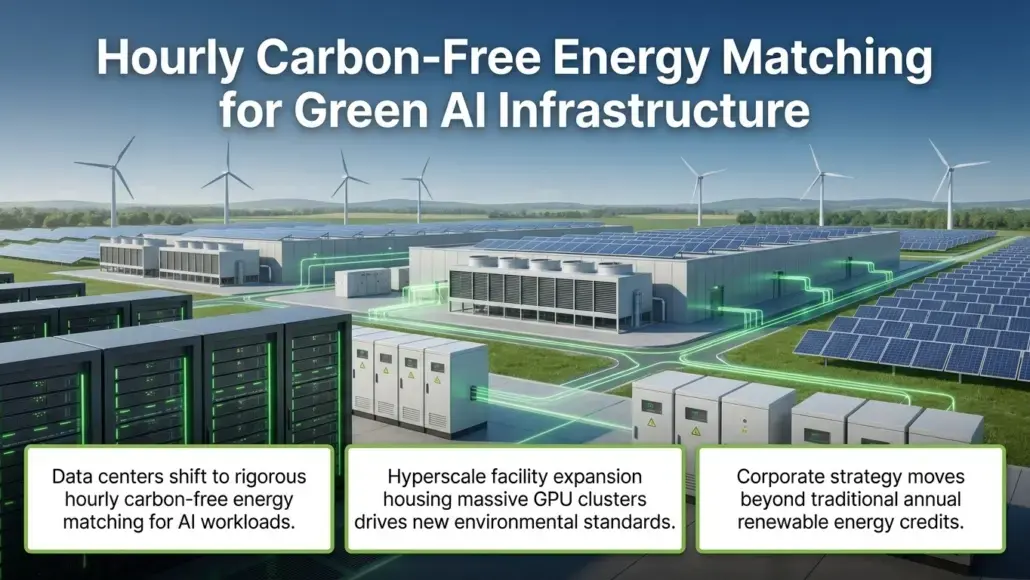
The environmental impact of the digital age has moved from a niche concern to a central pillar of corporate strategy, particularly as artificial intelligence (AI) continues its exponential growth. PowerGen Advancement notes that as hyperscale data centers expand to house the massive GPU clusters required for modern LLMs, the focus has shifted from simple renewable energy credits to a much more rigorous standard: hourly carbon free energy matching. This approach moves beyond the traditional annual matching model, where a company buys enough renewable energy to cover its yearly usage, to a granular, real-time synchronization of power consumption with carbon-free production. For the AI industry, this represents the gold standard of sustainability, ensuring that the heavy computational loads of training and inference are truly powered by green energy every single hour of the day.
The Evolution of Corporate Energy Procurement
For years, the standard for green energy was the purchase of Renewable Energy Certificates (RECs) or Power Purchase Agreements (PPAs) that balanced out annual emissions. While this was a positive first step, it often masked the reality that data centers were still relying on fossil fuels during periods when the sun wasn’t shining or the wind wasn’t blowing. The 24/7 Carbon-Free Energy movement, spearheaded by tech giants and supported by international coalitions, seeks to eliminate this discrepancy. By adopting hourly carbon free energy matching AI systems, operators can ensure that their physical grid consumption is mirrored by an equivalent amount of carbon-free electricity generated at the exact same time and in the same local grid region.
The Problem with Annual Offsets
Annual offsets create a temporal mismatch that hinders the decarbonization of the grid. If a data center uses wind power to cover its annual usage but that wind is generated primarily at night while the AI cluster peaks during the day, the facility must still draw from natural gas or coal-fired plants during the day. This creates a false sense of sustainability. Furthermore, annual matching does not incentivize the development of energy storage or diverse renewable portfolios. The transition to hourly carbon free energy matching forces the market to prioritize long-duration storage and geothermal power, which can provide the baseload reliability that intermittent sources lack.
The Role of AI in Energy Orchestration
Managing hourly matching at the scale of a multi-hundred-megawatt data center is a task that exceeds human capability. It requires the processing of massive amounts of real-time data from weather forecasts, grid congestion reports, and internal workload schedules. Advanced hourly carbon free energy matching algorithms are now being deployed to orchestrate this complexity.
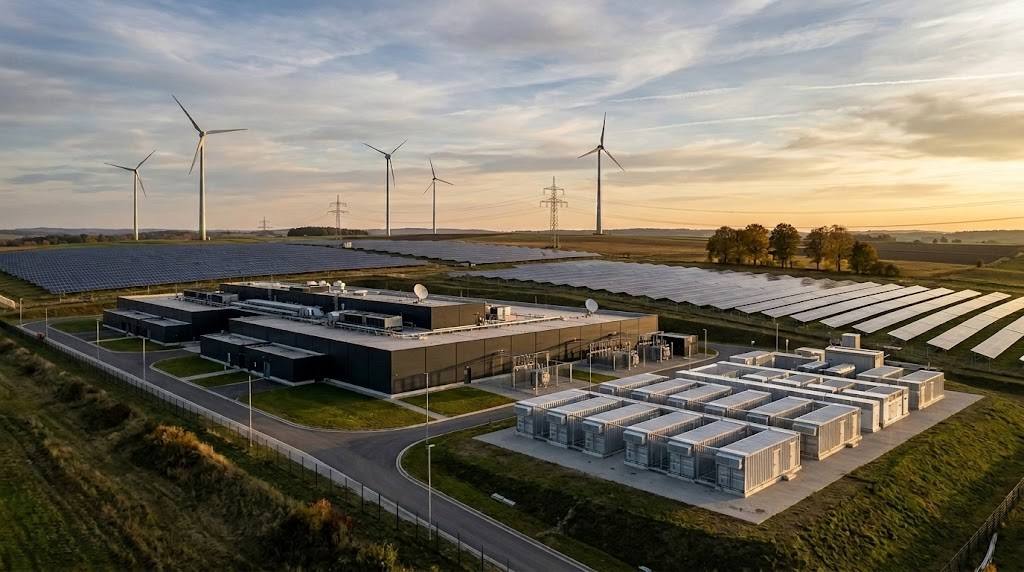
These systems can predict when renewable supply will be low and proactively adjust non-critical AI training tasks to lower-demand periods, or trigger the discharge of on-site battery storage to bridge the gap. In this way, AI is not just the consumer of the energy, but also the primary tool for managing its sustainable sourcing.
Technical Implementation of Hourly Matching
Implementing an hourly matching strategy requires a sophisticated tech stack that integrates with both the utility grid and the internal data center infrastructure. The core of this system is the energy management software, which must be capable of tracking energy origin with high precision. This often involves the use of Time-based Energy Attribute Certificates (T-EACs), which provide a verified record of when and where a kilowatt-hour of carbon-free energy was produced.
Data Center Workload Shifting
One of the most effective strategies enabled by hourly carbon free energy matching is temporal workload shifting. Not all AI tasks are time-sensitive. While real-time inference for a chatbot must happen instantly, the massive pre-training of a new model can often be paused or throttled. By integrating the AI scheduler with the energy matching platform, operators can follow the sun, ramping up compute power when solar production is at its peak and scaling back when the grid becomes carbon-intensive. This dynamic response reduces the reliance on expensive energy storage and lowers the overall cost of carbon-free operations.
Beyond Mere Matching: Grid Integration
Beyond mere matching, the aggregation of these resources allows data centers to participate in virtual power plants turn data centers into assets for the wider grid. By being able to precisely control their demand in response to grid signals, AI clusters can help balance the fluctuations of renewable energy across the entire network. This transforms the data center from a passive energy sink into an active, flexible participant in the energy market. This synergy is essential for a grid that is increasingly reliant on variable wind and solar power, providing the stability needed to retire legacy fossil fuel plants.
The Economic and Regulatory Landscape
The shift toward hourly matching is being driven by both internal ESG (Environmental, Social, and Governance) commitments and external regulatory pressure. In Europe, the Corporate Sustainability Reporting Directive (CSRD) is pushing companies toward more transparent energy reporting. In the U.S., the SEC’s climate disclosure rules are pointing in a similar direction. Companies that can demonstrate a high percentage of hourly carbon free energy matching will be better positioned to attract investment and comply with future carbon taxes or border adjustment mechanisms.
The Cost of 24/7 Carbon-Free Energy
It is important to acknowledge that hourly matching currently carries a green premium. Purchasing carbon-free energy for every hour is more expensive than buying annual offsets because it requires a more diverse and redundant energy portfolio. However, as the cost of batteries and long-duration storage continues to fall, this premium is narrowing. Furthermore, the use of hourly carbon free energy matching allows for optimization that can offset these costs. By avoiding peak grid prices and generating revenue through grid services, the total cost of ownership (TCO) for a 24/7 CFE facility can become competitive with traditional models.
Standardizing Verification and Reporting
A significant challenge in the adoption of hourly matching is the lack of a global standard for verification. Different regions have different methods for certifying renewable energy, and the infrastructure for tracking hourly production is still being built. Organizations like the UN-Energy 24/7 Carbon-Free Energy Compact are working to harmonize these standards. The goal is to create a transparent, liquid market for T-EACs that allows any company, regardless of size, to participate in hourly carbon free energy matching programs with confidence that their claims are accurate and verifiable.
Future Innovations in Energy Matching
The next phase of energy matching will likely involve even more granular tracking and the integration of emerging technologies. We are seeing the rise of carbon-aware computing, where the software itself is designed to minimize emissions by selecting the cleanest available path for data and computation. This goes beyond just the energy source and looks at the carbon intensity of the entire supply chain.
Geothermal and Nuclear as Baseload Complements
While solar and wind are the pillars of the renewable transition, achieving 100% hourly matching solely with these sources is incredibly difficult due to their intermittency. This is leading to a renewed interest in firm carbon-free sources like next-generation geothermal and small modular reactors. By providing a steady baseline of carbon-free power, these technologies make the job of hourly carbon free energy matching much simpler, reducing the need for massive over-building of solar arrays and battery banks.
The Impact on Data Center Design
The requirement for hourly matching is fundamentally changing how data centers are designed and sited. Facilities are now being located in regions with high renewable availability and favorable grid interconnect rules. We are seeing the emergence of energy-first data centers, where the location of the power source is the primary driver of site selection, rather than proximity to a large city or fiber hub. This geographic shift is helping to revitalize rural areas that have abundant natural resources but low local demand for electricity.
Clean Energy Giants Pair Baseload Nuclear and Granular Analytics to Anchor 24/7 AI Matching
To overcome the temporal intermittency of annual renewable credits, major utility and clean energy developers are combining firm baseload generation with real-time tracking software to sustain continuous AI workloads. Constellation Energy established an industry benchmark by executing a 20-year power purchase agreement with Microsoft to revive the 835 MW Crane Clean Energy Center, providing continuous nuclear generation that integrates with its hourly carbon-free tracking platforms to match data center demand on an hour-by-hour basis.
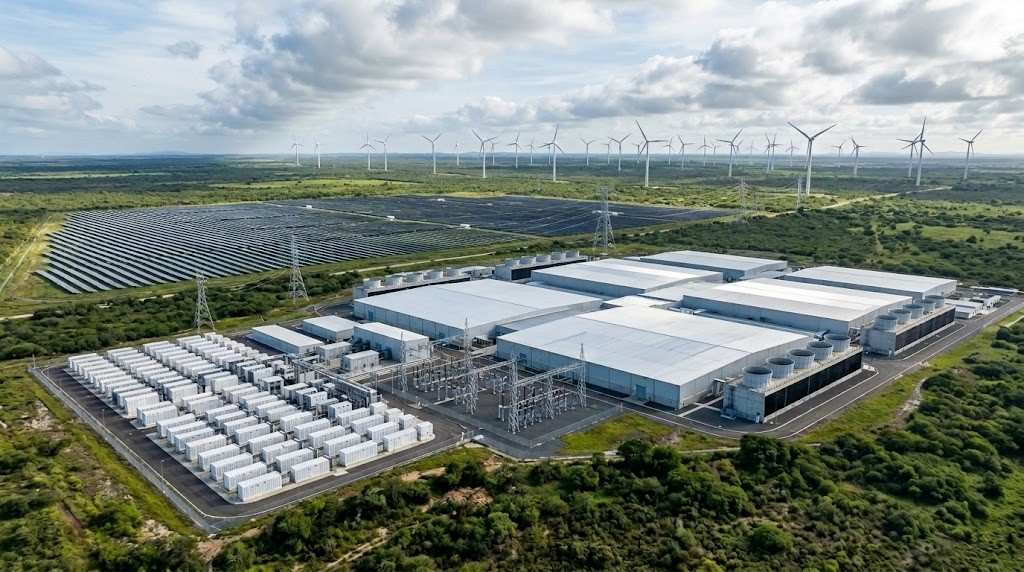
Concurrently, ENGIE teamed up with NTT DATA to supply tailored 24/7 renewable contracts supported by battery storage and granular time-stamped certifications across expanding data center portfolios. Addressing multi-gigawatt compute hubs, NextEra Energy partnered with Google Cloud to develop gigawatt-scale campuses powered by nuclear restarts and massive renewable capacity, while The AES Corporation contracted hybrid wind, solar, and storage fleets directly alongside Google data centers to deliver synchronized, zero-emission power around the clock
A New Standard for the AI Era
The journey toward a fully decarbonized digital economy is long and complex, but the adoption of hourly carbon free energy matching is a critical milestone. It represents a move away from symbolic gestures toward a scientifically rigorous and transparent accounting of environmental impact. For the AI industry, which stands at the forefront of technological innovation, leading the charge on 24/7 carbon-free energy is both a moral imperative and a strategic necessity.
As AI continues to reshape every aspect of our lives, we must ensure that its foundation is built on sustainable energy. PowerGen Advancement believes that by synchronizing our digital ambitions with the rhythms of our planet’s natural energy cycles, we can create a future where intelligence and ecology exist in harmony. The technologies and strategies developed for hourly carbon free energy matching will not only power the data centers of tomorrow but will also provide a blueprint for the decarbonization of the entire global industrial base.
References
-
Constellation Energy Corporation — Constellation to Launch Crane Clean Energy Center, Restoring Jobs and Carbon-Free Power to the Grid
-
ENGIE SA — ENGIE and NTT DATA announce strategic partnership to power sustainable AI and data center growth
-
The AES Corporation — AES Announces Landmark Agreements with Google in Texas
-
NextEra Energy, Inc. & Google Cloud — NextEra Energy and Google Cloud Announce Landmark Strategic Energy and Technology Partnership to Accelerate AI Growth and Transform the Energy Industry
-
NextEra Energy Resources, LLC & Meta Platforms, Inc. — NextEra Energy Resources and Meta Strengthen American Energy Leadership