









AI Summary
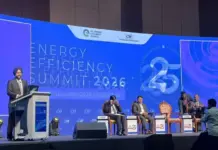
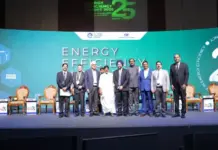
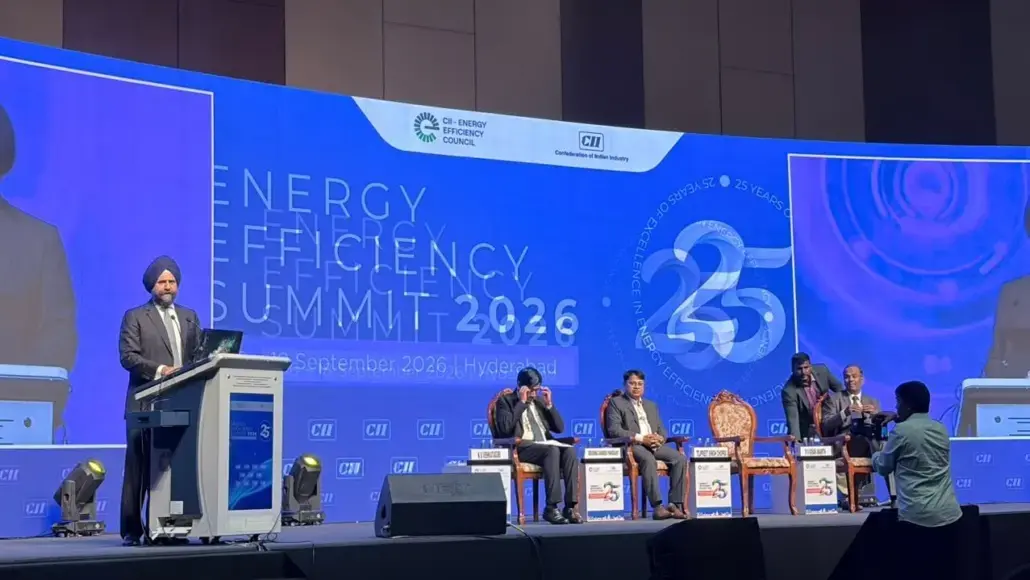
As the flagship 25th Energy Efficiency Summit 2026 entered its pivotal second day at the Hyderabad International Convention Centre (HICC), industrial dialogue shifted decisively from overarching national commitments to operational engineering execution, scalable clean technologies, and lab-to-market commercialization.
Organized by the CII-Sohrabji Godrej Green Business Centre (CII-GBC) under the theme “Accelerating the Transition to a Net Zero Economy Through Energy Efficiency, Clean Technologies, and Sustainable Practices,” the summit reaffirmed energy efficiency as the foundational “first fuel” powering India’s clean energy transition.
Our PowerGen Advancement editorial team covered the event from the convention floor, engaging directly with sector-specific discussions and capturing the key industry insights, knowledge and perspectives shared throughout the sessions.
Summit Reach, Footfall, and Ecosystem Presence
Across the three-day convention (September 16–18, 2026), the summit cemented its status as India’s premier clean energy and industrial decarbonization event:
-
Footfall and Attendance: Over 3,500 delegates and cross-sectoral stakeholders converged at HICC, including utility leaders, heavy-industry plant heads, policy advisors, and international development bodies.
-
Speaker Lineup: More than 150 eminent industry speakers and domain experts across 20 distinct industrial sectors.
-
Technology Expo: An active exhibition featuring over 110 cutting-edge solution providers and exhibitors showcasing commercial-scale decarbonization equipment, advanced pumping architectures, low-carbon heat recovery, and automated energy-management platforms.
-
Parallel Sectoral Platforms: Running in synergy with the 22nd Power Plant Summit and the 20th PaperTech 2026, fostering deep technical crossover between thermal power generation, pulp and paper, metals, and manufacturing.
Key Agendas and Session Highlights
Leadership Perspectives on India’s Energy Transition –
Achievements, Challenges and Future Priorities
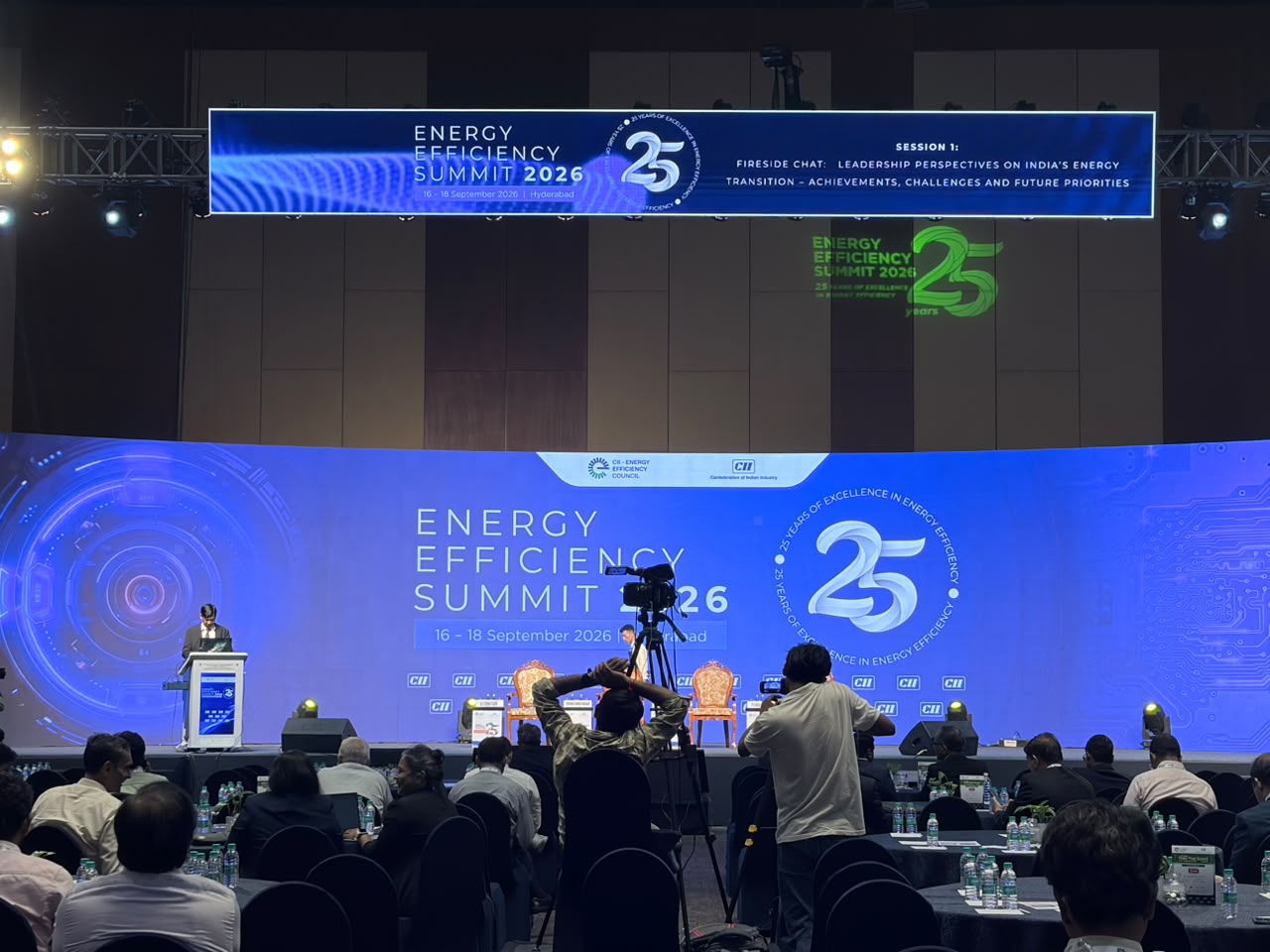
Shri Krushna Chandra Panigrahy, DG of Bureau of Energy Efficiency graced the Energy Efficiency Summit 2026 as a chief guest. The morning proceedings opened with a high-level fireside chat led by Summit Chairman Mr. Tejpreet Singh Chopra (Founder & CEO, BLP-Industry.AI). In this session, we noted an urgent consensus among industry leaders—including Mandar Vaijanapurkar (Danfoss India), Usha Subramaniam (Grundfos India), and Palanisamy Lakshman (Fuji Electric India)—that industrial competitiveness and Net-Zero mandates are no longer in conflict.
The discussion centered on scaling electrification, modernizing legacy pumping and automation systems, and deploying artificial intelligence to extract marginal efficiency gains across energy-intensive processes.
Energy Efficiency as Key Enabler for Energy Transition and
Decarbonization- National and International Perspective
Bringing a global macroeconomic lens, representatives from the International Energy Agency (IEA), International Institute for Sustainable Development (IISD), Centre for Strategic and International Studies (CSIS), and GIZ India examined global best practices and policy frameworks.
We covered detailed analyses illustrating that energy efficiency remains the most cost-effective hedge against volatile global energy markets. Speakers outlined actionable pathways for Indian manufacturing hubs to integrate clean power purchasing with aggressive demand-side management to satisfy upcoming Carbon Credit Trading Scheme (CCTS) standards.
Technological Advancements and Innovations in Energy Efficiency
During the technical fireside chat chaired by Dr. B. P. Thapliyal (Secretary General, IARPMA), engineering leaders shared real-world deployment data.
We discovered that heavy industrial operators are increasingly bypassing incremental upgrades in favor of deep thermodynamic overhauls—specifically:
-
Advanced plate heat exchangers enabling aggressive low-grade waste heat recovery.
-
High-efficiency industrial steam turbines engineered for variable thermal load conditions.
Real-time thermal asset monitoring driven by predictive AI across major refinery and steel complexes.
Clean Energy Technologies Driving Net Zero Transition
Chaired by Mr. Rumi Engineer (CII Jury Member & Godrej and Boyce Mfg. Co. Ltd.), this technical showcase unpacked commercial clean-tech applications.
Presentations highlighted next-generation Variable Frequency Drives (VFDs), smart digital pumping architectures, and industrial automation tools engineered specifically to eliminate parasitic electrical loads across utility plants and commercial infrastructure.
From Innovation to Impact-Programs in India for accelerating Energy Efficiency and Decarbonization
Chaired by Mr. Milind Deore (Secretary, Bureau of Energy Efficiency – BEE), this multi-stakeholder panel addressed the bridge between innovative pilots and national deployment.
We noted strong deliberations regarding programmatic financing mechanisms, bulk-procurement business models, and market aggregation instruments designed to accelerate the adoption of super-efficient appliances and industrial hardware across MSME clusters.
Academia’s Role in Driving Innovation and Lab-to-Market Conversion of Clean Technologies
The day concluded with an intensive panel chaired by Prof. M. V. Rane (IIT Bombay), featuring leaders from the IIT Madras Energy Consortium, Mahindra University, BITS-Pilani Hyderabad, and YNOS Venture Engine.
Deliberations centered on establishing institutional pathways for early-stage thermodynamic, materials science, and energy-storage innovations to navigate technology validation, secure risk-capital financing, and scale rapidly into commercial industrial operations.
Accelerating India’s Energy Transition from Ambition to Execution
Throughout our coverage of the summit, we observed that the narrative around India’s energy transition has fundamentally evolved. Decarbonization is no longer treated purely as a corporate social responsibility initiative or an aspirational target. It is now an engineering and operational necessity dictated by global market competitiveness and regulatory compliance.
From advanced automation in power plants to industrial thermal electrification, the 25th Energy Efficiency Summit continues to provide the essential framework required to translate high-level climate roadmaps into tangible, gigawatt-scale execution.