

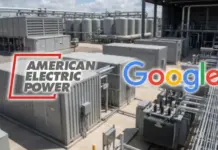





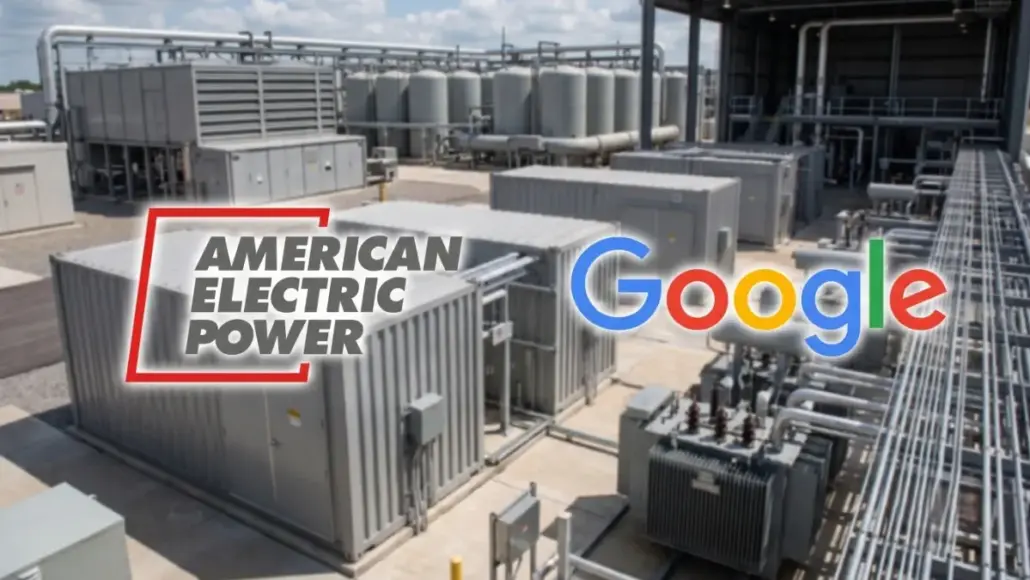
American Electric Power (AEP), a major U.S. utility company, has announced plans to develop a 702MW fuel cell power facility near Cheyenne, Wyoming, to provide electricity for Google. Announced on the 14th, the project represents an investment of approximately $4 billion and is intended to address rising electricity requirements associated with the expansion of AI and cloud services.
The facility will operate as a dedicated power source for Google under a 20-year power purchase agreement (PPA), ensuring a long-term arrangement for electricity supply. Construction is scheduled to begin in 2026, with full-scale operation targeted by the end of 2028. Under the agreement, Google will purchase the electricity generated at the plant, while AEP will develop and own the generation assets. This arrangement allows AEP to retain ownership of the infrastructure and secure demand and revenue through the long-term contract, rather than transferring ownership of the power plant to Google. The proposed fuel cell power facility is part of a model in which utilities develop dedicated generation infrastructure to meet the requirements of major electricity consumers.
Project Ownership and Fuel Cell Technology
The project will be developed through Cheyenne Fuel Cell LLC, in which AEP holds and controls approximately 92% of the company. The remaining 8% is owned by a fund advised by infrastructure investment firm Basalt Infrastructure Partners. The arrangement illustrates an alternative approach for IT companies seeking dependable electricity supplies for their data centers, with utilities and large-scale consumers working together through long-term contractual commitments.
The fuel cell power facility will use Solid Oxide Fuel Cell (SOFC) technology developed by Bloom Energy. Unlike conventional thermal power generation, which relies on turbines, SOFC technology produces electricity through electrochemical reactions without combustion, even when fuels such as natural gas are used. The technology is considered suitable for large-scale data centers because units can be installed relatively quickly at required locations, while electricity supply can be adjusted to meet demand. These characteristics are relevant to the project’s objective of supplying power for Google’s expanding electricity requirements.
Carbon Capture Plans and Emissions Reduction
AEP has also indicated plans to incorporate Carbon Capture and Storage (CCS) technology into the fuel cell power facility. Although natural gas will be used to generate electricity, the company aims to bring net emissions close to zero by capturing carbon dioxide. However, the technical specifications for this integration remain at the planning stage. The actual effectiveness of emissions reductions during operation has yet to be verified, leaving the proposed environmental performance subject to confirmation as the project advances.
AEP Expands Generation Investment
For AEP, the development represents a move beyond its traditional regulated regional power supply business towards a model in which generation assets are developed specifically for major clients. The company has also announced plans to invest a total of $78 billion between 2026 and 2030 to strengthen its transmission grid and power supply capacity. AEP serves approximately 5.6 million customers across 11 U.S. states and operates about 33GW of generation capacity, including owned and contracted assets. The planned fuel cell power facility provides a specific investment opportunity for the utility to address growing electricity demand while expanding its generation capabilities for large-scale power consumers.