

















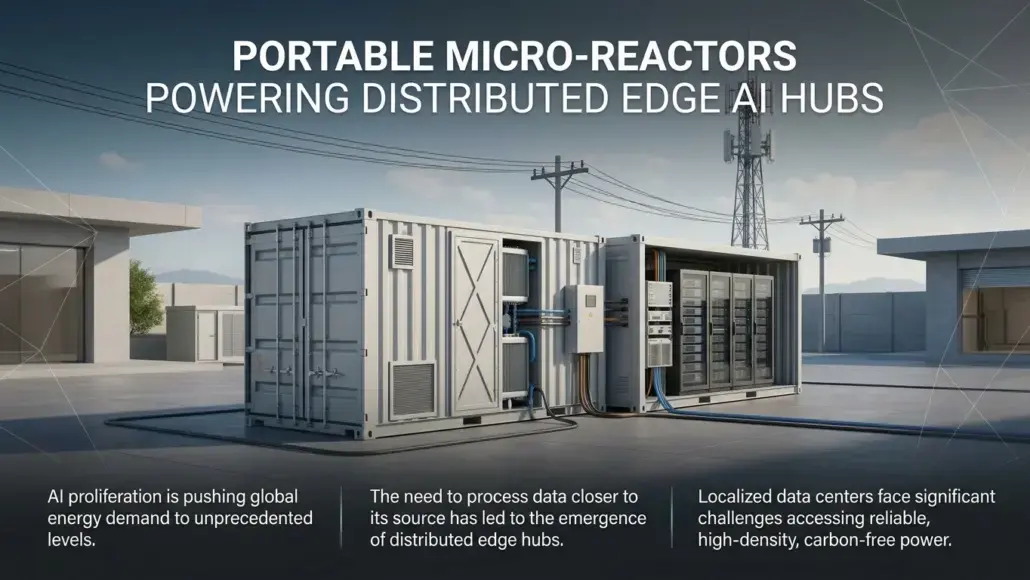
The rapid proliferation of artificial intelligence has fundamentally altered the landscape of global computing, pushing the demand for energy to unprecedented levels. As AI models grow in complexity, the need to move processing closer to the source of data has led to the emergence of distributed edge hubs. However, these localized data centers face a significant hurdle: the lack of reliable, high-density, and carbon-free power in remote or congested urban areas. Traditional grid connections are often slow to deploy and insufficient for the massive energy spikes required by modern GPUs. In this context, portable micro reactor AI power has emerged as a transformative solution, offering a compact and resilient energy source that can be deployed almost anywhere to sustain the next generation of intelligent infrastructure.
The Shift Toward Decentralized AI Infrastructure
PowerGen Avancement notes that the move toward edge computing is driven by the need for low latency and high bandwidth, which are essential for real-time AI applications such as autonomous vehicles, smart city management, and industrial automation. Unlike centralized hyperscale data centers, edge hubs are smaller and scattered across various geographies. This decentralization creates a logistical nightmare for power procurement. Bringing large-scale transmission lines to a local edge node is often cost-prohibitive and time-consuming. Consequently, the industry has begun exploring modular and autonomous energy sources that can operate independently of the primary utility grid.
Challenges of Traditional Energy Sources at the Edge
Traditional localized power solutions, such as diesel generators or small-scale solar arrays, fall short of meeting the rigorous demands of AI workloads. Diesel generators, while portable, are carbon-intensive and require frequent refueling, making them unsuitable for long-term sustainability goals. Solar and wind power are intermittent, requiring massive battery storage systems that increase the footprint and complexity of the edge hub. The energy density required to power a rack of H100 or B200 GPUs is so high that conventional renewables often cannot keep pace without significant land use. This is where the integration of portable micro reactor AI power provides a distinct advantage, offering constant, high-output energy in a footprint no larger than a shipping container.
The Rise of Nuclear Micro-reactors
Micro-reactors are defined by their small size and modular design, typically producing between one and twenty megawatts of thermal energy. Unlike traditional large-scale nuclear plants, these units are factory-built and can be transported via truck, ship, or rail.
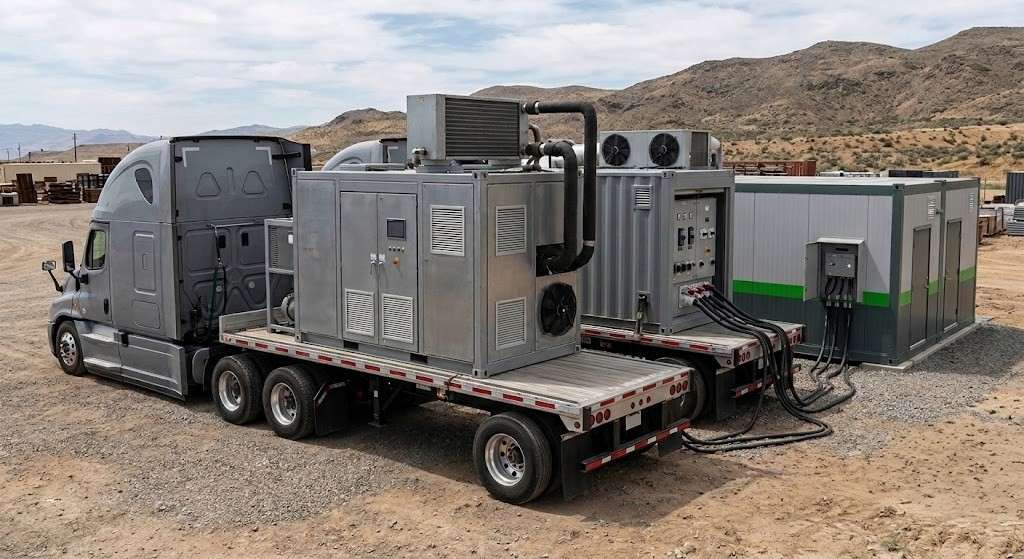
They utilize advanced cooling mechanisms, such as molten salt or gas-cooled systems, which are inherently safer and require less maintenance than conventional light-water reactors. For the AI industry, these reactors represent a plug-and-play energy source that can be dropped into a location and begin providing stable electricity within a matter of weeks, rather than the years required for grid upgrades.
Technical Advantages of Portable Micro Reactor AI Power
The primary appeal of portable micro reactor AI power lies in its ability to provide baseload power without the volatility of weather-dependent renewables. AI clusters require a steady stream of electricity to maintain the integrity of large language model training and inference. Even a millisecond of power fluctuation can cause significant data loss or hardware damage. Micro-reactors offer a level of stability that is unparalleled in the portable energy market.
Enhancing Grid Independence and Resilience
By operating as a microgrid, an AI edge hub powered by a micro-reactor is shielded from the vulnerabilities of the public utility infrastructure. Grid outages caused by storms, cyberattacks, or high demand do not impact the local AI operations. This level of resilience is critical for mission-critical applications, such as healthcare diagnostics or emergency response systems, where AI downtime is not an option. Furthermore, the heat generated by these reactors can be repurposed for district heating or cooling systems, further increasing the overall efficiency of the edge facility.
Sustainable Scaling for High-Density Computing
Sustainability is no longer an optional metric for tech companies; it is a core business requirement. As regulatory pressure mounts to reduce carbon footprints, the AI sector must find ways to grow without increasing emissions. Portable micro reactor AI power provides a carbon-free energy source that operates 24/7. To achieve true sustainability, these decentralized nuclear solutions must be paired with hourly carbon free energy matching to ensure zero-carbon operations every second of the day. This synergy between advanced nuclear and sophisticated energy accounting ensures that every kilowatt consumed is directly linked to a carbon-free source, meeting the highest standards of environmental responsibility.
Safety and Regulatory Considerations
One of the most frequent questions regarding the use of nuclear energy at the edge involves safety. Modern micro-reactors are designed with passive safety features, meaning they do not require human intervention or external power to shut down safely in the event of a malfunction. The fuel used is often TRISO (Tri-structural Isotropic) fuel, which is encapsulated in ceramic layers that prevent the release of radioactive materials even under extreme temperatures.
Streamlining Deployment through Modular Licensing
Regulatory bodies, such as the Nuclear Regulatory Commission (NRC) in the United States and similar agencies globally, are currently developing new frameworks to fast-track the licensing of small modular and micro-reactors. Because these units are standardized, the licensing process for the second and third units is significantly faster than the first. This modular approach to regulation matches the modular nature of data center expansion, allowing AI companies to scale their power capacity in lockstep with their computing needs.
Addressing Public Perception and Community Integration
Integrating nuclear power into local communities requires transparent communication and community engagement. Edge hubs are often located near population centers to minimize latency. Therefore, operators must demonstrate the safety and benefits of portable micro reactor AI power to local stakeholders. The promise of high-paying tech jobs, improved local infrastructure, and the contribution to a greener grid are powerful arguments in favor of this technology. As more successful pilots are deployed, public confidence in localized nuclear energy is expected to grow, paving the way for widespread adoption.
Economic Impacts of Localized Nuclear Energy
The economic model of AI is heavily weighted by the cost of energy. By utilizing portable micro reactor AI power, data center operators can lock in long-term energy prices, avoiding the volatility of natural gas markets or the rising costs of grid-delivered electricity. While the upfront capital expenditure for a micro-reactor is significant, the low operating costs and high capacity factor result in a competitive levelized cost of energy (LCOE) over the reactor’s 20-year lifespan.
Reducing Infrastructure Lead Times
The time-to-market for a new AI facility is often dictated by the utility’s ability to provide a power hookup. In many major markets, the wait time for a multi-megawatt connection is now measured in years. Micro-reactors bypass this bottleneck entirely. The ability to deploy portable micro reactor AI power on-site allows companies to bring their AI services online much faster, capturing market share and realizing revenue long before their competitors who are stuck waiting for grid upgrades.
Creating a New Energy-Computing Ecosystem
The convergence of nuclear energy and AI is creating a new ecosystem where energy and compute are inextricably linked. We are seeing a trend where energy companies are becoming data center providers, and tech giants are investing directly in nuclear startups. This vertical integration allows for deeper optimization, where the reactor’s output can be tuned to the specific needs of the AI cluster. This holistic approach to infrastructure design is necessary to sustain the exponential growth of artificial intelligence.
Future Outlook for AI Powering Solutions
As we look toward the 2030s, the deployment of portable micro reactor AI power will likely become a standard feature of the global computing landscape. The initial pilots currently underway will provide the data necessary to refine the technology and prove its reliability. We can expect to see nuclear-ready data center designs that are built specifically to accommodate these modular units.
The Role of Advanced Materials and Cooling
Future generations of micro-reactors will likely incorporate even more advanced materials and cooling techniques, such as heat pipes or supercritical CO2 cycles, which will further increase efficiency and decrease the physical footprint. These advancements will make portable micro reactor AI power even more attractive for ultra-compact edge deployments in urban skyscrapers or remote research stations.
Factory-Built Microreactors and Modular Nuclear Engines Emerge to Power Off-Grid AI Edge Hubs
To sidestep years-long utility interconnection queues and supply continuous, zero-emission baseload power to edge data clusters, nuclear developers are transitioning modular reactors into factory-built, transportable realities. Westinghouse Electric Company advanced its transportable eVinci™ microreactor through milestone approvals from the NRC and U.S. Department of Energy, establishing a 5 MWe plug-and-play heat pipe reactor architecture capable of powering isolated AI compute hubs without conventional water cooling.
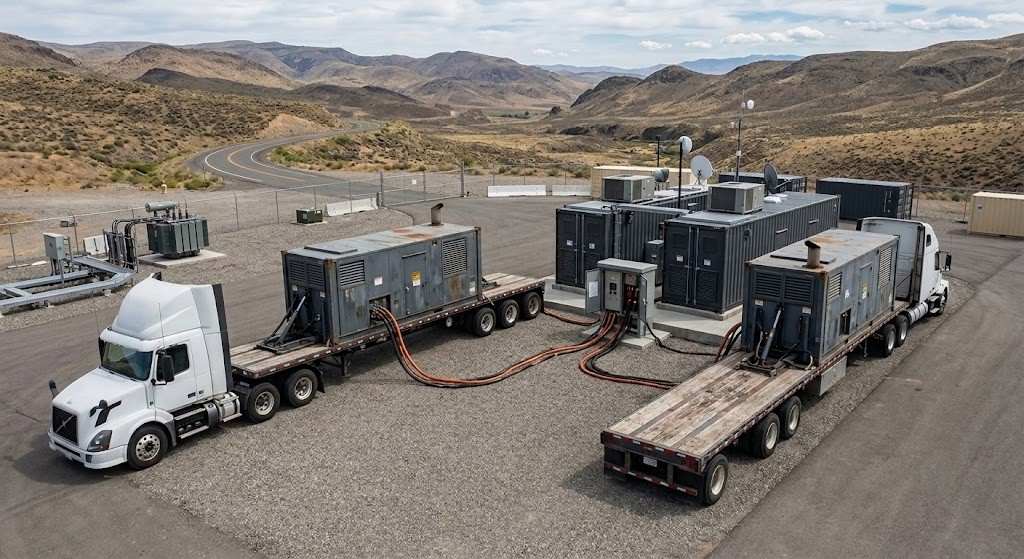
In parallel, BWX Technologies commenced core fabrication and delivered TRISO fuel for the transportable Project Pele microreactor prototype, demonstrating containerized 1–5 MWe nuclear deployment designed to eliminate grid dependency. Bridging regional grid constraints with dedicated baseload generation, Rolls-Royce SMR secured landmark deployment agreements with Great British Energy – Nuclear and European utilities to commercialize factory-manufactured modular reactors, pairing SMR baseload capabilities with its high-density data center power portfolio to establish dedicated, self-contained energy supplies for AI computing.
A Path Toward Global AI Sovereignty
For many nations, the ability to maintain independent AI infrastructure is a matter of national security and economic sovereignty. Relying on cross-border energy grids or fossil fuel imports creates vulnerabilities. By adopting portable micro reactor AI power, countries can ensure that their AI edge hubs remain operational under any circumstances, fostering domestic innovation and protecting critical data assets.
In conclusion, the integration of portable micro reactor AI power represents a paradigm shift in how we think about energy and computing. PowerGen Advancement believes that by providing a compact, resilient, and carbon-free source of electricity, these reactors solve the most pressing challenges facing the AI industry today. As we move closer to an AI-driven world, the synergy between nuclear technology and digital infrastructure will be the foundation upon which the next era of human progress is built. The transition to decentralized, autonomous power is not just an engineering necessity. It is the key to unlocking the full potential of artificial intelligence for the benefit of all.
References
-
Westinghouse Electric Company LLC — Westinghouse eVinci™ Design Reaches Key US Licensing Milestone
-
Westinghouse Electric Company LLC — Westinghouse eVinci® Test Reactor First to Receive Approval for Preliminary Safety Design Report
-
BWX Technologies, Inc. — Project Pele Begins Taking Shape with Start of Core Manufacturing
-
BWX Technologies, Inc. — BWXT Announces Arrival at INL of TRISO Nuclear Fuel for Project Pele Microreactor
-
Rolls-Royce SMR Ltd. — Rolls-Royce SMR Selected by Great British Energy – Nuclear as Preferred Technology in UK SMR Programme
-
Rolls-Royce plc — Powering Data Centres Through the Energy Transition