





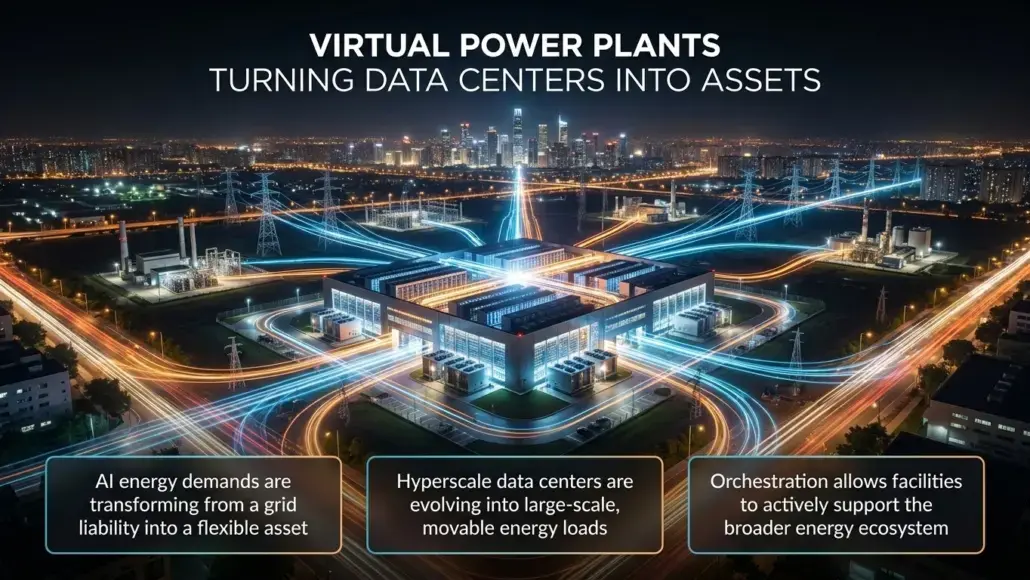
The astronomical rise in the energy consumption of artificial intelligence infrastructure has traditionally been viewed as a burden on the public utility grid. Hyperscale data centers, with their massive power requirements and continuous demand profiles, were often seen as rigid, immovable loads that strained infrastructure. However, a new paradigm is emerging where the flexibility of these facilities is being harnessed to benefit the entire energy ecosystem. Through sophisticated orchestration, virtual power plants turn data centers into assets that can provide critical grid services, balance renewable energy fluctuations, and generate new streams of revenue for operators. This transformation is not just a technical curiosity. It is a fundamental shift in the relationship between big tech and the energy industry.
The Concept of the Virtual Power Plant
A Virtual Power Plant (VPP) is a cloud-based distributed power plant that aggregates the capacities of heterogeneous Distributed Energy Resources (DERs) for the purposes of enhancing power generation, as well as trading or selling power on the electricity market. In the context of a data center, these resources include the massive batteries in Uninterruptible Power Supply (UPS) systems, on-site backup generators, and the computational load itself. PowerGen Advancement notes that by coordinating these thousands of individual components, virtual power plants turn data centers into assets that look and behave like a single, large-scale utility plant to the grid operator.
From Passive Load to Active Participant
Historically, data centers were passive consumers. They drew a steady stream of power and only used their backup systems during an emergency. This meant that billions of dollars worth of energy infrastructure sat idle 99.9% of the time. By joining a VPP, this infrastructure is put to work. A data center can now respond to signals from the grid, reducing its draw from the utility during times of peak demand or injecting power from its batteries back into the network. This flexibility is what allows us to say that virtual power plants turn data centers into assets, moving them from the liability side of the balance sheet to the asset side.
The Role of AI in VPP Orchestration
The complexity of managing a VPP requires advanced software capable of processing millions of data points per second. AI plays a dual role here: it is both the consumer of the energy and the brain that manages the VPP. Machine learning models predict grid conditions and data center workloads, determining the optimal time to shift compute tasks or discharge batteries. This level of orchestration ensures that participation in grid services never compromises the primary mission of the data center: keeping the servers running. The intelligence at the edge is what truly enables the vision where virtual power plants turn data centers into assets.
The Three Pillars of Data Center Flexibility
There are three primary ways in which a data center can provide flexibility to the grid: energy storage, on-site generation, and load shifting. Each of these pillars contributes to the overall value proposition of the VPP.
Energy Storage and UPS Integration
Data centers house some of the largest battery installations in the world. Traditionally, these batteries were lead-acid and only meant to provide power for a few minutes until the generators kicked in. Modern facilities are increasingly using lithium-ion and other advanced chemistries that can handle thousands of cycles.
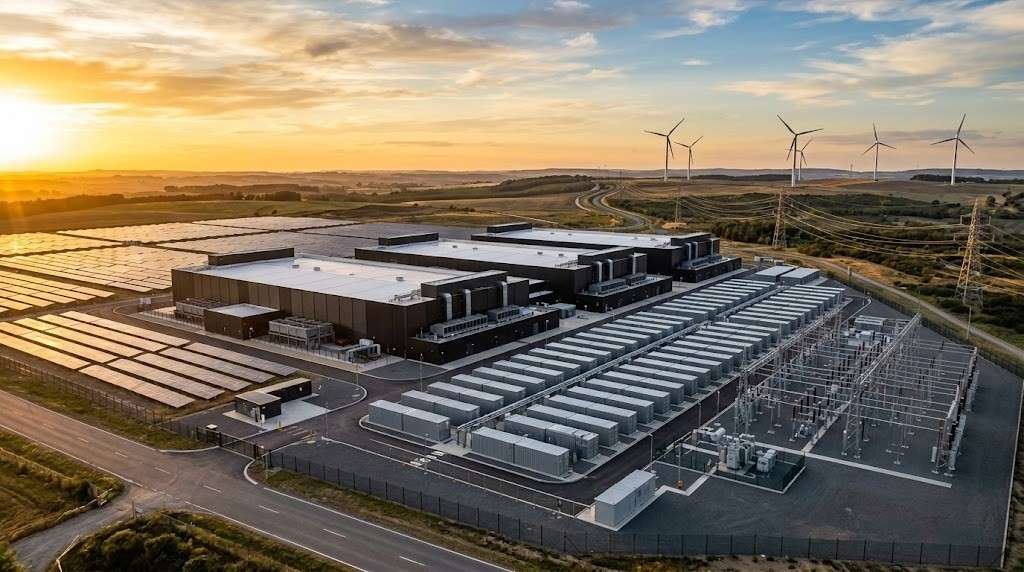
By integrating these batteries into a VPP, operators can provide frequency regulation services, helping the grid maintain its 50Hz or 60Hz balance. The success of these virtual systems relies heavily on advanced hardware, specifically where grid forming inverters stabilize AI power supplies during rapid fluctuations. This combination of hardware and software is what makes the transition to an active asset possible.
Backup Generation and Microgrids
On-site generators, often diesel or natural gas-fired, represent a massive amount of untapped capacity. In a VPP, these generators can be called upon during extreme grid stress—such as a heatwave—to provide spinning reserve capacity. While the goal is to move toward carbon-free backup, such as hydrogen fuel cells or long-duration thermal storage, the current fleet of generators still provides a vital safety net for the grid. When a data center uses its own generators to cover its load during a peak period, it effectively frees up hundreds of megawatts for the rest of the community.
Computational Load Shifting
The most unique form of flexibility in a data center is the ability to move the actual computational load. Unlike a factory that needs to run its assembly line at a specific time, many AI training tasks can be shifted in time or space. Through a VPP, a data center can throttle its AI workloads when the grid is under stress. Alternatively, it can move a specific task from a data center in a region with high demand to one in a region with a surplus of renewable energy. This spatial load shifting is a revolutionary tool for grid balancing, and it is a key reason why virtual power plants turn data centers into assets for global energy markets.
Economic and Strategic Benefits for Operators
For the data center operator, the decision to participate in a VPP is driven by economics. The revenue generated from grid services can significantly offset the cost of electricity, which is the largest operating expense for a facility.
New Revenue Streams and Cost Mitigation
By selling frequency regulation, spinning reserves, and demand response services, a data center can earn millions of dollars annually. In some markets, these payments are so substantial that they can cover up to 10-15% of the total energy bill. Furthermore, by reducing demand during peak hours, the facility avoids high demand charges and peak pricing, further lowering its costs. This financial upside is the primary reason why virtual power plants turn data centers into assets that attract savvy investors and infrastructure funds.
Enhancing Corporate Sustainability Goals
Participating in a VPP also supports a company’s environmental goals. By providing the flexibility needed to integrate more wind and solar power into the grid, data centers are actively contributing to the decarbonization of the energy system. This is a much more impactful form of sustainability than simply buying carbon offsets. It demonstrates that the company is part of the solution to the energy crisis, rather than just a contributor to it. This grid-positive approach is becoming a hallmark of responsible AI development.
Strengthening Grid Partnerships
Historically, the relationship between data centers and utilities was often transactional or even adversarial, as huge new loads created engineering challenges for the grid. By becoming an active partner through a VPP, the data center operator builds a much stronger relationship with the utility. This can lead to faster interconnect approvals, better energy rates, and collaborative infrastructure planning. When virtual power plants turn data centers into assets, the data center becomes a welcomed addition to the local grid rather than a feared one.
Regulatory and Technical Challenges
Despite the clear benefits, the path to universal VPP adoption is not without obstacles. The regulatory landscape for grid services is fragmented, with different rules in every state and country.
Market Access and Interconnection Rules
In many regions, wholesale electricity markets were designed for large, centralized power plants and do not have clear rules for how aggregated loads can participate. Organizations like FERC in the U.S. are working to change this, but the process is slow. Furthermore, connecting a data center’s batteries to the grid for injection requires complex interconnection studies and expensive safety equipment to ensure that power doesn’t flow back into the grid during a local outage, potentially endangering utility workers.
Ensuring Operational Integrity
The number one priority for a data center is uptime. Any participation in a VPP must be fail-safe. If a grid signal asks the data center to reduce its load, but the internal systems detect a critical workload or a hardware issue, the data center must be able to override the grid signal instantly. Building this level of trust between the facility’s Facility Management System (FMS) and the external VPP controller requires rigorous testing and sophisticated air-gapped control logic.
The Future of the Grid-Integrated Data Center
As we look toward the 2030s, the distinction between a data center and a power plant will continue to blur. We will see the rise of energy-native AI facilities that are designed from day one to be the anchors of their local VPPs.
Long-Duration Storage and Hydrogen
The next frontier for data center assets is long-duration energy storage. Technologies like liquid air, flow batteries, and green hydrogen will allow data centers to provide flexibility over days rather than just hours. This will be critical for managing multi-day periods of low wind and solar production. A data center with a large hydrogen storage tank could act as a seasonal energy reservoir for its local community, providing heat and power during the winter months.
Decentralized VPPs and Blockchain
We are also seeing the emergence of decentralized VPPs, where blockchain technology is used to track and settle energy transactions in real-time. This reduces the administrative overhead of participating in grid services and allows for even more granular control. In this model, every individual server rack could theoretically act as a micro-asset, bidding its flexibility into a global market. This is the ultimate realization of the concept where virtual power plants turn data centers into assets.
Grid Integration Giants Orchestrate Distributed Storage and Compute Flexibility to Anchor Virtual Power Plants
To resolve acute transmission constraints and transform high-density computing loads from grid burdens into dynamic, revenue-generating energy assets, major energy technology leaders are deploying advanced software orchestration and battery microgrids. Tesla spearheaded a major industry coalition with Sunrun and Renew Home to unlock over 16 GW of flexible capacity across North America, aggregating distributed battery and energy storage systems to directly supply and balance high-demand AI data center markets.
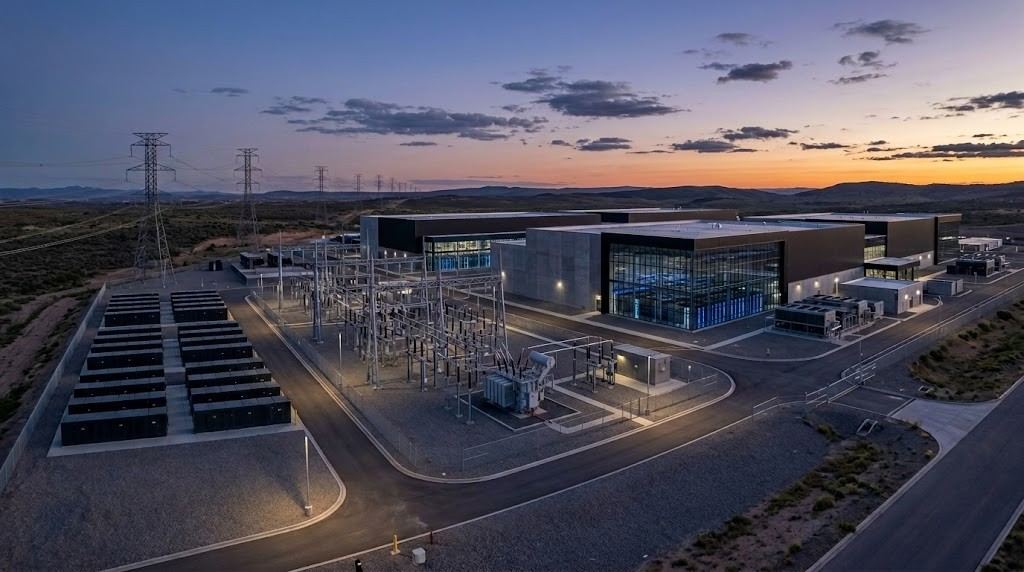
Tackling the challenge through IT/OT convergence, Siemens expanded its data center ecosystem by combining Fluence battery storage and Emerald AI software, coordinating compute load shifting with grid-integrated assets to accelerate utility interconnections and stabilize the power network. Meanwhile, Schneider Electric established specialized data center and microgrid test laboratories dedicated to validating behind-the-meter battery energy storage systems (BESS) and microgrid architectures, while deploying advanced distributed energy resource management platforms to aggregate facility-side power into reliable, utility-grade reserve capacity.
Moving Towards A Symbiotic Future
The integration of data centers into virtual power plants represents one of the most significant innovations in the history of industrial infrastructure. PowerGen Advancement believes that by turning a massive energy consumer into a flexible grid asset, we are creating a more resilient, sustainable, and efficient energy system for everyone. The data center is no longer just a warehouse for servers. It is a dynamic participant in the most important network on the planet: the electrical grid.
As AI continues to demand more from our energy infrastructure, we must continue to find creative ways to turn that challenge into an opportunity. The success of the virtual power plant model proves that with the right technology and a collaborative mindset, we can build a world where our digital and physical infrastructures grow together in harmony. The era of the passive, rigid data center is over. The era where virtual power plants turn data centers into assets has begun, and it will be the foundation for the next century of technological and environmental progress.
References
-
Sunrun Inc., Renew Home, and Tesla Energy Operations, Inc. — Sunrun, Renew Home, and Tesla Team Up to Deliver More Than 16 Gigawatts of Fast, Flexible Power for Data Centers and Large Loads
-
Schneider Electric SE — Schneider Electric Opens New Data Center and Microgrid Testing Labs at Global R&D Center in Massachusetts
-
Siemens AG — Siemens Expands Data Center Partner Ecosystem to Scale Next-Generation AI Infrastructure