

















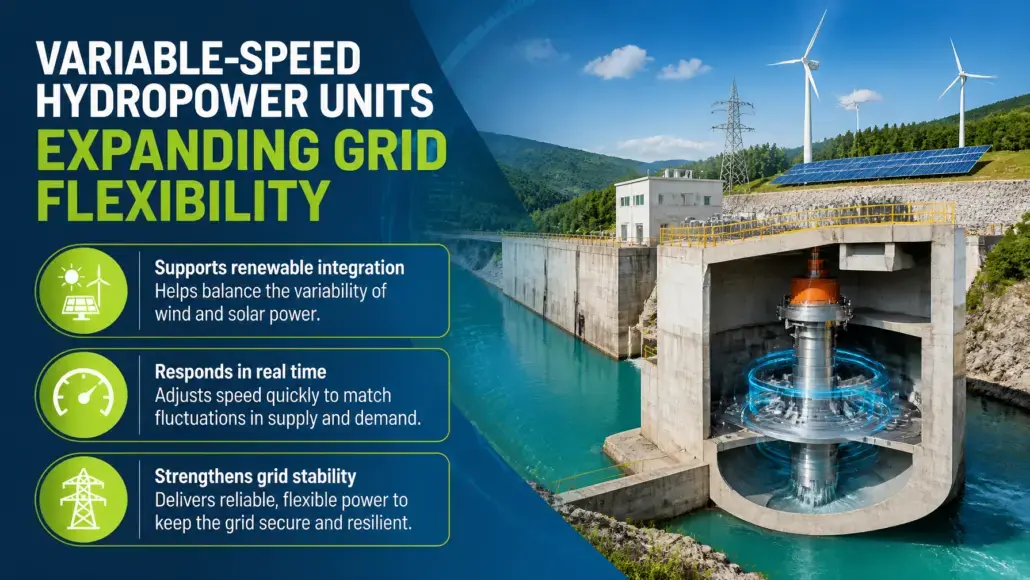
The global push for renewable energy is creating a more volatile electricity grid as intermittent sources like wind and solar become more dominant. To maintain stability, PowerGen Advancement observes that the grid requires flexible assets that can respond rapidly to fluctuations in supply and demand. Variable-speed hydropower units are emerging as a vital technology in this effort. Unlike traditional fixed speed turbines that must operate at a constant rotational frequency, these advanced units can adjust their speed to optimize performance across a wide range of operating conditions. This capability provides significant advantages in both power generation and pumped storage applications.
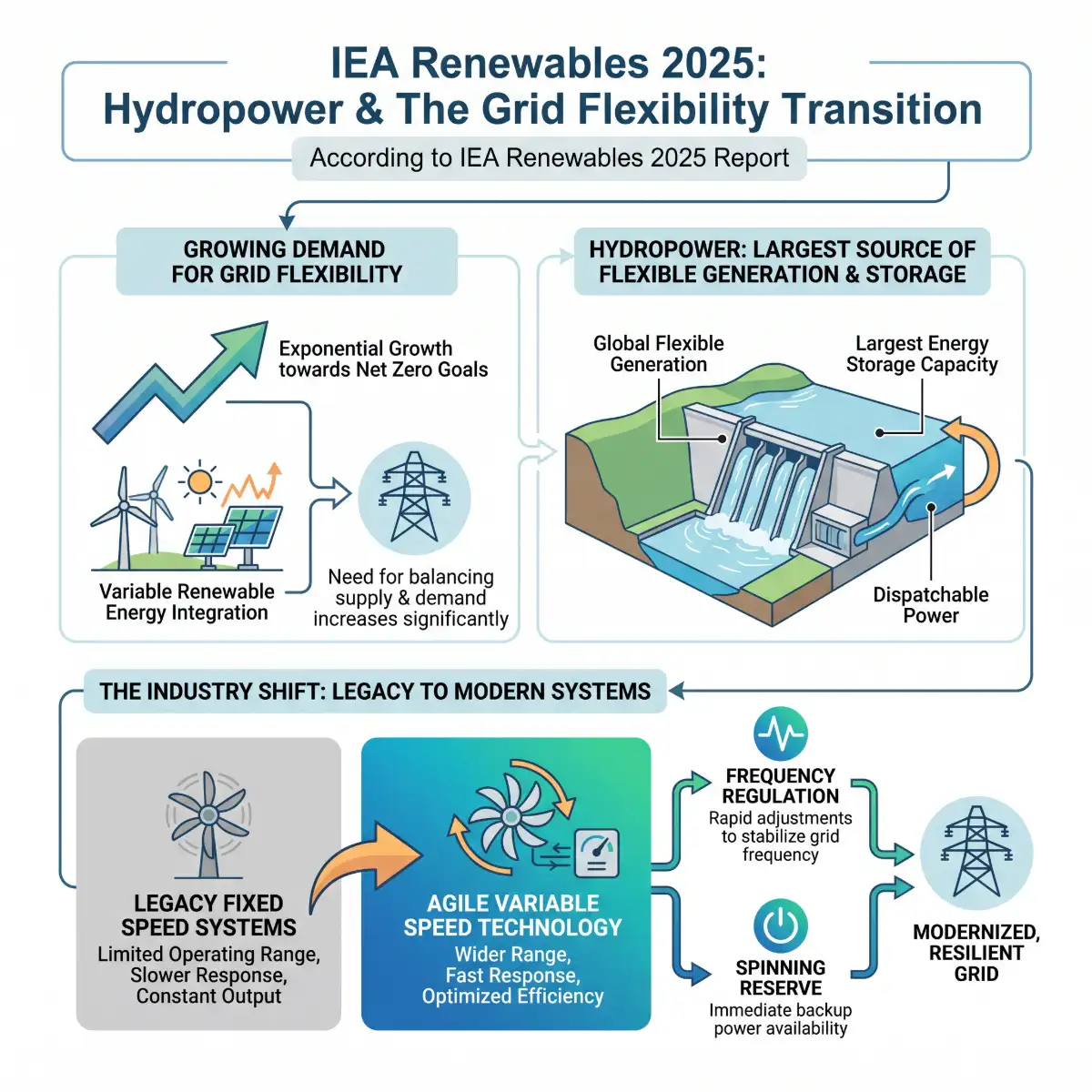
According to the International Energy Agency (IEA) Renewables 2025 report, the demand for grid flexibility is expected to grow exponentially as nations work toward their net zero goals. The agency highlights that hydropower remains the largest source of flexible generation and storage globally. However, to meet the needs of a modern grid, the industry must transition from legacy fixed speed systems to more agile variable-speed technology. This shift to variable-speed hydropower units allows hydropower plants to provide essential services such as frequency regulation and spinning reserve more efficiently than ever before.
Mechanical and Electrical Principles of Variable Speed Operation
The technical core of variable-speed hydropower units lies in the decoupling of the turbine speed from the grid frequency. This is typically achieved through the use of sophisticated power electronics, such as large scale frequency converters or doubly fed induction machines (DFIM). By allowing the turbine to rotate faster or slower depending on the water head and flow rate, the system can maintain peak hydraulic efficiency even when operating at partial loads. This is a major improvement over fixed speed units, which often suffer from cavitation and vibration when forced to operate away from their design point.
In pumped storage applications, variable-speed technology is particularly transformative. A traditional pumped storage plant can only adjust its power output in generation mode. In pumping mode, it acts as a constant load. Variable-speed units allow the plant to adjust the power consumed during the pumping phase, providing valuable flexibility to the grid when there is an excess of wind or solar energy. This ‘water battery’ function is essential for balancing the daily cycle of renewable energy production.
The adoption of these units is a critical component of wider hydropower plant modernisation strategies that seek to increase resilience against changing hydrological patterns and extreme flood risk. By being able to operate effectively across a broader range of water levels, variable-speed plants are better equipped to handle the unpredictable inflows associated with a changing climate. This structural and operational flexibility ensures that the plant remains a reliable asset for the grid regardless of environmental conditions.
Major Industry Developments and Company Projects
- Toshiba Energy Systems and Solutions Corporation: A pioneer in adjustable speed pumped storage, Toshiba secured a major order in May 2025 for a 200 MW variable-speed unit at Hokkaido Electric Power’s Kyogoku Power Plant Unit 3 in Japan. Extending into 2026, the project deploys advanced adjustable speed systems to deliver precise supply-and-demand grid balancing, underscoring rising commercial adoption of large-scale variable-speed storage assets.
- Hitachi Energy: The company is advancing the high-capacity power electronics and converters required to manage heavy electrical loads across utility-scale variable speed hydro facilities. Over the past two years, Hitachi has concentrated on integrating digital control systems that enable real-time coordination between grid operators and plants, leveraging live data to dynamically adjust turbine speeds for peak operating efficiency and grid stability.
- Voith Hydro: Supplying both turnkey installations and plant retrofits, Voith focuses on expanding operational flexibility through adjustable speed technology. In 2025, the firm spotlighted several European pumped storage modernization projects where variable-speed retrofits broadened operational ranges, enabling operators to tap into fast frequency response as an essential, high-value revenue stream in deregulated power markets.
Economic Benefits and Grid Service Revenue
The shift to variable speed hydropower units is driven as much by economics as it is by engineering. In many modern energy markets, grid operators pay a premium for ancillary services like frequency control and voltage support. Fixed speed units are often limited in their ability to provide these services, especially at low power levels. Variable speed units can offer these services across their entire operating range, allowing plant owners to capture more value from the market.
Furthermore, the improved efficiency of variable speed units leads to direct savings in fuel costs, which in the case of hydro is the water itself. By getting more energy out of every cubic meter of water, operators can maximize their production during periods of high electricity prices. The reduction in mechanical stress and vibration also leads to lower maintenance costs and longer intervals between major overhauls. While the initial investment for variable speed technology is higher than for fixed speed systems, the long term financial returns are often superior.
Challenges in Scaling Variable Speed Technology
Despite the clear advantages, there are several hurdles to the widespread adoption of variable-speed hydropower units:
- Power electronics cost and complexity: High-power frequency converters carry high manufacturing costs and require specialized maintenance routines.
- Harsh operational environment: Designing converters and power electronics to function reliably over decades within the humid, oily conditions of a hydropower plant presents a major engineering challenge.
- Outdated market frameworks and grid codes: Existing regulations often fail to recognize or adequately compensate the grid flexibility offered by variable-speed units.
- Insufficient compensation for ancillary services: In many regions, payment rates for ancillary grid services are too low to justify the upfront capital investment in advanced hydro technology.
-
Need for regulatory evolution: Industry organizations must actively collaborate with market regulators to create incentives and compensation structures that support flexible asset deployment.
Future Outlook for Flexible Hydroelectric Power
PowerGen Advancement notes that the future of the hydropower industry is inextricably linked to the need for grid flexibility. As we move toward 2030 and beyond, the role of hydropower will shift from providing simple base load power to being the primary balancer for a renewable heavy grid. Variable-speed units will be at the heart of this transition. We can expect to see further innovations in power electronics, such as the use of silicon carbide components to improve efficiency and reduce the size of converters.
The continued investment from major global players and the support from international energy organizations will ensure that variable-speed hydropower units remain a key technology for years to come. By expanding the operational flexibility of the world’s hydropower fleet, we are making the entire energy transition more stable, efficient, and affordable. The journey from fixed speed to variable-speed is a major milestone in the history of hydroelectric power, and its impact will be felt for decades.
References
- “Renewables 2025” – International Energy Agency
- “Renewable Capacity Statistics 2025” – International Renewable Energy Agency
- “Toshiba securing Kyogoku pumped storage contract” – Global Toshiba Newsroom
- “Hydro Power Solutions and Adjustable Speed Systems” – Toshiba Energy Systems and Solutions
- “2025 World Hydropower Outlook” – International Hydropower Association