


















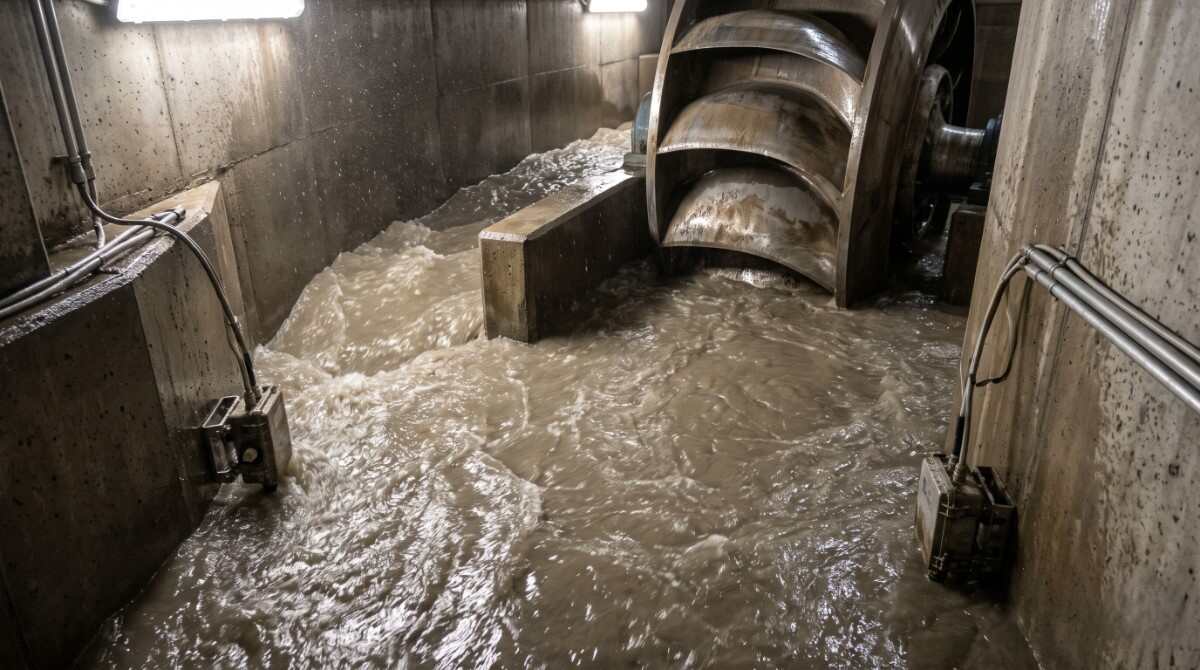
Sediment accumulation and turbine abrasion represent two of the most significant operational challenges for the global hydropower industry. In river systems with high suspended solid loads, the abrasive nature of silt and sand can cause rapid wear on turbine blades, leading to decreased efficiency and frequent, costly repairs.
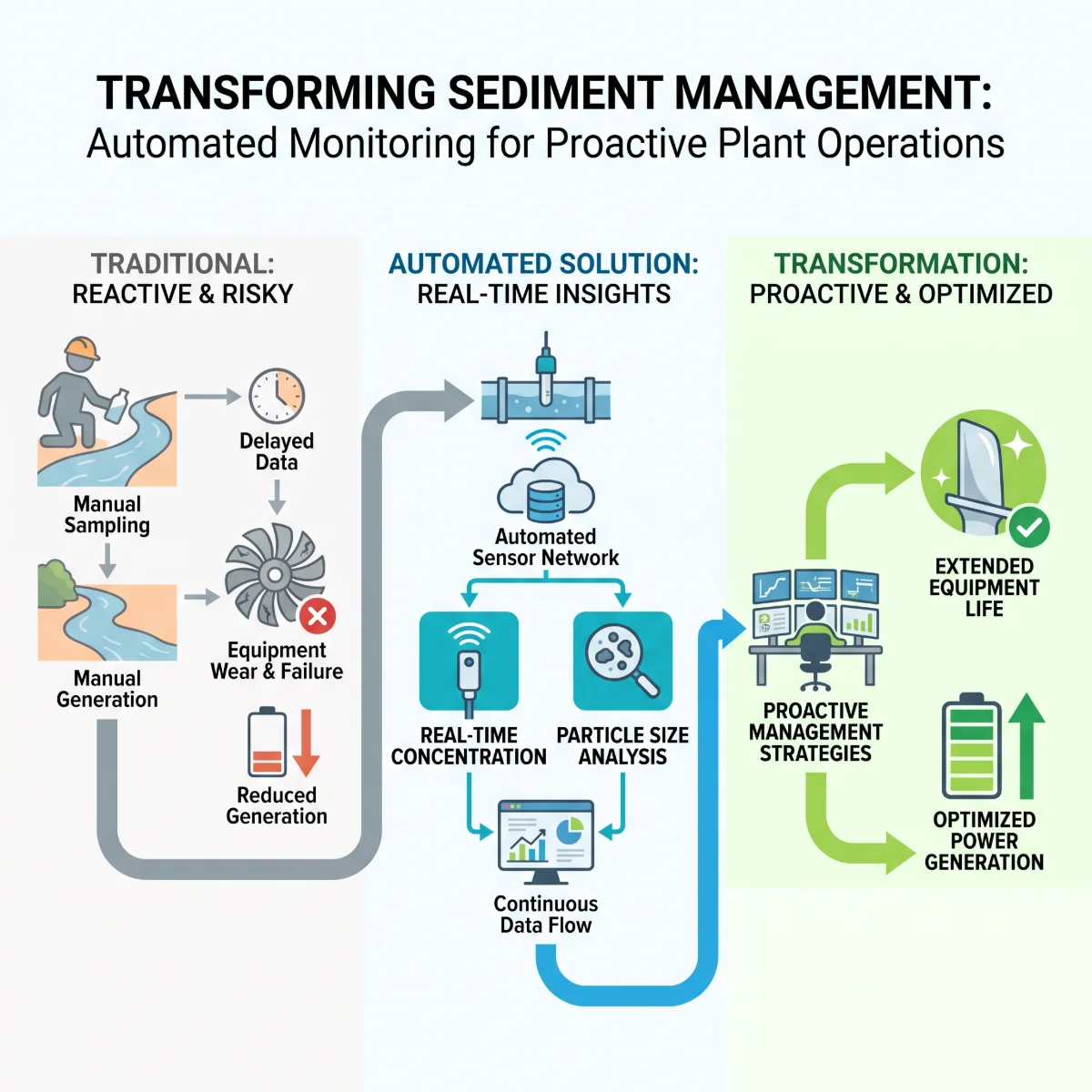
The adoption of automated sediment monitoring solutions is transforming how plant operators manage these risks. PowerGen Advancement notes that by providing real time data on sediment concentration and particle size, these systems allow for proactive management strategies that extend equipment life and optimize power generation.
The Role of Real Time Data in Turbine Preservation
Traditional methods of sediment monitoring often involve manual sampling and laboratory analysis, a process that is slow and cannot provide the immediate feedback needed for operational decision making. Modern automated sediment monitoring solutions use a variety of technologies, including acoustic, optical, and laser based sensors, to measure suspended solids continuously. These sensors are often installed at the water intake or within the desilting chambers to provide a constant stream of data to the plant’s control room.
High fidelity data from these sensors allows for better control of variable-speed hydropower units expanding operational flexibility by adjusting turbine rotation to compensate for changes in water density and sediment load. When sediment levels exceed safe thresholds, the system can automatically trigger a bypass or reduce the load to minimize impact. This level of automated response is essential for maintaining high performance in modern, digitally controlled hydroelectric facilities.
The integration of these monitoring systems into the plant’s wider digital twin architecture is a major trend in the industry. By combining sediment data with information on water flow and turbine vibration, operators can create a comprehensive picture of the plant’s health. This allows for predictive maintenance, where repairs are scheduled based on the actual condition of the equipment rather than on a fixed calendar. This approach significantly reduces downtime and maximizes the return on investment for the facility.
Leading Technology Providers and Recent Innovations
Major global companies in the industrial automation and water technology sectors are driving innovation in sediment monitoring:
- ABB: The power and automation company has broadened its digital portfolio with specialized water technologies, presenting its latest resilient monitoring solutions at the ENVEX 2025 exhibition. Designed for harsh operating conditions, ABB‘s systems provide continuous 24/7 cloud-based tracking to give plant managers global data access, uniting emissions monitoring with real-time water quality metrics to deliver an integrated overview of environmental impact.
- Xylem: The global water technology provider has advanced automated sediment monitoring through acoustic Doppler systems capable of concurrently measuring water velocity and suspended sediment concentration. Over the past two years, Xylem has reinforced the physical durability of its sensors against high pressure and abrasive wear, tailoring these solutions specifically for hydropower intakes in high-sediment environments such as the Himalayas and the Andes.
- Endress+Hauser: Specializing in precision measurement, the company deploys advanced optical sensors featuring multi-beam technology to gauge turbidity and suspended solids while compensating for lens fouling and component aging. Highlighted across several major European and Asian hydro facilities in 2025, these sensors optimize desilting basin management by detecting exact fill levels to trigger flushing cycles only when necessary, substantially cutting operational water waste.
Impact on Operational Efficiency and Maintenance Costs
The financial benefits of automated sediment monitoring are clear:
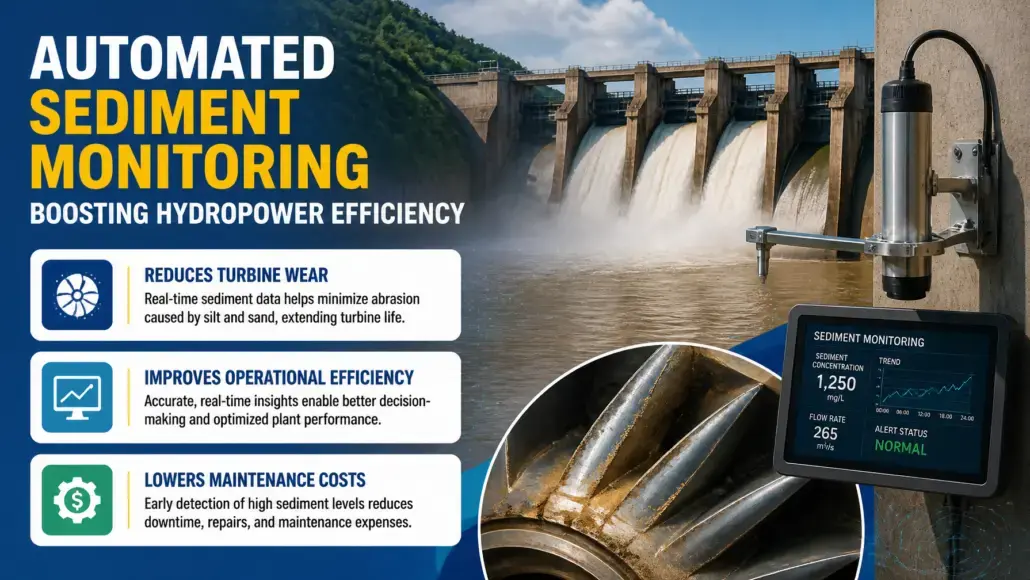
- Revenue generation and asset preservation: In utility-scale hydropower facilities, a mere 1% boost in efficiency translates to millions of dollars in recurring annual revenue. Automated protection systems prevent sediment-induced turbine erosion, sustaining peak operating efficiency over extended intervals, reducing the frequency of major overhauls, and substantially lowering the plant’s overall lifecycle cost of ownership.
- Lower maintenance costs and front-loaded design: Many studies have linked these monitoring systems to lower maintenance costs. These proven cost savings are prompting plant developers to integrate advanced monitoring instrumentation directly into greenfield engineering designs rather than executing expensive retrofits down the line.
- Workplace safety and structural integrity: Automated telemetry removes personnel from the hazardous conditions of manual water sampling during volatile high-flow events by providing real-time data remotely. Moreover, by catching component degradation early and averting catastrophic turbine failures, these systems protect the powerhouse and critical civil infrastructure from severe structural damage, reinforcing core operational safety and grid reliability.
Environmental Stewardship and Regulatory Compliance
Sediment management is not just a technical issue. It is also an environmental one. Rivers need a natural flow of sediment to maintain downstream ecosystems, including deltas and floodplains. When hydropower plants trap too much sediment, it can lead to downstream erosion and loss of habitat. Automated monitoring helps operators manage sediment flushing more effectively, ensuring that the timing and volume of released sediment mimic natural processes as closely as possible.
Regulatory agencies are increasingly requiring hydropower plants to monitor and report their sediment impact. In many countries, the renewal of an operating license is contingent on the plant demonstrating that it has a robust sediment management plan in place. Automated sediment monitoring solutions provide the verifiable data needed to satisfy these requirements. This transparency builds trust with regulators and local communities, which is essential for the long term social license to operate.
Future Directions in Sediment Monitoring Technology
PowerGen Advancement is of the opinion that the next generation of sediment monitoring technology will likely incorporate more advanced artificial intelligence and machine learning. By analyzing years of historical data, AI models could predict sediment spikes based on weather forecasts and upstream land use changes. This would give operators even more time to prepare for high sediment events, further reducing the risk of damage.
Collaboration between technology providers and research institutions is also essential for continued progress. The future of hydropower is digital, and automated sediment monitoring is one of the most important components of that digital future.
References
- “Renewables 2025” – International Energy Agency
- “Renewable Capacity Statistics 2025” – International Renewable Energy Agency
- “ABB to show innovative monitoring and water technologies at ENVEX 2025” – ABB
- “Real-time sediment monitoring in hydropower plants” – International Association for Hydro-Environment Engineering and Research (IAHR)
- “World Hydropower Outlook 2025” – International Hydropower Association