





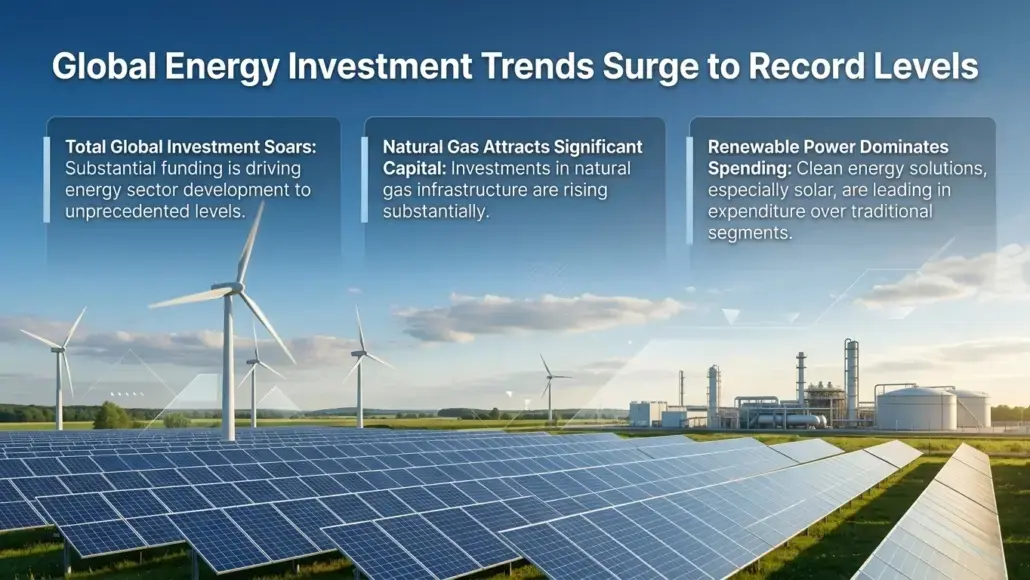
International Energy Agency recently forecasted global energy investment to climb to $3.4 trillion in 2026. This significant financial commitment reflects an urgent response by nations to address recurring energy crises. Of the total capital expenditure, $2.2 trillion is designated for electricity-related infrastructure, encompassing grids, storage, nuclear energy, wind, and solar projects. The remaining $1.2 trillion is allocated toward traditional oil, gas, and coal sectors.
Market dynamics show a clear divergence in fossil fuel spending. While crude oil investment is anticipated to decline for the third consecutive year, dropping to $500 billion despite geopolitical tensions in the Middle East, natural gas remains a critical priority. Investment in natural gas is projected to surge to $330 billion, marking the highest annual total in a decade.
Simultaneously, the transition toward cleaner energy continues to gain momentum under the jump in global energy investment. Renewable power investments are expected to reach $665 billion, with solar power spending alone forecasted to hit $365 billion by 2026. This transition highlights a structural move toward diversifying energy sources to ensure long-term stability.
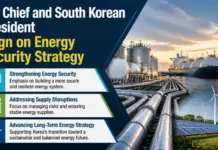
“We are in the midst of the largest energy security crisis the world has ever faced – and I believe this will reshape investment strategies globally, with parallels to the major changes the energy world witnessed after the oil shocks of the 1970s,” said IEA’s secretary-general Fatih Birol.
“We are already seeing intensified efforts by both producer and consumer countries to diversify trade routes and energy sources – such as advancing new pipelines and other supply infrastructure, on the one hand, and turning more to domestically available resources, on the other,” Birol added.
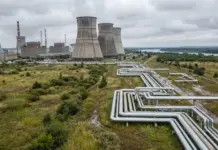
Examples of this strategic pivot include the growing interest in Canadian energy assets and infrastructure projects in the United Arab Emirates. The national oil company, ADNOC, has initiated plans to double the capacity of its oil pipeline to Fujairah, a move designed to enhance supply chain resilience by bypassing the Strait of Hormuz. These developments underscore the ongoing commitment to securing energy flows amidst an increasingly volatile global landscape, with global energy investments to increase for energy security.