






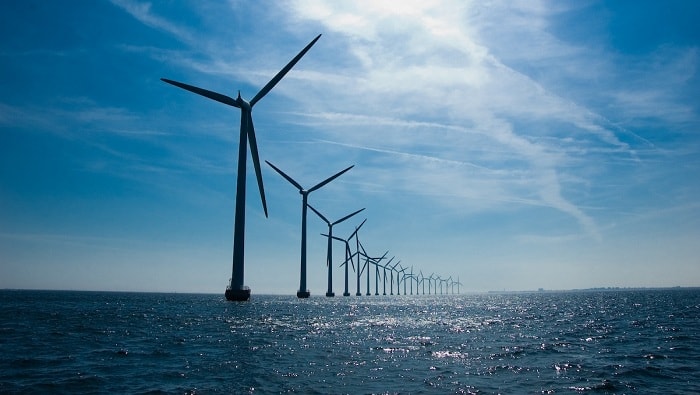




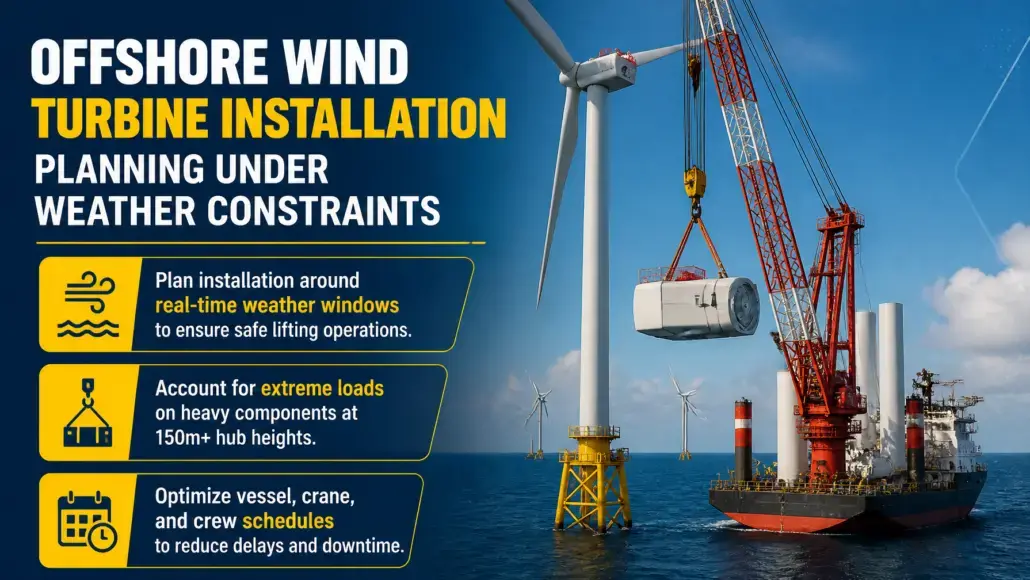
Installing modern offshore wind turbines involves lifting some of the heaviest, most aerodynamically sensitive structures ever built in open ocean waters. With current commercial turbine ratings reaching fifteen megawatts and rotor diameters exceeding two hundred and thirty meters, individual nacelles can weigh over eight hundred tonnes, while single blades extend beyond one hundred and fifteen meters. Operating giant cranes at hub heights of one hundred and fifty meters above sea level leaves virtually no margin for error when managing high wind gusts and unpredictable oceanic swells.
Offshore wind installation planning governs the deployment of multi-million-dollar vessel spreads operating under tight meteorological and oceanographic constraints. Specialized wind turbine installation vessels command daily charter rates that frequently exceed three hundred and fifty thousand dollars. When adverse weather halts offshore assembly, vessel standby fees can rapidly accumulate millions of dollars in project cost overruns. In severe cases, unexpected gust fronts during a critical lift can cause uncontrolled blade oscillations, risking catastrophic structural collisions with crane booms or tower sections.
PowerGen Advancement observes that as developers build projects farther from sheltered coastlines and in deeper waters with harsher wave climates, reliance on static seasonal averages is no longer sufficient. Precision installation planning must bridge high-resolution metocean forecasting, real-time hydrodynamic vessel motion simulations, and specialized crane stabilization hardware.
Metocean Limits and Critical Vessel Motion Thresholds
Every phase of turbine installation has distinct environmental limits defined by significant wave height, wave period, current velocity, and wind speed at varying working elevations:
- Jack-up leg transit and seafloor positioning require significant wave heights below one point five meters to prevent excessive spudcan impact loads on the seabed.
- Monopile and foundation lowering demand calm sea states to prevent dynamic motion amplification through crane hoisting wires.
- Tower section lifting is sensitive to mid-elevation wind shear, with typical allowable wind thresholds capped around twelve meters per second.
- Nacelle positioning on the upper tower flange requires sustained wind speeds below ten meters per second to ensure precise bolt alignment.
- Single-blade lifting operations represent the most weather-constrained activity, often restricted to wind speeds below eight to nine meters per second due to the massive sail area of modern aerodynamic blades.
Exceeding these limits risks equipment damage and threatens marine crew safety. Furthermore, wave period is as critical as wave height. Long-period ocean swells can induce resonant pitching and rolling in jack-up vessels during leg lowering or jacking down, generating extreme dynamic bending moments in vessel legs before they achieve stable penetration in the seafloor.
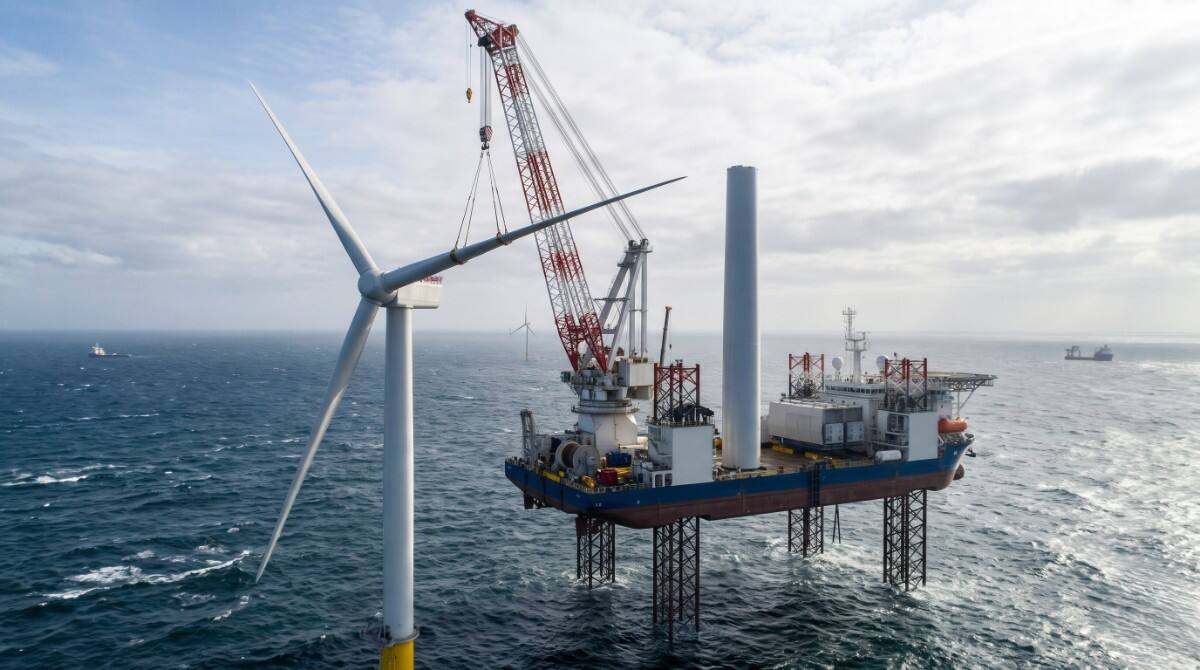
Cadeler took delivery in 2025 of its next-generation installation vessel, Wind Peak, designed specifically to operate in harsher metocean regimes. Built with a crane capacity of two thousand five hundred tonnes and an advanced hybrid propulsion system, the vessel handles fifteen-to-twenty-megawatt turbine components in deeper waters. Its sophisticated dynamic positioning system and lengthened jacking legs allow the vessel to navigate higher swell thresholds during site approach and leg deployment, expanding workable seasonal installation windows across northern European waters.
Geotechnical stability during vessel positioning represents another critical operational hurdle. When a self-elevating wind turbine installation vessel approaches an offshore location, lowering its massive steel legs onto the seabed subjects the seafloor to immense localized pressures. In layered sediments where soft silts overlie hard sand or clay, vessels face the dangerous risk of punch-through, where one leg suddenly breaks through a brittle crust and sinks rapidly into softer underlying strata. Marine engineering teams must conduct site-specific soil analyses and rigorous leg pre-loading procedures to ensure stable platform elevation before lifting operations begin.
Predictive Weather Analytics and Operational Window Modeling
Traditional marine operations relied on regional weather bulletins that lacked spatial and temporal resolution for specific offshore lease blocks. Today, offshore wind installation planning utilizes high-resolution atmospheric models combined with real-time metocean buoys and downscaling algorithms.
Statistical persistence modeling has been replaced by probabilistic weather forecasting. Instead of relying on a binary go or no-go forecast, marine warranty surveyors and offshore installation managers analyze ensemble weather forecasts. These models run dozens of atmospheric simulations simultaneously to calculate the statistical probability of a stable weather window lasting the exact duration of a planned installation cycle.
Key components of modern operational modeling include:
- High-precision LiDAR systems installed on vessel bridges that measure wind velocity, shear, and turbulence profiles up to three hundred meters above sea level in real time.
- Hydrodynamic digital twin simulations that translate incoming wave spectra into real-time vessel roll, pitch, and crane boom tip motions.
- Discrete event simulation software that models complex multi-vessel supply chains, identifying bottlenecks between coastal marshalling ports and offshore installation spreads.
- Automated downtime prediction algorithms that incorporate historical decadal metocean data to establish realistic project completion schedules.
Fred. Olsen Windcarrier implemented cloud-based metocean routing and operational simulation platforms across its installation fleet in 2025. By integrating real-time telemetry from offshore wind lidar buoys with predictive vessel response amplitude operators, the platform calculates safe lifting windows up to seventy-two hours in advance with greater accuracy than conventional forecasts, reducing vessel standby hours by an estimated twelve percent during peak construction campaigns.
Mechanical Innovation in Crane Stabilization and Lifting Systems
Even with advanced forecasting, sudden localized wind gusts can develop during an offshore lifting sequence. To mitigate atmospheric vulnerability, heavy-lift crane manufacturers and offshore contractors have developed active mechanical stabilization systems that maintain structural control during component installation.
Active blade grippers and dynamic yoke systems hold blades securely during transit from the vessel deck to the rotor hub. These yokes use hydraulic tensioning arms and high-friction contact pads to suppress aerodynamic fluttering, allowing cranes to execute blade attachments in wind speeds that would otherwise halt manual tagline operations. Automated tugger winch lines equipped with active heave compensation counteract vessel motion and wind sway, ensuring millimetric alignment between the blade root and the pitch bearing.
DEME Group deployed specialized motion-compensated lifting yokes and automated tagline guidance systems during its 2025 North Sea offshore installation campaigns. The technology stabilizes fifteen-megawatt blades against lateral wind turbulence during the final mating phase, safely lifting the operational weather ceiling from eight point five meters per second to nearly eleven meters per second. This improvement unlocks dozens of additional workable installation hours during spring and autumn construction schedules.
DNV updated its marine warranty surveying standard DNV-ST-N001 in 2025, providing updated guidance on dynamic lifting factors and vessel motion criteria for ultra-large turbine installations. The revised standard acknowledges advanced active motion compensation technologies, enabling marine warranty surveyors to approve lifts under slightly higher environmental thresholds when certified real-time motion monitoring systems are actively operational on site.
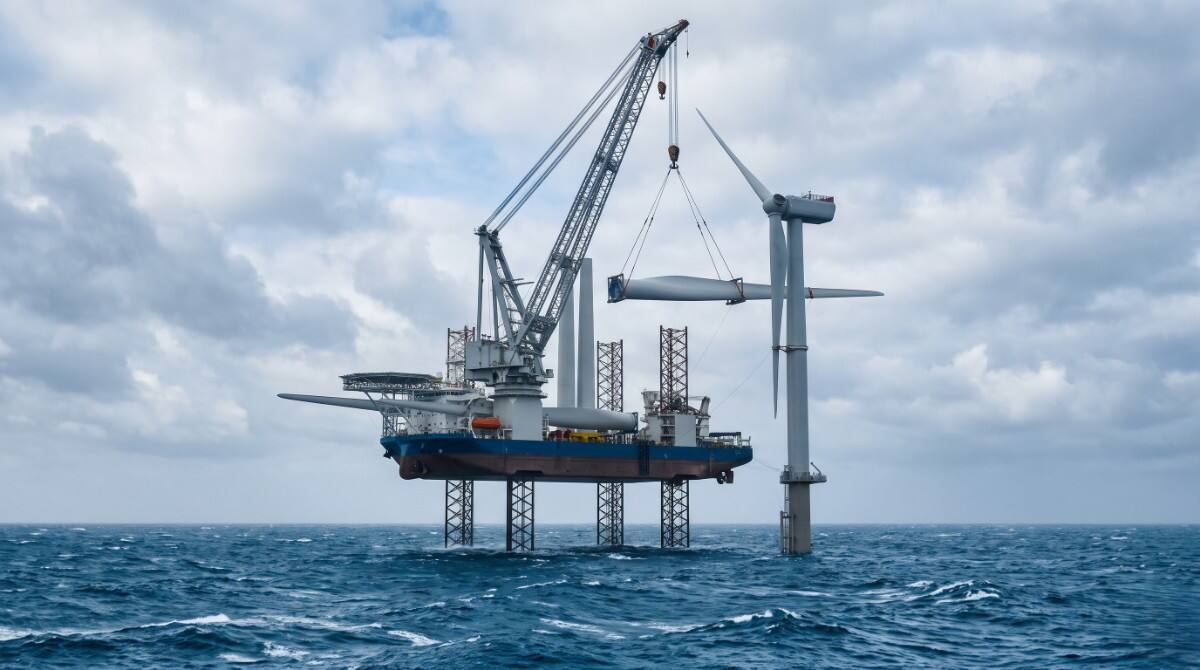
Turbine lifting operations form only one part of the offshore construction puzzle. While installation vessels maneuver above the waterline, cable installation spreads must operate simultaneously along the ocean floor. Coordinating these concurrent operations requires marine logistics teams to ensure that seabed trenching and subsea power cable placement proceed without disruption, directly linking topside crane logistics with offshore wind cable burial risk and seabed protection strategies to secure critical transmission lines against hydrodynamic scouring and marine hazards.
Digital coordination across maritime supply chains has become essential for managing weather-constrained project schedules. A standard turbine installation campaign coordinates dozens of specialized vessels, including crew transfer vessels, tugboats, guard vessels, and feeder barges transporting pre-assembled tower sections from port. When an incoming gale forces heavy-lift cranes to pause, operations planners must immediately adjust the sailing schedules of feeder vessels to prevent quayside congestion and optimize offshore bunkering logistics. Advanced marine enterprise resource planning platforms track fleet positions and vessel fuel efficiencies, helping project managers reschedule marine operations dynamically.
Fleet Capabilities and Strategic Port Infrastructure
PowerGen Advancement notes that as turbine components continue to scale, global offshore installation capacity faces physical bottlenecks in vessel dimensions and harbor infrastructure. Many older installation vessels cannot jack up in water depths exceeding fifty meters or lack the crane hook height required to install nacelles sitting one hundred and sixty meters above the waterline.
Jan De Nul Group expanded its offshore heavy-lift fleet in 2025, deploying ultra-large vessels engineered to install monopiles weighing up to three thousand tonnes and next-generation turbine platforms. At the same time, regional marshalling ports in northern Europe, the United States East Coast, and East Asia are deepening quayside berths and strengthening quay load-bearing capacities to handle pre-assembly staging. Collaborative industrial planning between port authorities, installation vessel owners, and wind turbine manufacturers remains essential to expanding operational weather envelopes and delivering commercial offshore wind projects on schedule.
References
- “Renewable Power Generation Costs in 2024 and 2025” – International Renewable Energy Agency
- “Marine Operations and Marine Warranty Standard DNV-ST-N001” – DNV
- “Operational Performance Report Next-Generation Installation Vessels” – Cadeler
- “Predictive Weather Window Analytics in Offshore Wind Construction” – Fred. Olsen Windcarrier
- “Advanced Lifting and Motion Compensation in Offshore Construction” – DEME Group
- “Heavy-Lift Offshore Vessel Capabilities and Global Fleet Review” – Jan De Nul Group