





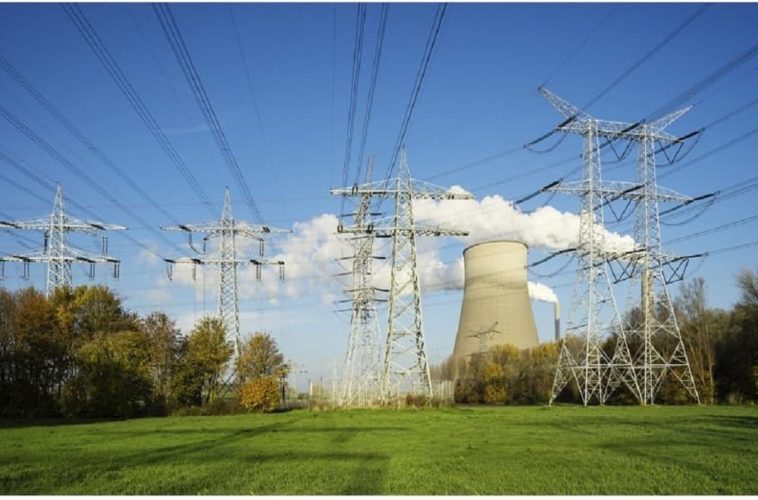



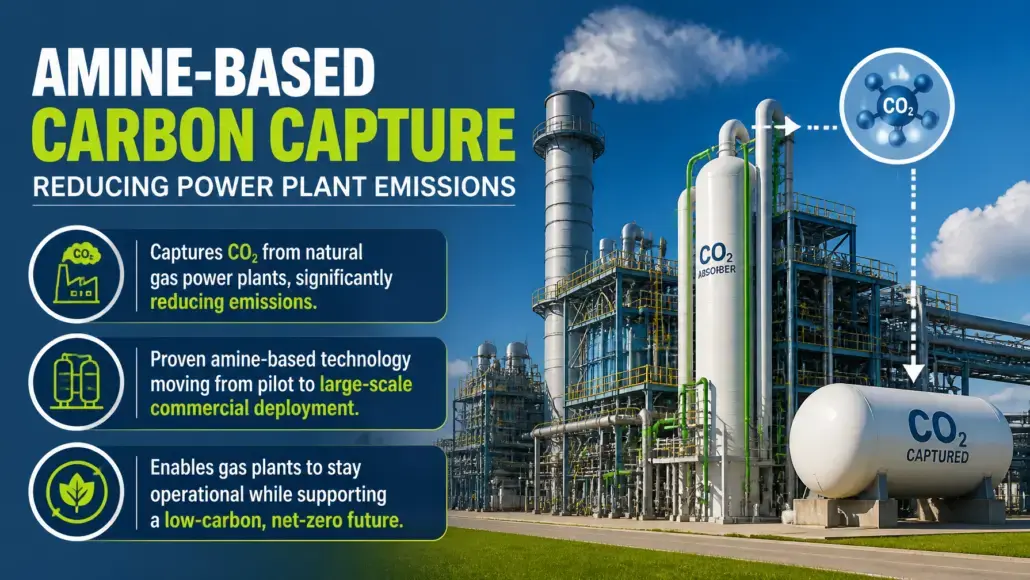
As global energy systems transition toward net zero, the role of natural gas in the power mix is under intense scrutiny. While combined cycle gas turbine facilities are significantly cleaner than coal, they still represent a major source of carbon dioxide emissions. Amine based carbon capture scaling has moved from the pilot phase into large scale commercial deployment in 2025 and 2026, offering a viable pathway for gas plants to remain operational in a carbon constrained world. This technology utilizes liquid solvents to absorb carbon dioxide from flue gases, providing a highly efficient method for reducing the environmental impact of thermal generation.
PowerGen Advancement observes that the challenge for the industry lies not just in the chemistry of the capture process but in the integration and scaling of these systems within existing and new power plants. Modern combined cycle plants are designed for high efficiency and flexibility, and adding a carbon capture unit requires a sophisticated balance of heat and power. By utilizing waste heat from the turbine exhaust to regenerate the amine solvent, operators can minimize the energy penalty associated with the capture process.
Chemical Innovations and Solvent Performance
The effectiveness of amine based carbon capture scaling depends largely on the properties of the solvent being used. In 2026, a new generation of advanced amines has entered the market, offering higher absorption rates and better resistance to degradation. These improvements are critical for reducing the size of the capture equipment and lowering the operational costs over the life of the plant. Manufacturers are now focusing on solvents that require less heat for regeneration, which directly improves the overall thermal efficiency of the facility.
Research published by the International Energy Agency (IEA) in early 2026 highlights that the cost of carbon capture has decreased by nearly 15 percent over the last two years due to these chemical advancements. Furthermore, the development of solid sorbents and hybrid systems is beginning to complement traditional liquid amine processes, providing more options for different plant configurations. The ability to handle varying concentrations of carbon dioxide in the flue gas is also a major focus, as plants increasingly shift toward flexible load following operations.
Scaling Infrastructure and Supply Chain Logistics
Moving from megawatt scale pilots to gigawatt scale commercial units requires a massive expansion of the carbon capture supply chain. This involves not only the capture equipment itself but also the transport and storage infrastructure needed to handle millions of tonnes of carbon dioxide. In 2025, several major industrial hubs in Europe and North America reached final investment decisions on shared CO2 pipelines, which will significantly lower the barrier to entry for individual power plants.
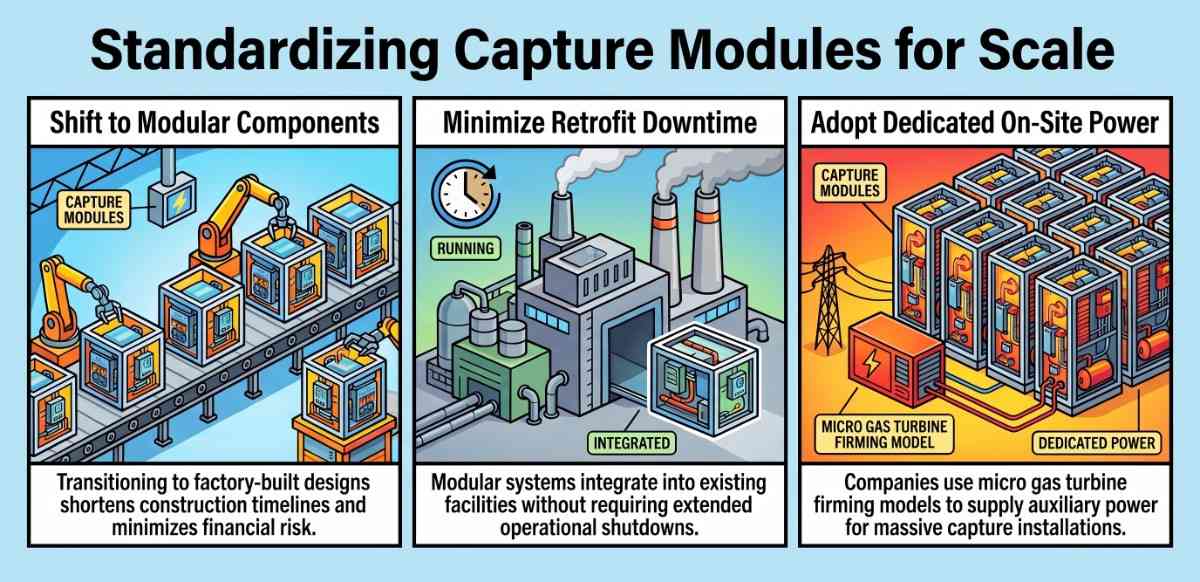
The scaling process also involves the standardization of capture modules:
- Shift to modular components: Transitioning from custom-built systems to modular, factory-built designs shortens construction timelines and minimizes financial risk.
- Minimized retrofit downtime: Modular systems allow existing facilities to integrate capture technology without requiring extended operational shutdowns.
- Dedicated on-site power: Companies are increasingly adopting micro gas turbine firming models to supply the auxiliary power required to run massive capture installations.
Major Corporate Developments in Carbon Capture
The global leaders in power generation and chemical engineering have made significant strides in scaling amine based carbon capture technology during 2025 and 2026. These developments represent the cutting edge of the industry and provide a roadmap for future projects.
- Mitsubishi Power successfully commissioned a large scale amine based capture unit at a combined cycle plant in Japan in late 2025, achieving a capture rate of over 95 percent during initial testing.
- Shell announced the expansion of its CANSOLV technology in 2026, securing multiple contracts for new gas to power projects in the Middle East that will incorporate integrated carbon capture from the start.
- GE Vernova collaborated with a major European utility to demonstrate a full scale retrofit of an H class turbine facility, focusing on the dynamic integration of the capture system with the plant control loop.
- Aker Carbon Capture reached a milestone in 2026 with the delivery of its modular Just Catch units to several mid sized power facilities in the United Kingdom, proving the viability of smaller scale amine systems.
- TotalEnergies initiated a massive carbon storage project in the North Sea in 2025, providing the necessary off take capacity for several planned capture projects at gas plants across Northern Europe.
Economic Viability and Regulatory Drivers
The deployment of amine based carbon capture scaling is heavily influenced by government policy and carbon pricing mechanisms. In 2026, the implementation of more stringent emissions standards in several major economies has made carbon capture a necessity rather than an option for new gas plants. Incentives such as tax credits in the United States and carbon contracts for difference in Europe have improved the bankability of these projects, attracting significant interest from private equity and infrastructure funds.
However, the cost of capture remains a significant factor in the dispatch order of power plants. Facilities equipped with CCS may have higher operational costs than those without, unless carbon prices are high enough to bridge the gap. Utilities are working closely with regulators to develop new market structures that recognize the value of low carbon dispatchable power, ensuring that these plants can compete effectively in the wholesale electricity market.
Technical Challenges of Solvent Regeneration
The regeneration of the amine solvent is the most energy intensive part of the capture process. It requires a significant amount of low pressure steam, which is typically extracted from the steam turbine cycle. This extraction reduces the electrical output of the plant, creating what is known as the energy penalty. In 2026, engineers are implementing innovative heat integration strategies to mitigate this loss.
One approach involves using heat pumps to upgrade low grade waste heat from the cooling water system, providing a portion of the energy needed for regeneration. Another trend is the use of solar thermal energy to supplement the steam supply, creating a hybrid power and capture facility. These innovations are essential for making amine based carbon capture scaling a practical solution for the broad spectrum of gas fired power plants currently in operation.
The Path Forward for Carbon Neutral Gas Power
PowerGen Advancement believes that he future of the gas power industry is inextricably linked to the success of carbon capture technology. As we move closer to 2030, the expectation is that all new combined cycle plants will be built as carbon capture ready, with the necessary space and connections already in place. The continued scaling of amine technology will drive down costs and improve performance, making it a standard feature of the global energy landscape.
Integration with other low carbon technologies, such as hydrogen blending and bio methane, will further enhance the environmental profile of these plants. By combining capture with these cleaner fuels, it is possible to achieve near zero or even negative emissions in some cases.
The dedication of global energy companies to perfecting these systems ensures that natural gas will continue to provide the reliable, dispatchable power the world needs while meeting the urgent requirements of the climate crisis. This technical progress is essential for maintaining the stability of the global energy market during the transition to a low carbon economy. By investing in the continuous improvement of capture technology, the industry is providing a clear pathway to a sustainable future for gas fired power generation.
References
- Global Status of CCS 2025 Report – Global CCS Institute
- Energy Technology Perspectives 2026 – International Energy Agency
- Shell CANSOLV Technical Update 2026 – Shell
- Mitsubishi Power CCS Project Portfolio – Mitsubishi Power
- Aker Carbon Capture Annual Progress Report 2026 – Aker Carbon Capture