













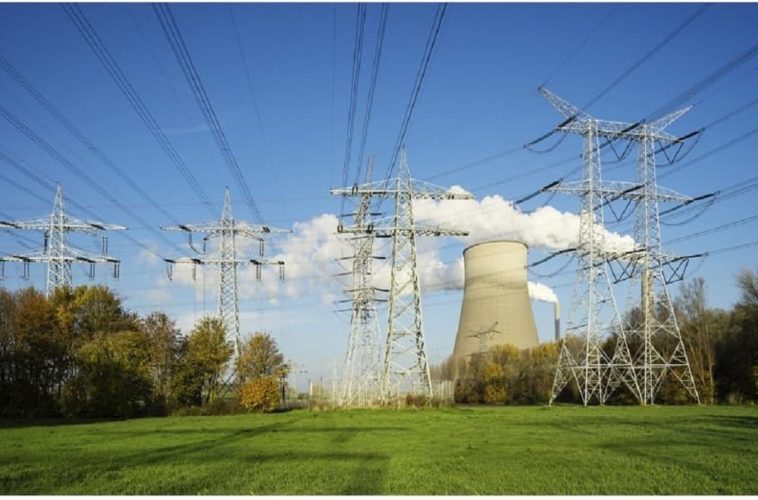







The transition from coal to natural gas remains one of the most effective ways for the global power sector to achieve immediate and significant reductions in carbon emissions. While renewable energy is growing at a record pace, the need for reliable, dispatchable baseload power ensures that thermal generation will continue to play a vital role for the foreseeable future. PowerGen Advancement observes that coal to gas transition strategies have become a central pillar of corporate sustainability plans for major utilities in 2026, allowing them to leverage existing infrastructure while dramatically lowering their environmental footprint.
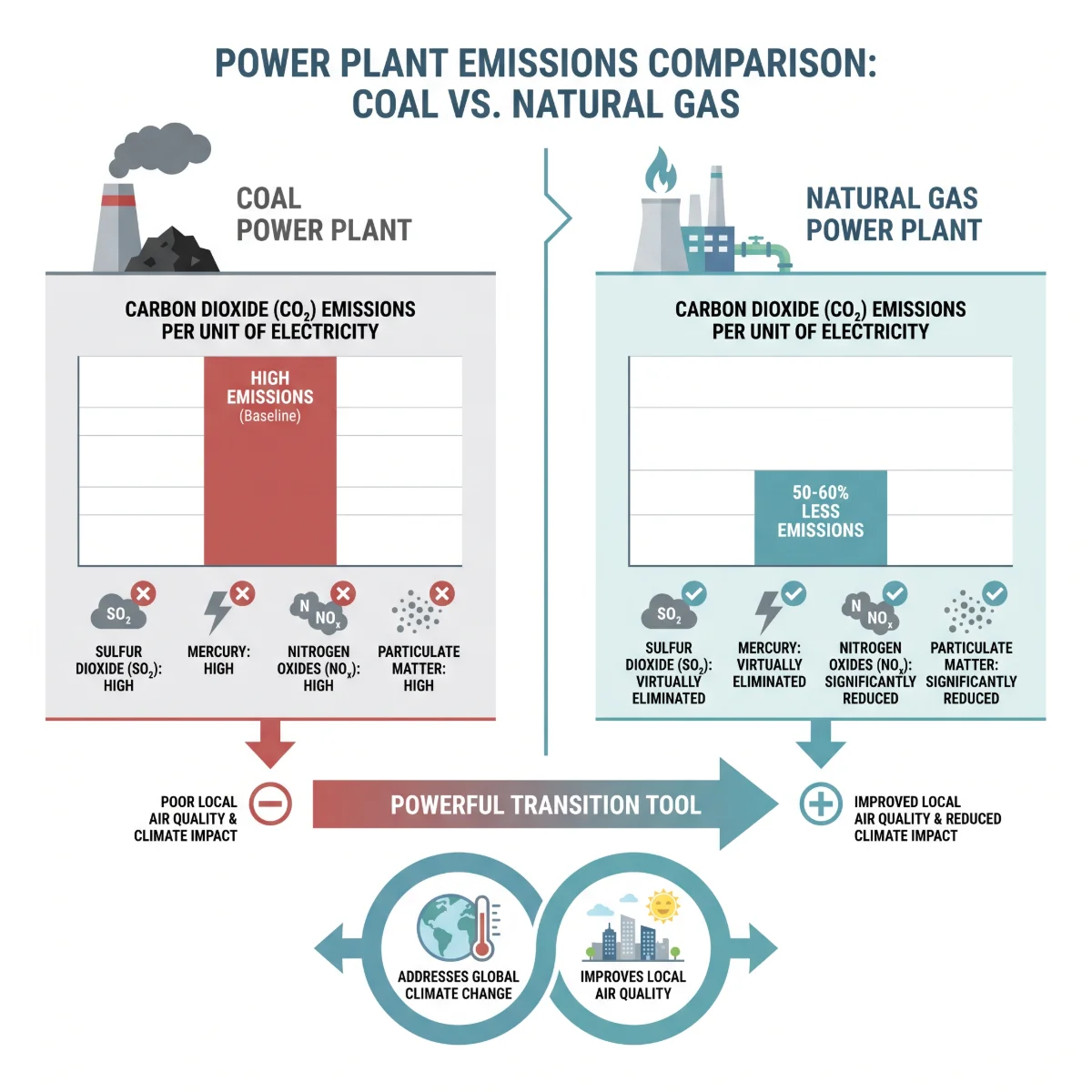
Natural gas power plants emit approximately 50 to 60 percent less carbon dioxide than coal plants per unit of electricity generated. They also virtually eliminate emissions of sulfur dioxide and mercury, while significantly reducing nitrogen oxides and particulate matter. This makes the transition a powerful tool for improving local air quality as well as addressing global climate change.
By repurposing the sites of retired coal plants, utilities can also preserve local jobs and utilize existing transmission connections, which are increasingly difficult and expensive to build from scratch.
Technical Pathways for Fleet Conversion
There are several distinct technical approaches to coal to gas transition strategies, depending on the age and condition of the existing coal fleet. The most common method involves the complete decommissioning of coal boilers and the installation of new, high efficiency gas turbines in a combined cycle configuration. This approach maximizes the efficiency of the new plant, often reaching over 60 percent, compared to the 30 to 40 percent efficiency of the old coal units.
Another strategy is the repowering of existing coal fired steam turbines by adding a gas turbine and a heat recovery steam generator (HRSG). This allows the utility to continue using the steam turbine and electrical generator from the original plant, which can significantly reduce the capital cost of the project.
In 2026, we are seeing an increase in modular gas turbine grid resilience solutions being integrated into these conversion projects to provide additional flexibility during the construction phase. To support the grid during these massive transitions, utilities are increasingly relying on modular gas turbine grid resilience solutions to provide temporary stability.
Economic and Financial Drivers for Transition
The economic case for coal to gas transition has strengthened in 2026, driven by a combination of carbon pricing, falling gas turbine costs, and the rising expense of maintaining aging coal facilities. In many regions, the total cost of electricity from a new gas plant is now lower than the cost of continuing to operate an old coal plant, especially when carbon taxes are taken into account. Financial institutions are also increasingly reluctant to fund coal related projects, making natural gas a more bankable alternative for utilities.
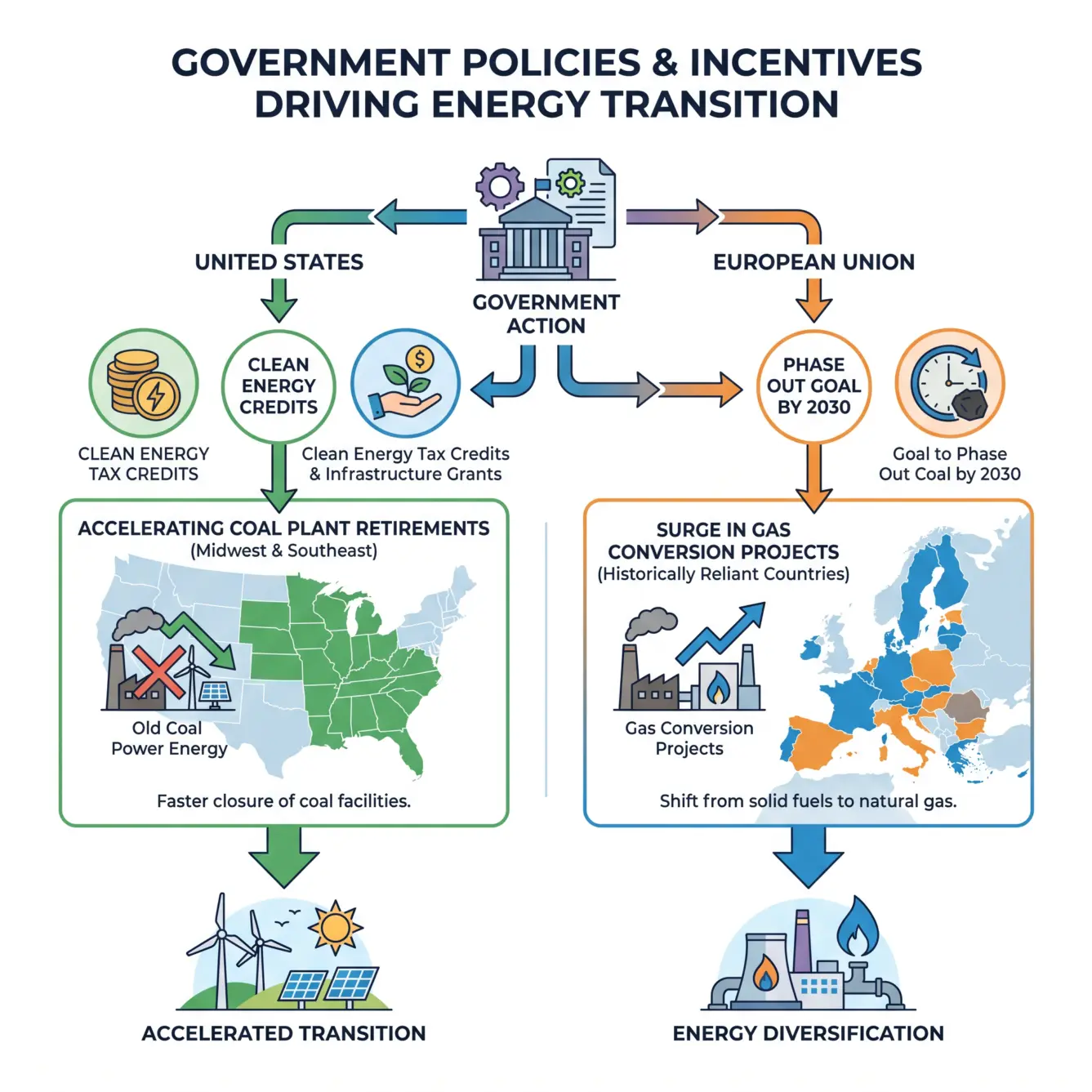
Government policies and incentives are also playing a crucial role:
- United States: Clean energy tax credits and infrastructure grants are accelerating coal plant retirements across the Midwest and Southeast.
- European Union: The goal to phase out coal by 2030 is driving a surge in gas conversion projects across countries historically reliant on solid fuels.
Leading Corporate Initiatives and Repowering Projects
Major global power technology companies are at the forefront of the coal to gas transition, providing the advanced turbines and engineering expertise needed to execute these complex projects. The following developments in 2025 and 2026 highlight the scale and diversity of these initiatives.
- GE Vernova secured a major contract in late 2025 to supply its 9HA.01 gas turbines for the conversion of the Kozienice Power Station in Poland. This project is one of the largest coal to gas transitions in Europe and will significantly reduce the country’s carbon intensity.
- Siemens Energy announced in 2026 that it had successfully completed the repowering of a large coal facility in the United States, utilizing its SGT-800 turbines to boost efficiency while cutting emissions by over 55 percent.
- Mitsubishi Power launched a new series of standard transition packages in 2026, designed to accelerate the conversion of medium sized coal plants in Southeast Asia by providing pre engineered modules for gas turbine integration.
- Enel and RWE have both expanded their coal retirement schedules in 2025, committing to repurposing multiple sites across Italy and Germany into high efficiency gas and hydrogen ready facilities.
- Ansaldo Energia returned to the market with a focus on flexible gas solutions for coal repowering, securing a series of contracts in Southern Europe for its GT36 series turbines in 2026.
The Role of Hydrogen Readiness in Long-Term Strategy
A critical component of modern coal to gas transition strategies is ensuring that new gas plants are ready for the future. In 2026, almost every new gas turbine being installed is designed to burn a significant percentage of hydrogen, with a clear roadmap to 100 percent hydrogen operation. This prevents these assets from becoming stranded in a future where even natural gas may be phased out.
Utilities are also exploring the integration of carbon capture and storage (CCS) with their new gas plants. By building capture ready facilities, they can ensure that their fleet remains compliant with even the most stringent future emissions regulations. The combination of coal to gas transition, hydrogen blending, and CCS provides a multi stage pathway to truly zero carbon thermal generation.
Strategic Planning and Risk Management
Implementing a fleet wide transition is a massive undertaking that requires careful strategic planning. Utilities must balance the need for rapid decarbonization with the requirement to maintain grid reliability and affordable electricity for their customers. This involves managing the timing of coal retirements to ensure that enough replacement capacity is online to meet demand.
Fuel supply security is another major consideration:
- Supply vulnerability: The transition depends on a reliable, flexible natural gas supply that remains exposed to geopolitical and market volatility.
- Fuel diversification: Utilities are mitigating supply risks by investing in liquefied natural gas (LNG) infrastructure and biomethane production.
- Digital optimization: Advanced digital tools for market forecasting and asset management are becoming essential to optimize the operation of the new gas fleet.
The Future of Thermal Generation in a Low Carbon World
The coal to gas transition is not an end in itself but a vital bridge to a sustainable energy future. By significantly reducing emissions today, it buys the time needed for renewable energy and storage technologies to fully mature and scale. The expertise and infrastructure developed during this transition will also be foundational for the eventual shift to hydrogen and other carbon free gases.
As we look toward 2030 and beyond, PowerGen Advancement believes that the success of coal to gas transition strategies will be measured by their ability to deliver a stable, affordable, and increasingly clean energy supply. The commitment of global power companies to this transition ensures that the thermal fleet will continue to evolve, remaining a cornerstone of grid reliability in the 21st century.
References
-
“IEA Electricity 2026 Report” – International Energy Agency
-
“Global Status of Coal to Gas Transition 2025” – Wood Mackenzie
-
“9HA.01 Gas Turbine Project Portfolio” – GE Vernova
-
“Siemens Energy Transition Solutions Update 2026” – Siemens Energy
-
“Sustainability and Climate Progress Report 2026” – Enel