










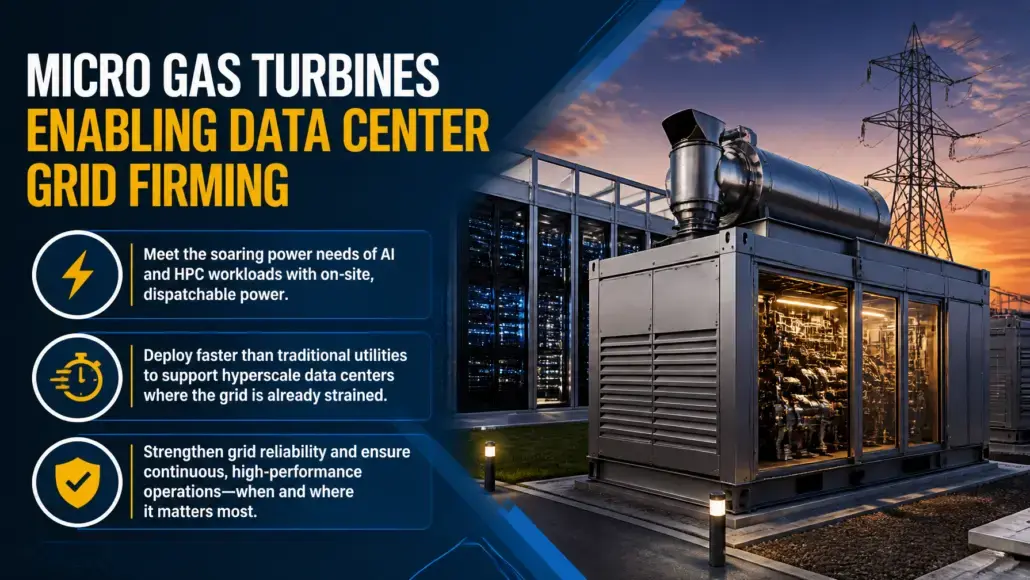
The rapid expansion of artificial intelligence and high performance computing has triggered an unprecedented surge in electricity demand. Hyperscale data centers are now requiring hundreds of megawatts of power to support the latest GPU architectures, often in locations where the existing grid infrastructure is already strained. Micro gas turbines have emerged as a critical solution for this challenge, providing on site, dispatchable power that can be deployed much faster than traditional utility grid connections. These small scale turbines offer the reliability and flexibility needed to support the sensitive and variable loads associated with AI training and inference.
Wait times for new grid interconnections have stretched to several years in many major data center hubs, creating a significant bottleneck for the industry. By installing micro gas turbines, operators can bring new capacity online in a fraction of the time, allowing them to meet the urgent needs of their customers. These units can operate as the primary power source or as a firming asset that complements renewable energy and battery storage, ensuring that the data center remains operational even during grid fluctuations or lulls in green power production.
Technical Advantages of Micro Turbine Technology
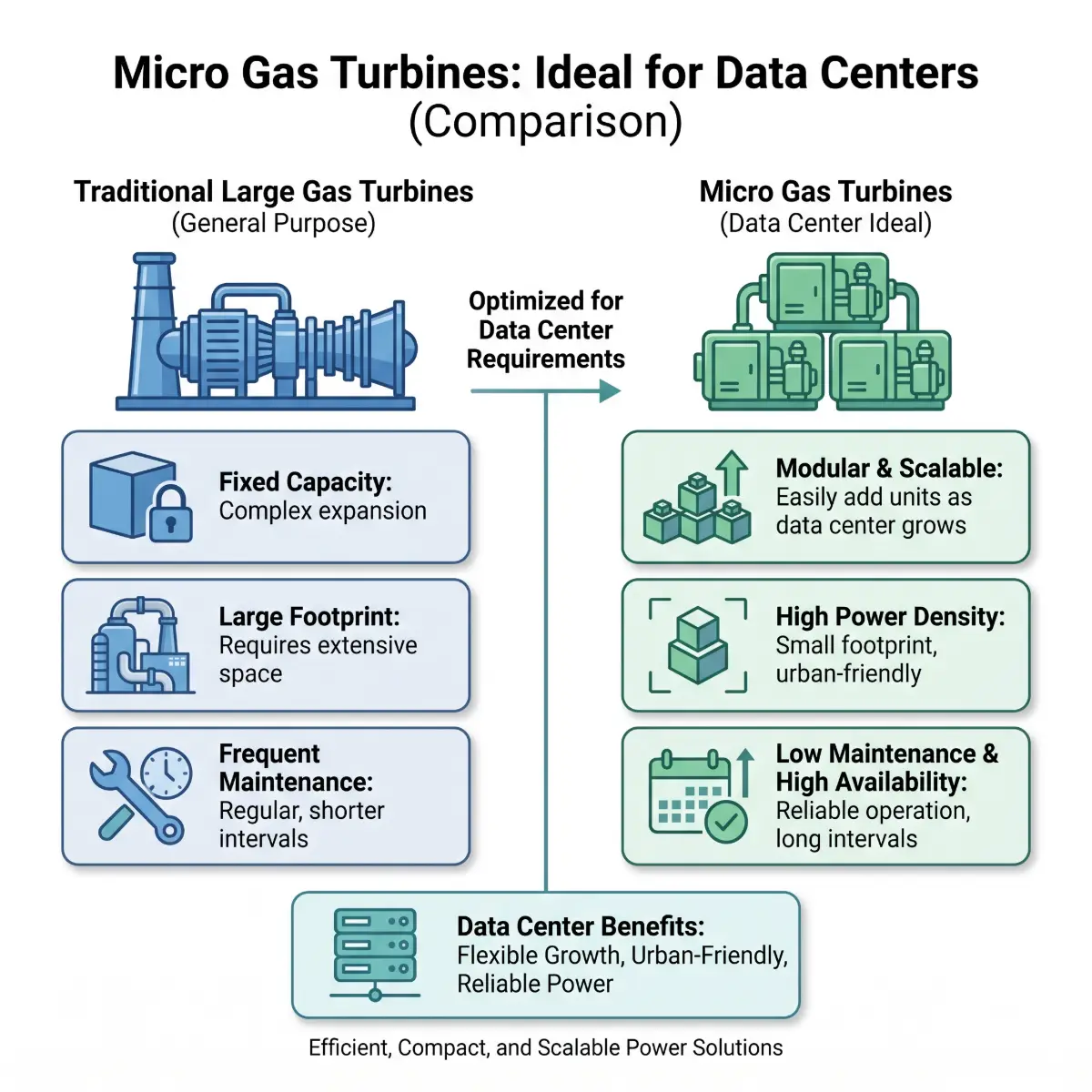
Micro gas turbines differ from their larger counterparts in several ways that make them ideal for data center environments:
- Modular and Scalable: Units can be easily added as the data center expands.
- High Power Density: Requires a relatively small physical footprint, making them ideal for urban or land-constrained locations.
-
Low Maintenance & High Availability: Designed to run reliably for thousands of hours between service intervals.
One of the most important technical features of micro gas turbines is the ability to handle rapid load swings. AI workloads can be highly variable, with power demand spiking during intense training runs and dropping during periods of lower activity. Micro turbines can ramp their output up or down in seconds, maintaining a stable frequency and voltage that protects sensitive server equipment. This transient response is often superior to that of large scale reciprocating engines or heavy duty gas turbines.
Overcoming Interconnection Delays with On-Site Power
The deployment of on site generation is no longer just about backup power. It is about speed to market. In 2025 and 2026, many of the world’s largest data center developers have shifted their strategy toward islanded or semi islanded operations. By generating their own power, they can bypass the multi year queues for transmission upgrades and start operations as soon as the building is ready.
This shift is supported by the development of integrated microgrid controllers that manage the balance between gas turbines, solar arrays, and battery systems. These controllers ensure that the most efficient and cost effective power source is used at any given time, while always maintaining the necessary redundancy for a tier three or tier four data center. The coal to gas transition in the broader utility sector is also helping to free up natural gas capacity for these distributed generation projects. The growth of these distributed solutions is occurring alongside large scale coal to gas transition strategies that are transforming the broader utility landscape.
Industry Leaders and Key Project Milestones
The market for small scale gas turbines has seen significant activity in 2025 and 2026, with major manufacturers securing large contracts from hyperscalers and colocation providers. These projects demonstrate the growing confidence in micro turbine technology for mission critical applications.
- Baker Hughes secured a marquee contract in mid 2025 to supply 16 of its NovaLT gas turbines for a major U.S. data center project. These units provide a total of 270 megawatts of capacity and are designed to run on 100 percent hydrogen in the future.
- GE Vernova expanded its aeroderivative and micro turbine offerings in 2026, focusing on mobile bridging units that can be deployed in just a few months to provide immediate relief for data centers facing power shortages.
- Siemens Energy formed a strategic alliance with a leading power management company in 2026 to offer modular, pre configured data center power packages that include SGT-A05 turbines and advanced switchgear.
- Caterpillar and its Solar Turbines division announced a new series of high efficiency modular gas turbines in late 2025, specifically optimized for the high ambient temperatures often found in data center cooling zones.
- Mitsubishi Power launched a new initiative in 2026 to combine its small gas turbines with synchronous condensers, providing the inertia and short circuit current needed to stabilize local grids near massive data center clusters.
Sustainability and the Path to Low Carbon Operations
While the immediate priority for many data center operators is reliability, they are also under pressure to meet aggressive sustainability goals. The use of natural gas in micro turbines is seen as a bridge toward cleaner fuels. In 2026, many new installations are being built with fuel flexible systems that can burn a mix of natural gas, bio methane, and hydrogen.
The high temperature exhaust from micro turbines can also be used in combined heat and power (CHP) configurations. In a data center, this waste heat can drive absorption chillers, providing a significant portion of the cooling needed for the server halls. This trigeneration approach can boost the overall energy efficiency of the site to over 80 percent, significantly reducing the carbon footprint compared to traditional grid power and mechanical cooling.
Strategic Planning for Future Capacity
For data center developers, the decision to invest in micro gas turbines involves a complex analysis of fuel availability, regulatory requirements, and long term power costs. The volatility of natural gas prices is a concern, but the high cost of data center downtime or delayed project launches often outweighs the fuel risks. Developers are increasingly securing long term gas supply contracts or investing in on site storage to mitigate these issues.
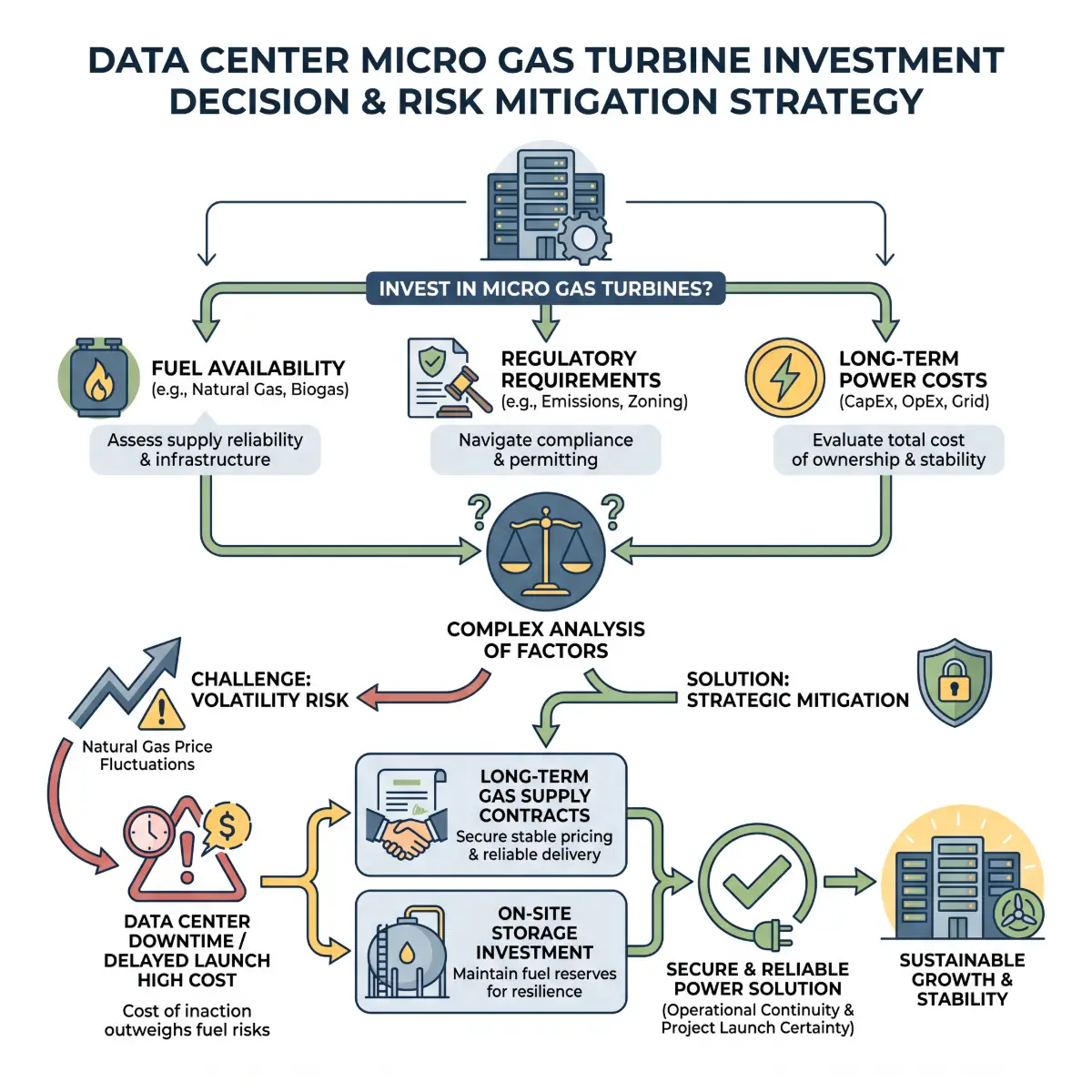
Looking forward to the late 2030s, the role of these turbines is expected to evolve from bridging power to a permanent part of the hybrid energy mix. As grid stability becomes more challenging due to the high penetration of renewables, the ability of data centers to provide their own firming will be a major competitive advantage. The expertise gained in managing these complex on site power systems will also be valuable for other industrial sectors facing similar energy challenges.
The Evolution of the Data Center Energy Model
The traditional model of relying solely on the utility grid for power is being replaced by a more resilient and distributed approach. Micro gas turbines are at the heart of this transformation, providing the flexibility and reliability that the AI era demands. The continuous improvement in turbine efficiency and emissions control will ensure that these systems remain a vital part of the global technology infrastructure for years to come.
As the industry continues to innovate, PowerGen Advancement believes that the industry can expect to see even smaller and more efficient turbines, as well as better integration with renewable energy sources. The goal is to create a truly sustainable and self sufficient data center that can support the rapid growth of digital services without putting undue strain on the environment or the public energy grid. This evolution of the data center power model is essential for the continued expansion of the digital economy in a resource constrained world. By embracing distributed generation and advanced optimization, the technology sector is leading the way toward a more resilient and sustainable future.
References
- “Energy and AI Special Report 2025” – International Energy Agency
- “Data Center Power Demand Outlook 2026” – Goldman Sachs Research
- “NovaLT Gas Turbine Product Announcement” – Baker Hughes
- “Siemens Energy Annual Report 2026” – Siemens Energy
- “Sustainability and Climate Progress Report 2026” – GE Vernova