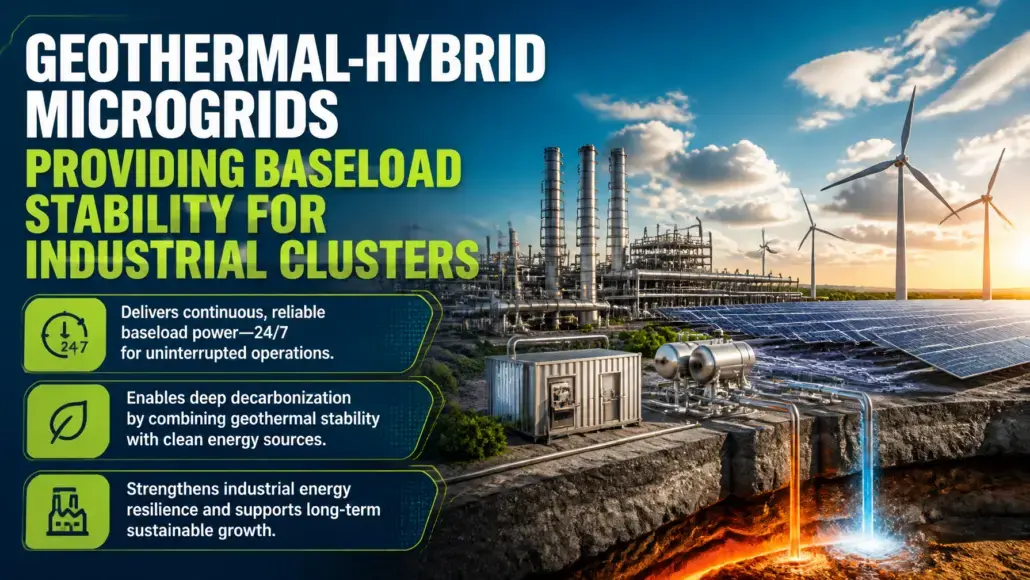
The global industrial sector is facing a dual challenge, that is, the urgent need to decarbonize production processes and the absolute requirement for reliable, 24/7 baseload power. While wind and solar energy have made significant strides, their inherent intermittency remains a major hurdle for industries that cannot afford even a momentary disruption in energy supply. PowerGen Advancement notes that the emergence of geothermal-hybrid microgrids represents a transformative solution to this problem, combining the constant and carbon-free energy of the Earth’s core with the flexibility and resilience of modern microgrid architectures. By providing a stable, renewable, and localized source of baseload power, these hybrid systems are enabling the sustainable growth of industrial clusters, from manufacturing hubs to high-density data centers, marking a new era in the fusion of geological science and electrical engineering.
Baseload Reliability and Waste Heat Utilization
Geothermal energy is unique among renewables in its ability to provide a consistent and predictable output, regardless of weather conditions or time of day. When integrated into a hybrid microgrid, geothermal power serves as the foundational anchor, providing a steady stream of baseload electricity that can be supplemented by other resources like solar, wind, or energy storage during peak demand periods. This combination allows for a high level of renewable penetration while maintaining the grid stability that industrial users require. Furthermore, the waste heat generated by geothermal power plants can be captured and used for industrial heating, cooling, or desalination, significantly improving the overall energy efficiency and economic viability of the cluster. The integration of geothermal-hybrid microgrids is also a vital step toward achieving long-term energy independence, as it utilizes a domestic and virtually inexhaustible resource.
Binary Cycle Systems and Closed-Loop Technology
The technical variety of geothermal systems includes dry steam, flash steam, and binary cycle plants. Binary cycle plants are particularly relevant for hybrid microgrids, as they can utilize lower-temperature resources by using a secondary working fluid with a lower boiling point than water.
This significantly expands the geographic potential of geothermal energy, allowing it to be deployed in regions that lack high-temperature volcanic activity. The expertise gained in managing these complex thermodynamic cycles is a key component of the industrial electrification movement. As the technology matures, we are seeing a shift toward closed-loop systems, where the working fluid is entirely contained within the piping, eliminating the need for fluid extraction from the reservoir and reducing the environmental impact.
Deep-Well Telemetry and Machine Learning Reservoir Optimization
Furthermore, the integration of deep-well monitoring is a major trend in geothermal reservoir management. By placing high-temperature, high-pressure sensors directly into the production wells, engineers can monitor the state of the reservoir in real-time, optimizing the flow rates and preventing issues like scaling or thermal drawdown. The data generated by these sensors is essential for maintaining the long-term productivity and sustainability of the geothermal resource. This technical synergy between geological sensing and electrical control is a hallmark of modern geothermal-hybrid systems. The data from these sensors is also being used to train machine learning models that can predict the long-term behavior of the reservoir, providing valuable insights for future expansion.
Commercial Deployment: The Western North American EGS Milestone
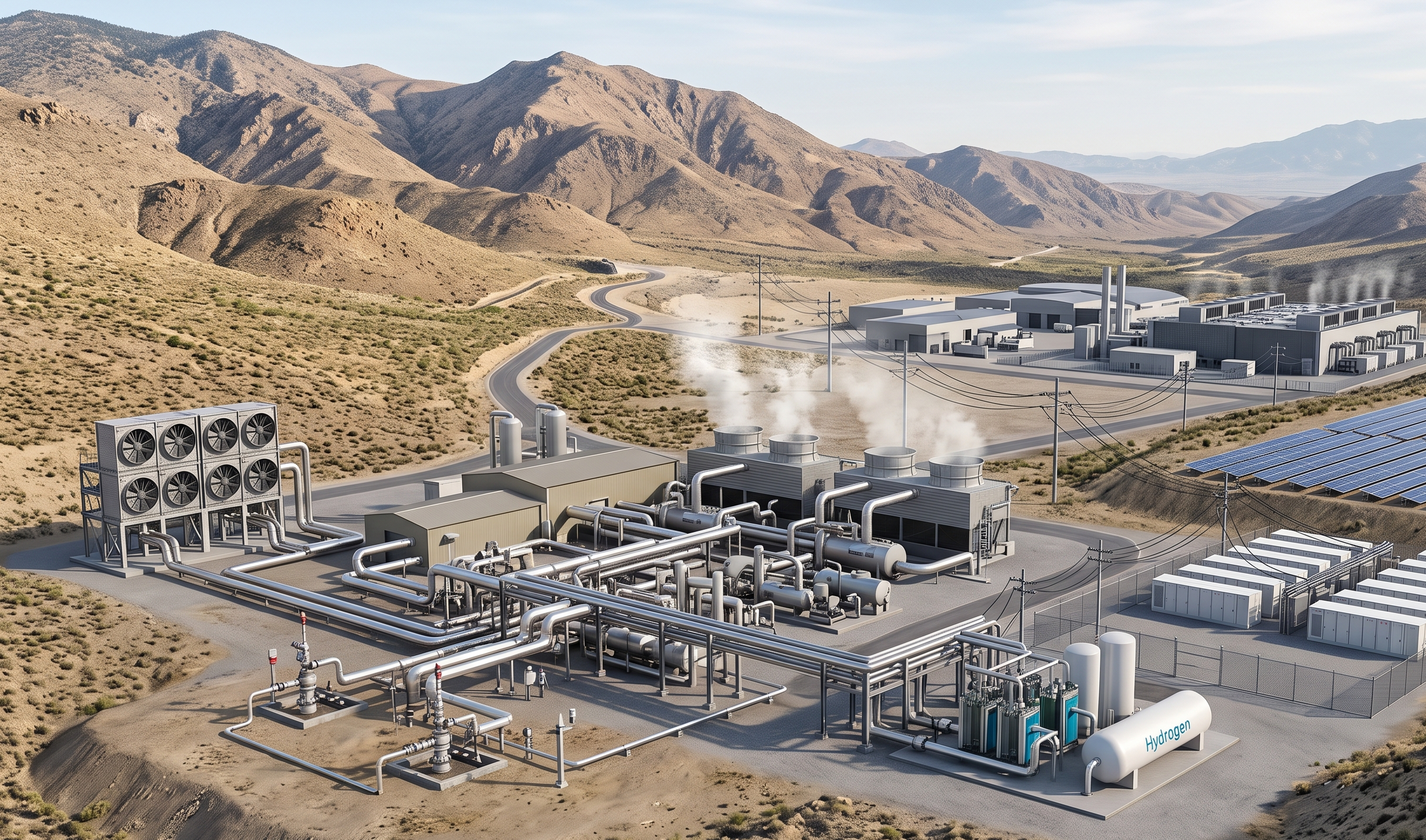
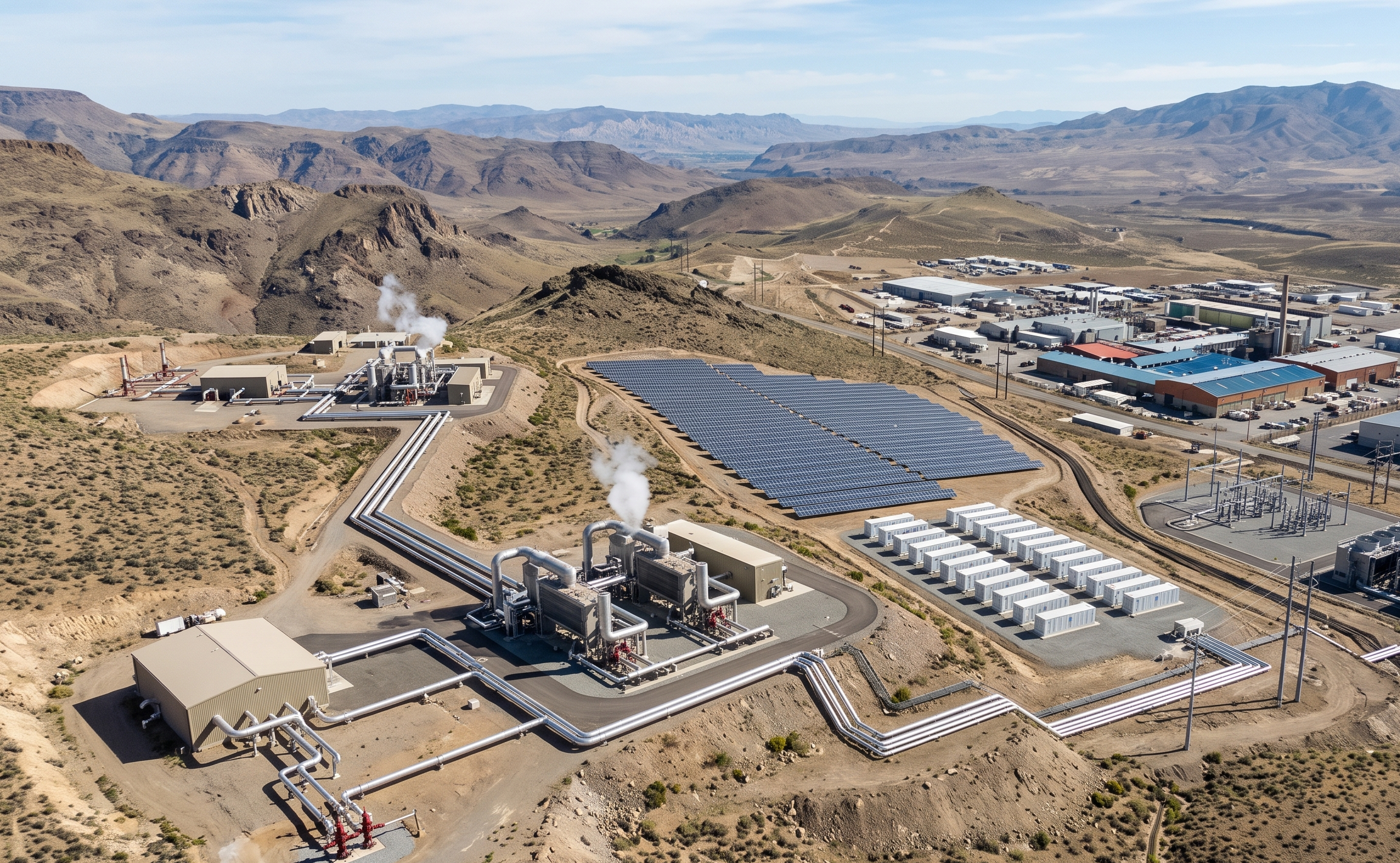
A significant milestone in the development of this technology was highlighted in early 2025, when several leading energy developers and industrial partners announced the successful commissioning of a large-scale geothermal-hybrid microgrid project serving an industrial cluster in Western North America. The project utilizes advanced enhanced geothermal systems (EGS) to extract heat from deep within the Earth, providing approximately 50 megawatts of baseload power that is integrated with a localized solar and battery storage network. This initiative underscores the critical role that geothermal energy plays in the future of industrial resilience and serves as a powerful indicator of the industry’s commitment to building a more sustainable and secure energy base.
Systemic Coordination: DC Protection, Thermal Cooling, and Storage
The shift toward geothermal-based baseload is intrinsically linked to the broader goals of energy resilience. As DC networks expand, the
integration of solid-state circuit breakers for faster fault isolation in DC networks provides the necessary safety net for geothermal-hybrid systems to operate at their full potential. By providing a more reliable and carbon-free way to power localized industry, geothermal-hybrid microgrids allow for the development of hard-to-abate sectors that have previously struggled to decarbonize. For instance, the transition toward liquid cooling integration in high-density architectures is bolstered by the stable and predictable power provided by geothermal energy, ensuring that the cooling systems remain functional even under extreme load profiles. Similarly, the integration of geothermal power with advanced energy storage and adaptive protection is essential for maintaining the overall integrity of the industrial microgrid. This systemic approach ensures that the localized power system is not just a collection of devices, but a thermally-optimized and resilient engine that maximizes the value of every geothermal megawatt.
Sector Coupling and Industrial Cogeneration
Furthermore, the integration of geothermal energy is driving a revolution in the way engineers approach the problem of sector coupling. By providing both electricity and heat, geothermal-hybrid microgrids are a vital component of the broader effort to decarbonize the industrial and building sectors simultaneously. The data generated by deep-well sensors and thermal flow meters is a vital resource for grid management, providing the real-time information needed to identify complex energy patterns and coordinate the response across the entire network. The expertise gained in managing these complex geological-electrical systems is a key component of the digital transformation in the energy sector. The transition to geothermal-hybrid microgrids is thus a major driver of industrial activity and technological progress in the broader energy landscape.
Clean Fuel Generation: The Geothermal-to-Hydrogen Pathway
The role of Geothermal-to-Hydrogen production is also a critical trend. By using the excess geothermal energy during periods of low demand to power electrolyzers, microgrids can produce green hydrogen for use in industrial processes or as a clean fuel for transportation. This dual-product model significantly improves the economic viability of the geothermal plant and provides a versatile way to store and transport renewable energy. The technical challenge of integrating high-pressure hydrogen systems with localized power grids is significant, but the potential rewards for industrial decarbonization are immense. The synergy between geothermal baseload and hydrogen production is a powerful model for the future of sustainable energy.
Direct Air Capture and Climate-Positive Infrastructure
Moreover, the integration of Direct Air Capture (DAC) with geothermal-hybrid microgrids is a burgeoning area of innovation. DAC systems require a significant amount of both heat and electricity, making them the perfect anchor load for a geothermal plant. By utilizing the clean geothermal energy to remove carbon dioxide from the air, these integrated hubs can achieve a net-negative carbon footprint, providing a high-value climate service in addition to energy and heat. This climate-positive infrastructure is the ultimate expression of the modern energy transition. The ability to produce renewable energy while simultaneously removing atmospheric carbon is a major milestone for the industry. The influence of these technologies is transforming the relationship between industry and the atmosphere.
Cross-Disciplinary Engineering and Environmental Stewardship
The technical implementation of these systems also requires a high degree of coordination between geologists, reservoir engineers, power systems developers, and thermal management specialists. Building a geothermal plant that can effectively extract heat from deep, hot rock—and that can be integrated with a variable microgrid without compromising stability—is a significant engineering feat. Similarly, ensuring the long-term sustainability and environmental safety of the geothermal reservoir is a key priority for the industry. The collaboration between these different sectors is essential for overcoming the technical hurdles and ensuring that the benefits of geothermal-hybrid microgrids reach the industrial edge as quickly and safely as possible.
Project Economics, Capital Efficiency, and Long-Term Value
The economic case for the integration of these technologies is also becoming increasingly compelling. While the initial capital expenditure for geothermal drilling and plant construction can be substantial, the long-term savings associated with low operational costs, high capacity factors, and the avoidance of carbon taxes are significant. Improving the energy security of an industrial cluster can also lower the overall cost of capital and attract new investments to the region. Moreover, the improved reliability and resilience of the grid can lead to lower economic losses from power outages and fluctuations. The financial benefits of geothermal-hybrid microgrids are thus a major driver of their adoption across the global industrial landscape.
Role of International Geothermal Association
Moreover, the role of international standards in the growth of the geothermal market is critical. As these systems become more widespread, there is a need for clear guidelines on resource characterization, reservoir management, and grid connection requirements. Global organizations like the International Geothermal Association (IGA) are already working with industry partners to develop these standards, providing the regulatory certainty needed for large-scale investment. The transparency and accountability provided by these systems will be key to maintaining public trust in the energy industry’s efforts to develop new and innovative renewable tools.
Future of Closed-Loop Advancements and Integrated Networks
Looking ahead, the commitment to geothermal-hybrid microgrids will be a defining characteristic of the industrial power landscape in the coming decades. The ongoing development of even more efficient closed-loop geothermal systems, including those based on advanced drilling techniques and high-conductivity heat exchangers, will further improve the performance and reduce the cost of baseload renewable energy. The integration of geothermal with green hydrogen production and the expansion of global geological energy networks, supported by international standards and environmental safeguards, will enable a more flexible and secure energy market.
The implementation of robust regulatory frameworks, including international standards for geothermal resource reporting and carbon removal verification, will be essential for maintaining public trust and ensuring that the benefits of these technologies are shared fairly. By embracing these innovations, the energy community is not only solving the baseload challenges of renewable energy but also building a more resilient and equitable foundation for the future of the grid. The fusion of geological science and electrical engineering, embodied in the rise of geothermal-hybrid microgrids, is the defining vision for the energy industry of the 21st century. The journey from a heat-anomaly to a high-density industrial hub is a collective effort that will require the participation of stakeholders across the entire geological and energy sectors.
Training Multi-Disciplinary Geo-Energy Specialists
Finally, the importance of fostering a new generation of geo-energy specialists who are equally comfortable in the worlds of reservoir engineering and electrical systems cannot be overstated. As geothermal-hybrid microgrids become a standard part of the industrial landscape, the demand for these multi-disciplinary professionals will continue to grow. PowerGen Advancement believes that by investing in the education and training of these specialists, the energy community can ensure that the full potential of geothermal baseload is realized. This investment in human capital is as important as the investment in the technology itself, as the long-term success of sustainable industrial power depends on the expertise and dedication of the people who work at the heart of the geological energy revolution. The industrial sector’s transition to a sustainable, geothermal-powered future is a journey that will require the participation of everyone from the drilling engineer to the industrial site manager.
References
-
Successful Commissioning of Large-Scale Geothermal-Hybrid Microgrid for Western North American Industrial Cluster
-
The Role of Enhanced Geothermal Systems (EGS) in Providing Sustainable Baseload Power
-
Geothermal Energy and Industrial Decarbonization: A Holistic Approach to Sector Coupling
-
The Technical Challenges and Economic Benefits of Geothermal-Hybrid Microgrids
-
International Geothermal Association: Standardizing Global Resource Management