


















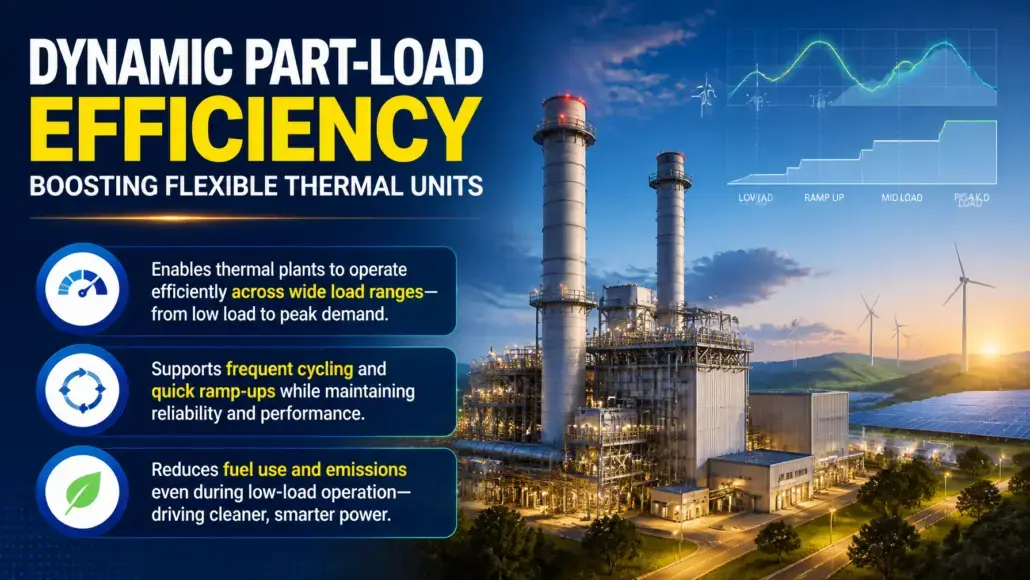
For decades, large scale thermal power plants were designed to operate at a steady, high output to provide reliable baseload power. However, the rapid integration of variable renewable energy has fundamentally changed the role of these facilities. Today, combined cycle gas turbine plants are increasingly required to cycle multiple times per day and operate for long periods at low capacity to balance the fluctuations of wind and solar. This shift toward flexibility has made dynamic part load efficiency optimization a critical focus for the industry in 2026. Without these advanced optimization strategies, plants face significant performance degradation and increased fuel consumption when running at less than full power.
Operating at part load is inherently less efficient for traditional gas turbines, as the thermodynamic cycle is optimized for a specific temperature and pressure range. As the output drops, the efficiency of the turbine and the associated heat recovery steam generator also declines. PowerGen Advancement observes that by implementing dynamic optimization techniques, operators can maintain a higher level of performance across the entire operating range, ensuring that the plant remains competitive in a market that increasingly values flexibility over sheer capacity. In parallel with combined cycle improvements, deploying aeroderivative turbine energy balancing grid stability solutions provides the rapid-start and fast-ramping capabilities needed to counter steep renewable swings without waiting for longer thermal startup curves.
Artificial Intelligence and Real-Time Optimization
The most significant advancement in dynamic part load efficiency optimization in 2026 is the widespread adoption of artificial intelligence and machine learning in plant control systems. These digital tools analyze thousands of data points from across the facility in real time, identifying subtle opportunities to improve heat transfer and combustion stability. Unlike traditional control loops that follow a fixed set of rules, AI driven systems can learn from the plant’s history and adapt to changing ambient conditions, fuel qualities, and grid requirements.
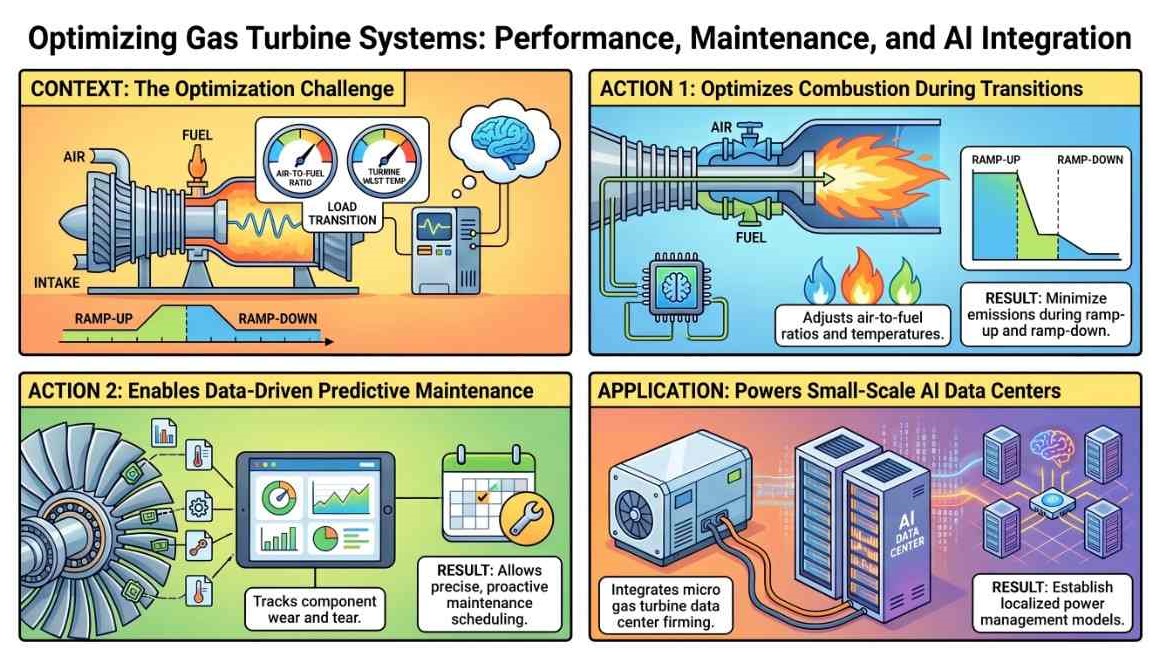
One of the primary benefits of these systems is their ability to optimize the air to fuel ratio and turbine inlet temperatures during load transitions:
- Operational efficiency: Maintains ideal combustion conditions to minimize emissions and fuel waste during ramp-up and ramp-down phases.
- Predictive maintenance: Tracks component wear and tear to enable precise maintenance scheduling, boosting overall asset efficiency.
- Localized optimization: Integrates micro gas turbine data center firming, establishing new models for small-scale AI power management.
Corporate Leadership in Performance Optimization
The global leaders in power generation technology have all launched significant updates to their optimization platforms in 2025 and 2026, competing to offer the highest levels of flexibility and efficiency to their customers. These developments represent the state of the art in thermal asset management.
- Siemens Energy rolled out its enhanced Omnivise digital platform in early 2026, which features a new module specifically for dynamic part load efficiency optimization. This tool has already been deployed at several H class plants in Europe, showing efficiency gains of up to 1.5 percent at half load.
- GE Vernova integrated advanced AI capabilities into its APM Reliability software in 2025, providing utilities with real time optimization of their entire fleet. This initiative includes a focus on reducing the minimum stable load of its turbines, allowing them to stay online during periods of high renewable production.
- Mitsubishi Power expanded its TOMONI intelligent solutions in 2026, introducing a new autonomous control system that optimizes the heat balance between the gas and steam cycles during rapid ramping.
- Ansaldo Energia launched its “Flex-Power” initiative in 2025, providing a comprehensive package of hardware and software upgrades for its existing fleet to enhance low load efficiency and responsiveness.
- TotalEnergies collaborated with a leading tech firm in 2026 to develop a cloud based optimization tool for its global power assets, focusing on the integration of bio methane integration strategies with real time efficiency tracking.
Technical Strategies for Enhancing Low-Load Performance
Beyond digital tools, several mechanical and operational strategies are being deployed to enhance the low load performance of modern turbines. One such approach is the use of inlet guide vane (IGV) optimization, which controls the volume of air entering the compressor. By precisely adjusting the IGVs, operators can maintain a higher exhaust temperature at low loads, which is essential for keeping the steam turbine running efficiently in a combined cycle configuration.
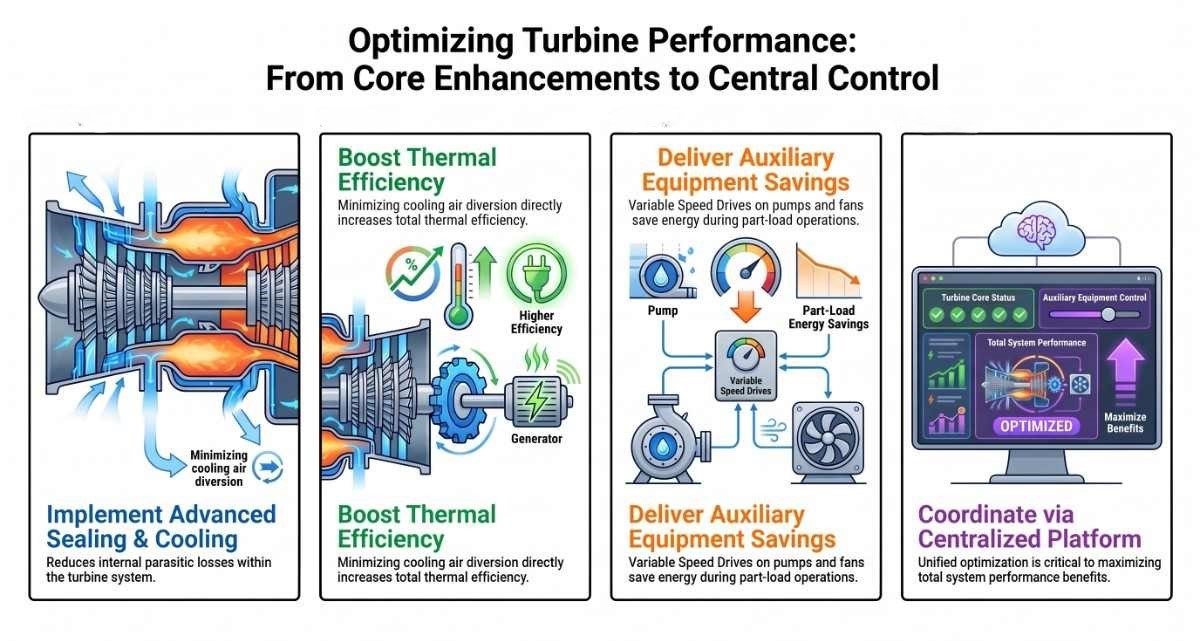
Another important development in this field is the implementation of advanced sealing and cooling technologies that reduce parasitic losses within the turbine.
-
Boosted thermal efficiency: Minimizing cooling air diversion improves the unit’s overall thermal efficiency.
-
Auxiliary equipment savings: Implementing variable speed drives on components like pumps and fans delivers significant energy savings during part-load operations.
- Centralized optimization: Coordinating these enhancements through a unified platform is critical to maximizing performance benefits.
Economic Impact and Market Competitiveness
The financial benefits of dynamic part load efficiency optimization are substantial. For a large combined cycle plant, even a small percentage increase in part load efficiency can save millions of dollars in fuel costs over a year. Furthermore, by reducing the minimum stable load, the plant can avoid the significant costs associated with frequent shut downs and restarts. This improved competitiveness is essential for thermal plants to secure their place in the dispatch order of modern power markets.
Regulators are also beginning to recognize the value of flexible efficiency. In several major markets, new grid codes and capacity market rules provide incentives for plants that can demonstrate high levels of efficiency across a wide operating range. This regulatory support is driving further investment in optimization technology, as utilities look to future proof their assets against evolving market conditions. The ability to provide reliable, low carbon firming power is becoming a major differentiator for energy companies.
The Role of Waste Heat Recovery in Optimization
A critical component of dynamic part load efficiency optimization is the management of the bottoming cycle. The heat recovery steam generator (HRSG) must be able to handle the varying exhaust temperatures and flow rates from the gas turbine without suffering from thermal stress or excessive efficiency loss. In 2026, we are seeing the deployment of new HRSG designs that feature thinner walled components and advanced alloy materials, allowing for faster and more frequent cycling.
Optimizing the waste heat recovery optimization in gas turbine combined cycle power plants ensures that the steam turbine continues to contribute as much power as possible, even when the gas turbine is throttled back. This requires a sophisticated coordination of steam temperatures and pressures, which is now handled by advanced digital control loops. By maximizing the energy extracted from the exhaust gas, operators can maintain a high overall efficiency even at very low loads.
Future Directions for Performance Optimization
As we look toward 2030, PowerGen Advancement believes that the focus of optimization will likely shift toward the integration of multi fuel operations and long duration storage. We expect to see more systems that can dynamically adjust for the varying heating values of hydrogen and bio methane blends, maintaining peak efficiency regardless of the fuel mix. The use of digital twins will also become more prevalent, allowing for continuous, real time benchmarking of every asset in the global fleet.
The ultimate goal of dynamic part load efficiency optimization is to create a thermal power plant that is as flexible and efficient as a battery, but with the massive scale and reliability of a traditional utility asset. The progress made in 2025 and 2026 ensures that we are well on our way to achieving that goal, providing a stable foundation for the high renewable energy grids of the future. The commitment to innovation from global energy leaders ensures that thermal generation will continue to evolve and thrive in a low carbon world.
References
- “Digital Transformation in Power Generation 2026” – International Energy Agency
- “Global Gas Turbine Efficiency Outlook 2025” – Wood Mackenzie
- “Omnivise Digital Platform Update 2026” – Siemens Energy
- “GE APM Reliability Technical Whitepaper” – GE Vernova
- “TOMONI Intelligent Solutions Progress Report 2026” – Mitsubishi Power