








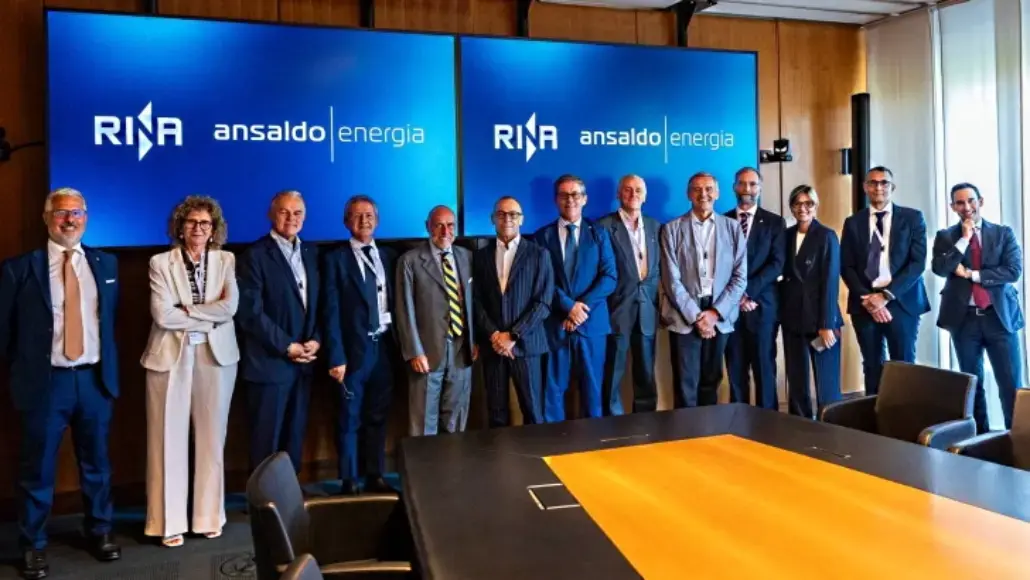
Italian power technology firm Ansaldo Energia and certification and engineering company RINA have entered into an agreement aimed at strengthening the nuclear supply chain in Italy while helping domestic companies access opportunities in the expanding global nuclear market. The initiative focuses on providing businesses with a structured certification pathway so they can meet the requirements needed to participate in the sector. Targeting companies that are not currently operating in the nuclear industry but possess transferable industrial capabilities, the programme is intended to broaden and reinforce the country’s industrial base. As part of the nuclear supply chain initiative, participating companies will undergo preliminary assessments, gap analyses against international standards, and receive guidance on upgrade pathways required for entry into the nuclear market. RINA will oversee the certification and qualification process, while Ansaldo Energia will contribute its industrial expertise by sharing sector-specific market requirements and supporting certification efforts through financial backing from institutions and public instruments dedicated to internationalisation and industrial development. Companies interested in participating can obtain additional information through the official websites of RINA and Ansaldo Energia.
“Strengthening the country’s industrial capacity is an essential step to enable Italian companies to seize the opportunities of a rapidly growing nuclear market,” said Ansaldo Energia CEO Fabrizio Fabbri.
Carlo Luzzatto, CEO and General Manager of RINA, said, “Through this initiative, we aim to support companies on a structured qualification pathway, enabling them to progressively develop the capabilities and meet the requirements needed to operate in an industry defined by the highest regulatory, technological, and safety standards.”
“The Italian Nuclear Association expresses its strong appreciation and full support for this initiative, which is of fundamental importance to strengthen and coordinate a national nuclear supply chain that can already rely on expertise and industrial capabilities developed also through significant projects abroad,” said Stefano Monti, Chairman of the Italian Nuclear Association.
Italy Continues Legislative Steps Toward Nuclear Energy Return
The nuclear supply chain initiative comes as Italy continues to advance its broader plans for the possible return of nuclear energy. The country operated four nuclear power plants beginning in the early 1960s before deciding to phase out nuclear power following the referendum held after the 1986 Chernobyl accident. Its final two operating facilities, Caorso and Trino Vercellese, were closed in 1990. In late March 2011, after the Fukushima Daiichi accident, the Italian government approved a moratorium of at least one year on the construction of nuclear power plants, despite earlier efforts to revive the country’s nuclear programme. A referendum conducted in June that year saw 94% of voters reject the construction of new nuclear reactors.
Since then, public opinion has become increasingly favourable toward nuclear energy. In May 2023, the Italian Parliament approved a motion urging the government to evaluate the inclusion of nuclear power within the country’s energy mix. Later, in September 2023, the government convened the first meeting of the National Platform for Sustainable Nuclear Power to establish a timetable for the possible return of nuclear energy and identify opportunities for the country’s existing nuclear supply chain and industrial capabilities. In October 2025, Italy’s Council of Ministers, chaired by Prime Minister Giorgia Meloni, approved for final consideration a bill assigning responsibility for reintroducing nuclear energy to the government. The legislation authorises comprehensive regulation of ‘sustainable’ nuclear power in line with European decarbonisation policies by 2050 and energy security objectives, including the creation of a National Programme for Sustainable Nuclear Power, an independent Nuclear Safety Authority, stronger scientific and industrial research, the development of new skills, and public information initiatives.
Further legislative progress followed in June 2026 when Italy’s lower house of parliament, the Chamber of Deputies, approved the bill presented by Meloni’s government, moving the country closer to resuming the use of nuclear energy. The legislation will now proceed to the upper house, the Senate, for a vote. Once enacted, the implementing legislative decrees must be adopted within 12 months of the law’s entry into force.