


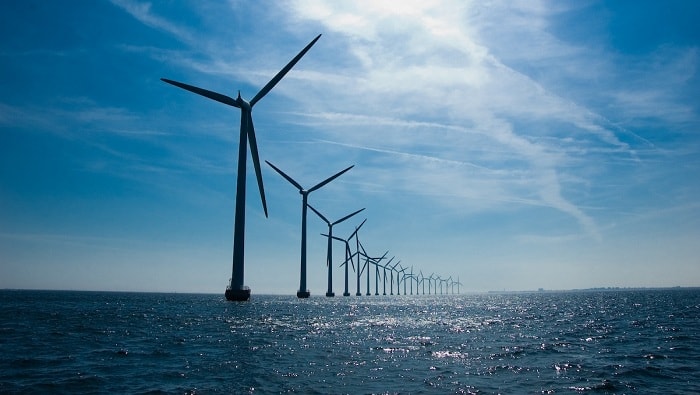



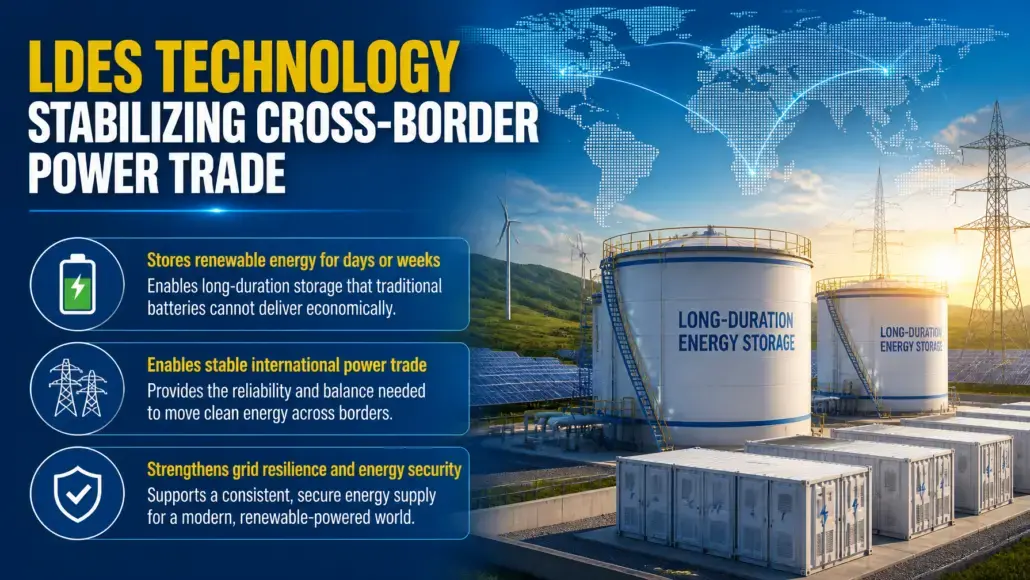
The global transition to renewable energy is reaching a critical bottleneck that traditional battery technologies cannot solve alone. While lithium ion batteries have been highly successful for short term energy shifts and frequency regulation, they are not economically viable for storing power for the multiple days or even weeks required by a modern grid. In 2026, long-duration energy storage has emerged as the essential bridge for international power trade, providing the stability needed to manage the prolonged periods of low wind or solar generation that occur across entire geographical regions. PowerGen Advancement observes that the integration of long-duration energy storage (LDES) is transforming the once intermittent renewable sector into a source of reliable, dispatchable power.
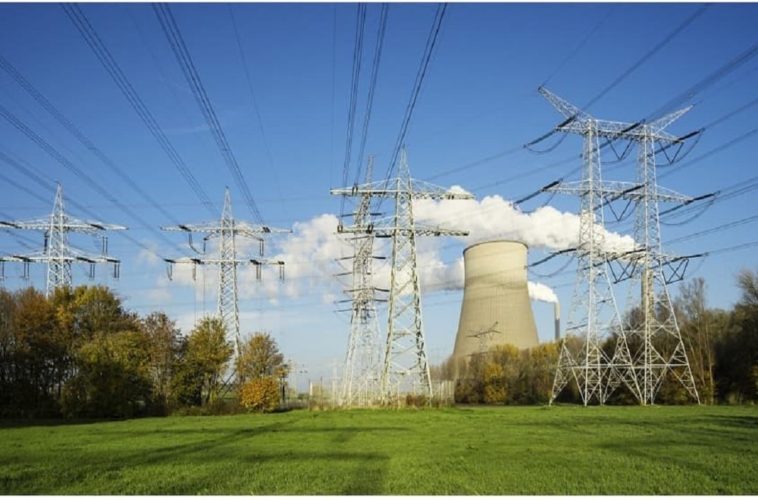
Without LDES, cross border transmission links often face significant volatility and economic inefficiency. When renewable production is high, excess power is traded to neighboring countries at low or even negative prices, but when production drops, the grid must rely on expensive gas peaking plants or face supply shortfalls. By integrating storage systems that can discharge for 10 hours to several days, grid operators can smooth out these fluctuations, ensuring that renewable energy remains the primary source for international trade regardless of short term weather patterns. This capability is essential for meeting the decarbonization targets of the mid 21st century.
Market Growth and the Diversification of Storage Technologies
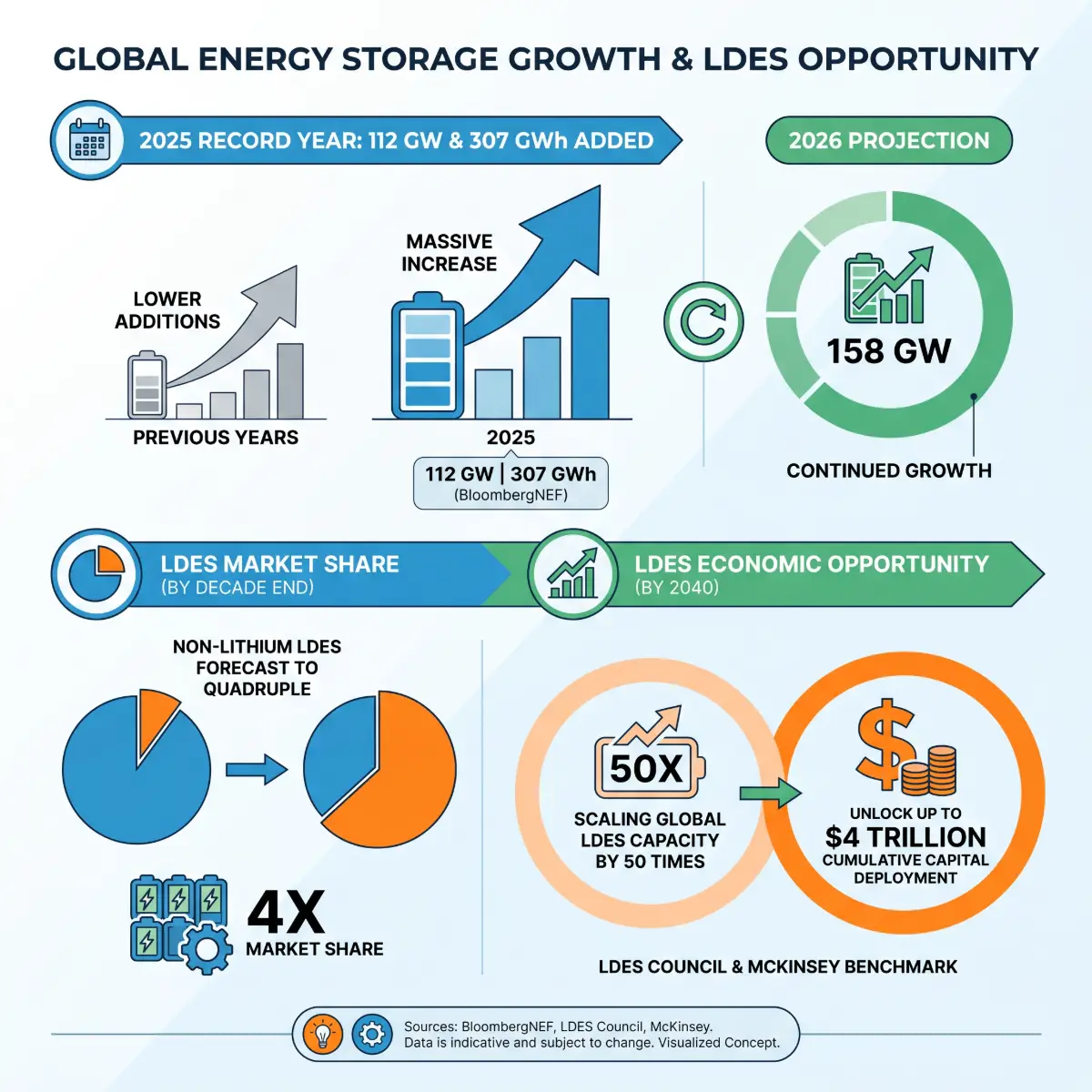
The market for LDES is expanding rapidly as utilities and grid operators recognize the fundamental limitations of short duration storage. BloombergNEF reported that annual global energy storage additions reached 112 GW and 307 GWh in 2025, a massive increase over previous years, and are projected to hit 158 GW in 2026. Within this growth, non-lithium LDES systems are forecast to quadruple their market share by the end of the decade. The LDES Council and McKinsey benchmark indicates that scaling global LDES capacity by 50 times could unlock up to 4 trillion USD in cumulative capital deployment by 2040, highlighting the massive economic opportunity in this sector.
Different technological approaches are competing to meet this demand, each offering unique benefits for grid stability and specific duration needs:
- Iron-air batteries, such as those produced by Form Energy, which utilize the oxidation of iron to provide up to 100 hours of storage at a cost significantly lower than lithium ion.
- Advanced Compressed Air Energy Storage, which uses hard rock caverns to store energy as pressurized air, delivering hundreds of megawatts of synchronous inertia and multi hour discharge.
- Liquid air energy storage, which utilizes cryogenic technology to store electricity in the form of liquid nitrogen or air, allowing for large scale storage in a relatively compact footprint.
- Flow batteries, such as vanadium redox and all iron systems, which offer long cycle lives and non degrading capacity, making them ideal for utility scale and microgrid applications.
- Gravity based storage systems that use the movement of massive weights to store and release energy, providing a long term and mechanically simple solution.
Commercial Deployments and Strategic Trade Partnerships
Major projects are now moving from experimental pilot stages to full scale commercial operation, demonstrating the maturity of the technology. In late 2025 and throughout 2026, several significant deployments have redefined the energy storage landscape. Form Energy has scaled production at its Weirton facility, partnering with major utilities like Xcel Energy and Google to deploy 300 MW systems designed to provide multi day storage for clean data center operations. These projects are a clear signal that LDES is now a viable solution for the most demanding energy consumers in the world.
Other notable LDES developments include a series of international projects:
- Hydrostor achieving grid connection approval for the 200 MW Silver City Energy Storage Centre in Australia, which provides emissions free synchronous inertia and grid protection for a regional network.
- Highview Power securing a 300 million pound investment to construct the Carrington liquid air energy storage plant in the United Kingdom, helping to alleviate transmission bottlenecks across the Scottish border.
- ESS Inc expanding the adoption of its all iron redox flow batteries with a 50 MWh project in Arizona and a large scale framework agreement with the Sacramento Municipal Utility District.
- Invinity Energy Systems rolling out the Mistral vanadium flow battery platform in partnership with Siemens Gamesa for utility scale and commercial microgrid applications globally.
- The advancement of the Willow Rock project in California, a 500 MW A-CAES facility that will provide eight hours of storage to support the state’s aggressive renewable targets.
These projects are increasingly tied to cross border trade corridors where grid stability is a primary concern. For example, the Carrington plant is strategically located to manage the flow of wind power from Scotland to England, reducing the need for expensive redispatch payments when transmission lines are congested. The optimization of these massive storage fleets requires immense computational power, and quantum computing is revolutionizing international grid dispatch models to solve these complex multi-variable problems.
Economic Implications for International Power Markets
The integration of LDES is fundamentally changing the economics of international power markets by creating a more stable and predictable environment for trade. By reducing renewable curtailment, which exceeded 10 TWh across major U.S. and European markets in 2025, LDES increases the value and profitability of every gigawatt of clean energy produced. Grid operators are also seeing a significant reduction in negative pricing events, as surplus energy can be stored and sold later during peak demand periods when prices are higher.
For investors, the primary shift is the development of dedicated long duration capacity remuneration mechanisms by regulators. Governments are beginning to recognize that LDES provides services that short duration batteries cannot, such as seasonal shifting and multi day grid resilience during extreme weather events. As these markets mature, LDES will become a standard component of every major international power trade link, providing the reliability that was once only possible with large scale fossil fuel or nuclear plants. The ability to “time shift” energy trade is a powerful new tool in the global energy market.
Future Perspectives and Technical Evolution
As we look toward the 2030s, the evolution of LDES will likely include the development of even more cost effective chemistries and the integration of thermal energy storage. The ability to capture and store waste heat from industrial processes and then convert it back into electricity is a major area of ongoing research. This would further broaden the application of LDES beyond the power grid and into the heart of industrial manufacturing, creating new opportunities for energy trade in the form of zero carbon heat.
Environmental sustainability is also a core advantage of many LDES technologies. Unlike lithium ion batteries, which require the mining of rare earth metals, systems like iron air or compressed air storage utilize abundant and easily recyclable materials. This reduces the supply chain risk and environmental footprint of the energy transition, making LDES a truly sustainable solution for the long term. The durability of these systems, many of which are designed to last for 30 years or more without significant degradation, also improves the overall economics of the grid.
The road to a fully decarbonized global grid is complex, but the progress made in long duration energy storage by late 2026 suggests that one of the biggest hurdles is being overcome. By providing the flexibility and stability needed for international power trade, LDES is enabling the next great phase of the energy transition. PowerGen Advancement believes that as these technologies continue to scale and their costs continue to fall, the vision of a 100 percent renewable global energy system will become a practical and economic reality.
References
- “Energy Storage Outlook 2026” – BloombergNEF
- “Net Zero LDES Council Benchmark Report” – LDES Council / McKinsey
- “IEA World Energy Investment 2025” – International Energy Agency
- “Form Energy Commercial Scale Update 2026” – Form Energy
- “Hydrostor Silver City Project Status” – Hydrostor
- “Highview Power Carrington Investment Announcement” – Highview Power
- “BNEF Global LDES Forecast 2026” – BloombergNEF
- “Invinity and Siemens Gamesa Mistral Platform Launch” – Invinity Energy Systems