








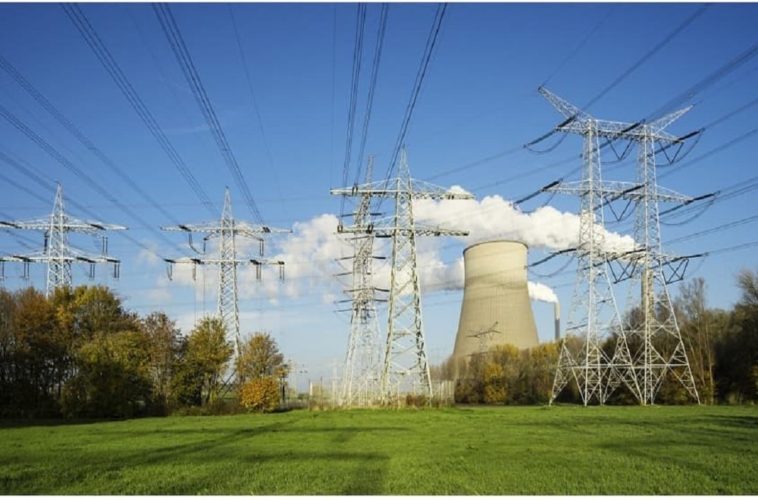




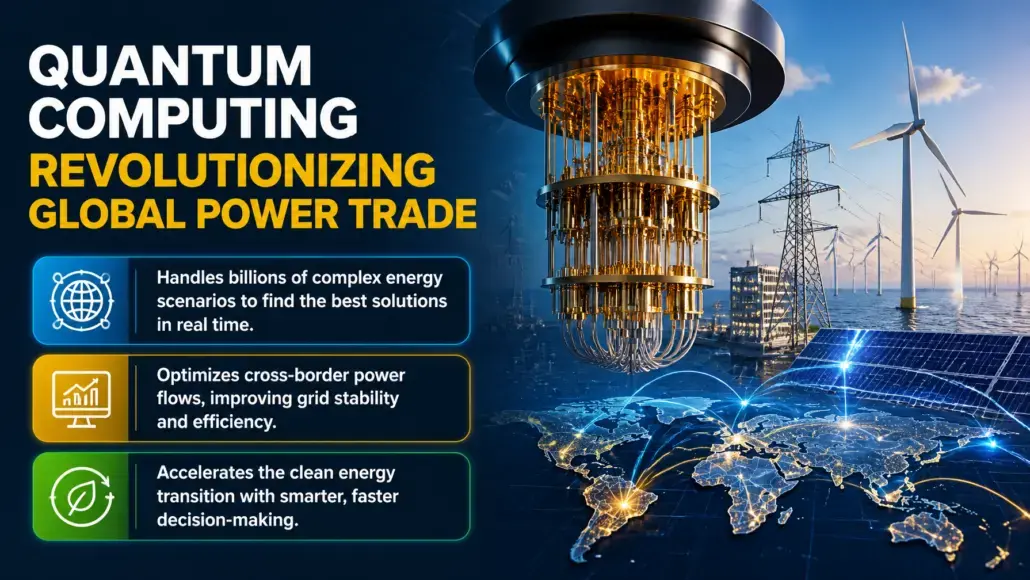
The computational requirements for managing a globalized, decarbonized energy grid have reached a point where classical computers are struggling to find optimal solutions in real time. As regional networks like the ASEAN Power Grid or the North Sea offshore network grow in complexity, the number of potential dispatch scenarios becomes astronomical, involving billions of interconnected data points. PowerGen Advancement observes that quantum computing has emerged in 2026 as a transformative technology capable of solving these multi country optimization problems, allowing for more efficient, secure, and stable international power trade.
A typical cross border dispatch problem involves millions of variables that must be processed rapidly to maintain system stability. While classical supercomputers use mathematical approximations to find a good solution, quantum computers can explore the entire solution space simultaneously to find the absolute best outcome for the entire network, significantly reducing waste and cost.
Trials and Technological Milestones in 2026
The energy sector has reached a significant inflection point in the adoption of quantum technologies, moving from laboratory experiments to practical field trials. In April 2026, several major utility partnerships reported the first successful large scale trials of quantum algorithms for international grid management.
IBM and the European energy giant E.ON have collaborated to use quantum circuits to tackle the extreme complexity of decentralized energy systems. This partnership focuses on optimizing the layout and operation of local energy communities while ensuring they integrate smoothly with the high voltage national and international grids.

Recent breakthroughs in quantum hardware and software architectures include:
- Pasqal, among the leaders of neutral atom quantum computing, has integrated its architecture into energy distribution workflows to evaluate grid stabilization, conservation, and restoration strategies.
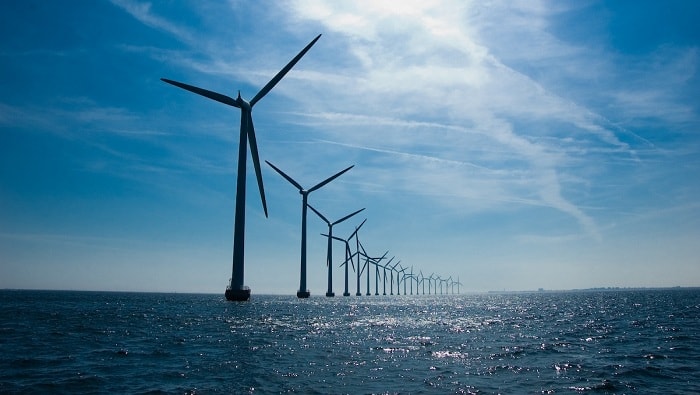
- The use of the Quantum Approximate Optimization Algorithm (QAOA) to significantly reduce energy losses in simulated transmission networks and large scale offshore wind farm operations.
- IBM making its Osprey and Eagle processors available for utility partners to run longer and more complex grid circuits than were previously possible with earlier generations of hardware.
- The development of hybrid quantum classical models that use the immense speed of quantum processors for the most complex calculations while relying on classical systems for data management and input processing.
- Research into quantum sensing for the grid, which could provide much more precise measurements of magnetic fields and current flows compared to traditional sensors.
Addressing the Complexity of High Penetration Renewable Integration
One of the most challenging aspects of modern grid management is the inherent intermittency of renewable energy sources like wind and solar:
- Continental-Scale Challenge: Predicting the exact output from thousands of wind turbines and millions of solar panels demands immense computational power and complex modeling.
- Quantum Computing Solution: Quantum systems are deployed to build significantly more accurate weather forecasting and renewable generation models.
- Optimized Grid Management: Enhanced model precision enables grid operators to execute cross-border energy trades and schedule storage discharge with greater accuracy and confidence.
These advanced calculations are directly interfaced with physical grid hardware through digital substation automation to enable near-instantaneous balancing across borders. This integration ensures that the optimal dispatch plan generated by the quantum processor can be executed in the real world without any significant delays. The ability to react to sudden and unexpected changes in the grid, such as a major transmission line failure or a sudden drop in regional wind speed, is critical for maintaining regional energy security and preventing cascading blackouts.

Regulatory bodies and major grid operators are also exploring the use of quantum computing for long term infrastructure planning and risk assessment. Deciding where to build the next generation of interconnectors, energy islands, or massive storage facilities requires modeling the grid’s behavior decades into the future under thousands of different climate and economic scenarios. Quantum computing can process these complex simulations much faster than classical methods, helping governments and institutional investors make more informed decisions about the multi billion dollar future of the energy system.
The Path Toward Quantum Advantage and Grid Security
While full scale, fault tolerant quantum computers are still an engineering challenge for the future, the energy industry is already seeing the practical benefits of noisy intermediate scale quantum devices. These current generation systems are capable of solving specific, well defined optimization problems that provide a clear advantage over classical methods in terms of speed and accuracy. As hardware continues to improve and qubit counts increase throughout the late 2020s, the range of applications for quantum in the energy sector will expand even further into materials science and fuel cycle optimization.
Cybersecurity remains a critical consideration for the adoption of quantum technologies in the energy grid. As quantum computers become more powerful, they also pose a potential long term threat to existing encryption methods used for grid communication and financial settlements. Consequently, the transition to quantum dispatch models is being accompanied by the rapid deployment of post quantum cryptography to ensure that international power trade remains secure from future threats. The convergence of these advanced computing and security technologies is creating a more resilient, intelligent, and secure global energy network.
Strategic Implications for the Global Energy Market
As we look toward the 2030s, the nations and companies that lead in quantum energy modeling will have a significant strategic advantage. The ability to manage a complex grid more efficiently will lead to lower energy costs, higher reliability, and a faster transition to a zero carbon economy. This will make their economies more competitive and their societies more resilient to external shocks. Quantum computing is therefore not just a technical tool but a key driver of geopolitical and economic influence in the 21st century energy market.
The environmental impact of this computational shift is also significant. By enabling a grid that can handle much higher levels of renewable energy without the need for fossil fuel backups, quantum computing directly contributes to the reduction of global carbon emissions. It represents the intelligence layer of the energy transition, ensuring that the physical assets of the grid are used to their absolute maximum potential. As the quantum and energy sectors continue to merge, PowerGen Advancement is of the opinion that the future will bring a global power system that is not only cleaner but also much more capable than anything that has come before.
References
- “Quantum Computing at an Inflection Point” – IBM Newsroom
- “E.ON Case Study: Tackling Complexity with Quantum” – IBM
- “Quantum Technology Use Cases in Energy and Utilities” – Post-Quantum
- “Pasqal Energy and Utilities Solutions Overview” – Pasqal
- “IEA Technology Report: AI and Computing in the Energy Transition” – International Energy Agency
- “Global Smart Grid Market Report 2026” – Precedence Research
- “IBM Quantum Roadmap and Energy Sector Impact” – IBM
- “Quantum Algorithms for Power System Optimization” – IEEE Power and Energy Society