








Estimated electricity production from the total waste generated in Africa could reach 122.2 TWh in 2025, or more than 20% of the electricity consumed in 2010 at continental level (661.5TWh), according to a JRC co-authored study which analysed the potential of urban solid waste for Africa’s electricity needs.
This is an equivalent to the energy needed for 40 million households in 2025 in Africa. However waste management is poor — the potential electricity of waste actually collected was estimated at 83.8 TWh in 2025. Still, this represents energy needed for 27 million families in 2025, considering the average electricity consumption in 2010 in Africa.
Many Africans do not have access to energy. Besides providing an interesting share of gross energy consumption and electricity as a renewable resource, energy recovered from waste could also help minimise the impact of municipal solid waste on the environment. The study Evaluation of energy potential of Municipal Solid Waste from African urban areas provides an estimate of the total potential of energy from waste incineration and from landfill gas (LFG) 2025 for each African country.
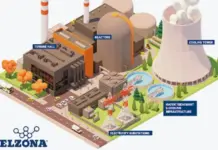
In 2010, there were more than 600 waste-to-energy facilities in the world, most of them in Europe (472), Japan (100) and the US (86). In Africa, a very limited share of waste is recovered and reused, and only major or capital cities have waste management systems.
In a number of countries, the use of waste to generate electricity could have a significant impact. Waste can have a very high contribution to providing electricity to citizens and alleviate energy poverty especially in countries with low access to electricity and reduced electricity consumption per capita, such as the Central African Republic, Burundi, Guinea-Bissau, Mali, Sierra Leone, Rwanda and Somalia.