












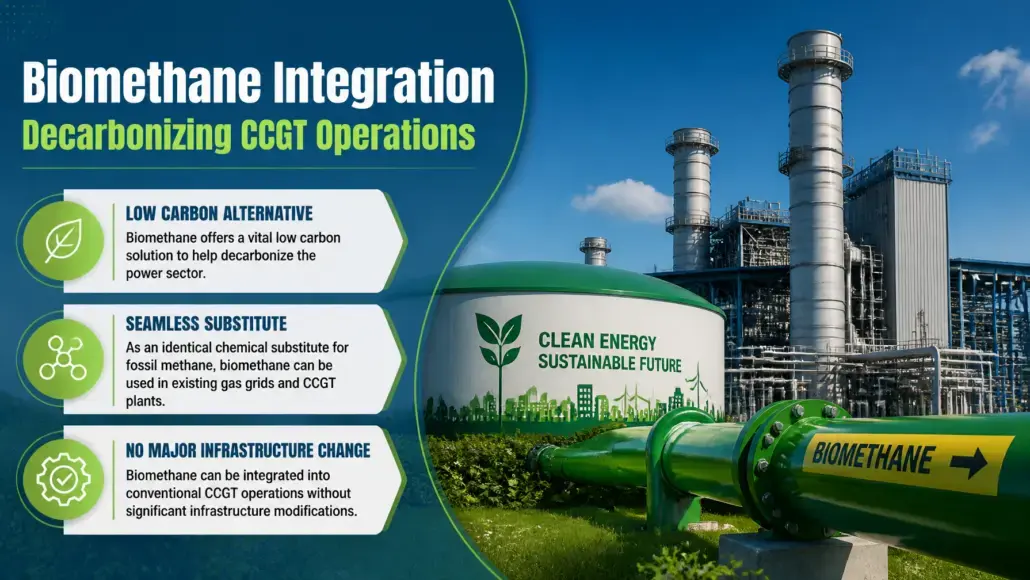
The search for low carbon alternatives to natural gas has led to a renewed focus on biomethane as a vital tool for decarbonizing the power sector. As an identical chemical substitute for fossil methane, biomethane can be injected into existing gas grids and used in conventional combined cycle gas turbine (CCGT) plants without the need for significant infrastructure modifications.
Biomethane integration strategies have become a key priority for European and North American utilities in 2025 and 2026, providing a near term pathway to reduce the carbon intensity of dispatchable power generation. By sourcing gas from organic waste, agricultural residues, and wastewater treatment, energy companies can create a circular energy economy that addresses both waste management and climate goals.
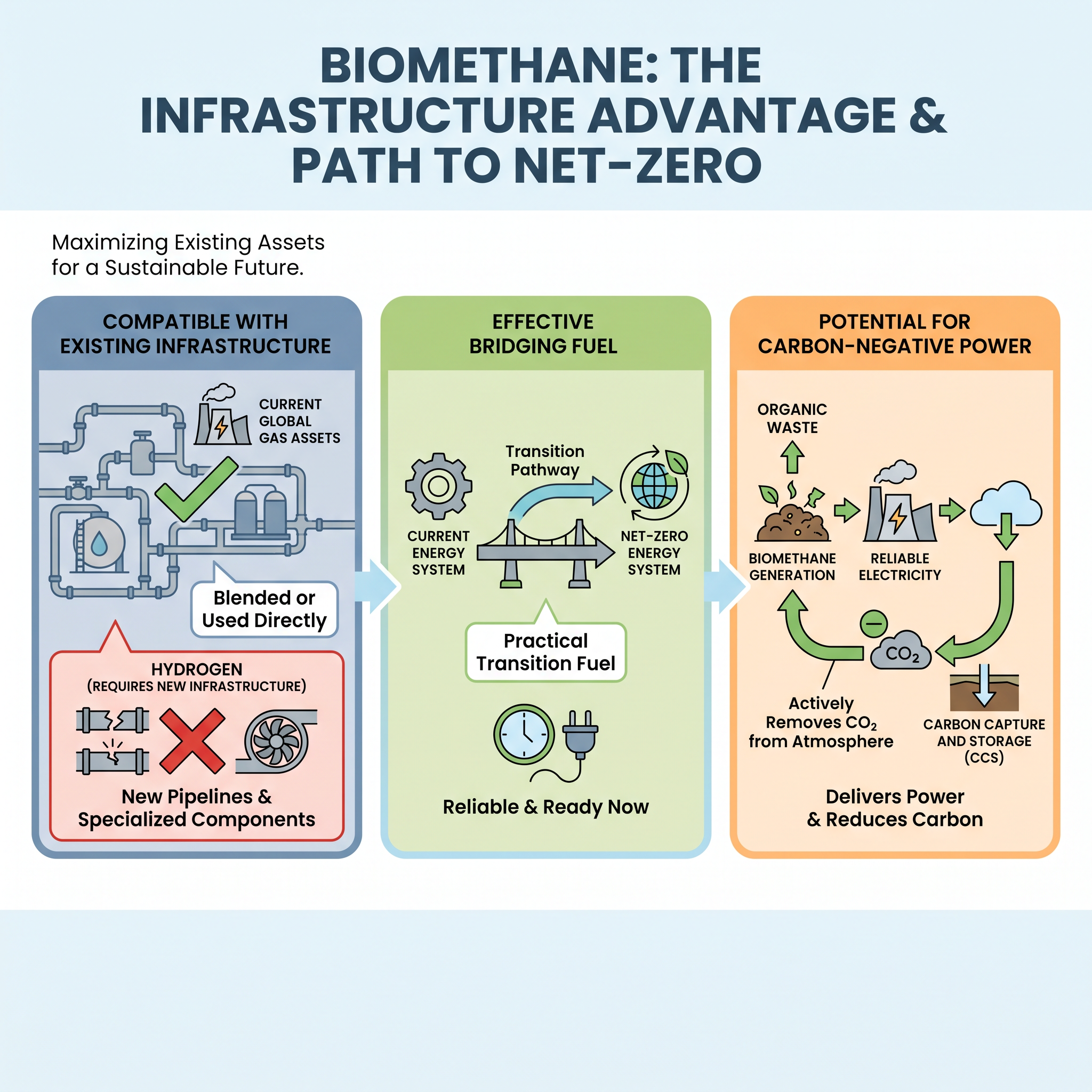
The primary advantage of biomethane is its compatibility with the massive global investment in gas infrastructure:
- Compatible with existing infrastructure: Unlike hydrogen, which requires new pipelines and specialized turbine components, biomethane can be blended or used directly in any current gas asset.
- Effective bridging fuel: Acts as a practical transition fuel on the pathway toward a net-zero energy system.
- Potential for carbon-negative power: When paired with carbon capture and storage (CCS), biomethane generation can actively remove CO2 from the atmosphere while providing reliable electricity.
Production Scaling and Supply Chain Optimization
The success of biomethane integration strategies depends on the ability to scale up production and optimize the supply chain. In 2025, several major energy companies announced massive investments in anaerobic digestion facilities and gas upgrading plants. These facilities convert raw biogas into grid quality biomethane, which can then be transported to power plants across the country. The industry is focusing on utilizing non food biomass sources to avoid competition with agricultural land, ensuring that the growth of biomethane is truly sustainable.
Supply chain optimization involves the development of virtual pipelines and certificates of origin that allow utilities to track the renewable content of their gas supply. This transparency is essential for meeting regulatory requirements and corporate sustainability targets. In 2026, we are seeing the emergence of regional biomethane hubs where production facilities are clustered near major gas demand centers, reducing transportation costs and emissions. The use of dynamic part load efficiency optimization in these plants ensures that the renewable gas is used as efficiently as possible during periods of high demand. Maximizing the value of these renewable fuels requires the implementation of dynamic part load efficiency optimization to ensure peak performance across all operating regimes.
Technical Considerations for Fuel Blending
While biomethane is chemically identical to natural gas, the process of blending it into the fuel stream requires careful management to ensure consistent power plant performance. Variations in the trace components of biomethane, such as siloxanes or oxygen, must be monitored to prevent damage to turbine blades and combustion systems. In 2026, manufacturers have introduced advanced fuel analysis and blending stations that provide real time control over the fuel quality entering the turbine.
These systems allow CCGT operators to maintain stable combustion even when the ratio of biomethane to natural gas fluctuates. This flexibility is particularly important as the availability of renewable gas may vary seasonally or based on the output of local production facilities. By using sophisticated control algorithms, plants can optimize their operations to maximize the use of biomethane while ensuring the reliability and safety of the turbine. The integration of digital twin technology also helps operators predict the long term impact of different fuel blends on asset health.
Leading Corporate Initiatives and Bio-methane Projects
The global energy industry has seen a surge in biomethane related activity in 2025 and 2026, with several major players taking a lead in production and integration. These projects demonstrate the growing commercial viability of renewable gas in the power sector.
- TotalEnergies expanded its biomethane production capacity significantly in late 2025, securing a series of agreements with agricultural cooperatives in France and the United States to supply feedstock for its new anaerobic digestion plants.
- Shell launched a new initiative in 2026 to supply certified biomethane to several of its combined cycle power plants in Europe, aiming to reduce the carbon footprint of its integrated power business by 30 percent by 2030.
- Engie and Equinor announced a joint venture in 2025 to develop large scale biomethane projects in Northern Europe, focusing on the integration of renewable gas with existing offshore and onshore gas infrastructure.
- Siemens Energy collaborated with a leading biogas producer in 2026 to develop a pilot project that tests the performance of its H class turbines using 100 percent biomethane.
- GE Vernova expanded its fuel flexible turbine offerings in 2026, providing guaranteed performance levels for units operating on high blends of biomethane and other renewable gases.
Economic Viability and Regulatory Frameworks
The deployment of biomethane integration strategies is heavily influenced by the prevailing regulatory environment and the cost of carbon. In 2026, many countries have introduced renewable gas mandates or feed in tariffs that make biomethane competitive with fossil gas. These policies provide the financial security needed for long term investment in production facilities. The European Union‘s focus on the REPowerEU plan has been a major driver, with the goal of reaching 35 billion cubic meters of biomethane production by 2030.
However, the cost of biomethane remains higher than that of natural gas in most markets. Utilities are working with regulators to develop green power products that allow customers to pay a premium for electricity generated from renewable gas. Corporate power purchase agreements (PPAs) are also emerging as a popular way for large companies to support the growth of the biomethane industry while meeting their own sustainability goals. As production scales up and technology improves, the cost gap between biomethane and natural gas is expected to narrow significantly.
The Role of Bio-methane in Grid Firming
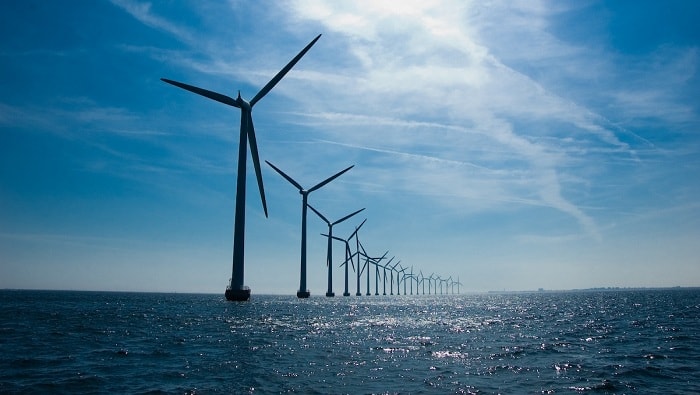
One of the most valuable applications of biomethane is in providing low carbon grid firming services. As the penetration of variable renewable energy increases, the need for dispatchable power becomes more acute. Biomethane allows CCGT plants to provide this firming capacity without adding to the net carbon emissions of the grid. This makes it a perfect complement to wind and solar, providing a 100 percent renewable energy system that is both reliable and sustainable.
In 2026, grid operators are increasingly recognizing the value of these renewable gas assets, providing incentives for plants that can ramp quickly and maintain stability using biomethane. This is particularly important for repurposing thermal plant turbines for enhanced grid stability, where the addition of renewable fuel can further enhance the environmental profile of the facility. The ability of biomethane plants to provide long duration storage by using the gas grid as a massive energy reservoir is another significant advantage over battery technology.
Future Outlook for Renewable Gas Integration
PowerGen Advancement believes that the future of the power sector will likely involve a diverse mix of low carbon fuels, and biomethane will be a central part of that mix. As we look toward the 2030s, we expect to see even deeper integration between the gas and power sectors, with biomethane playing a key role in seasonal energy storage and industrial decarbonization. The continuous improvement in production efficiency and the development of new feedstock sources will ensure that the supply of renewable gas continues to grow.
The combination of biomethane with other emerging technologies, such as green hydrogen and carbon capture, will provide a comprehensive toolkit for achieving net zero power. By leveraging the existing gas infrastructure and the flexibility of CCGT plants, we can build a resilient and sustainable energy system that meets the needs of both the present and the future. The dedication of global energy leaders to this transition ensures that biomethane will remain a cornerstone of the global energy transition for decades to come.
References
- Bio-methane Market Outlook 2026 – International Energy Agency
- European Bio-methane Map 2025 – European Biogas Association
- TotalEnergies Sustainability Progress Report 2026 – TotalEnergies
- Shell Energy Transition Strategy 2025 – Shell
- Engie Annual Report 2026 – Engie