



For decades, the nuclear power industry has been defined by massive, bespoke civil engineering projects that often took more than a decade to complete and faced significant budget overruns. However, in 2026, a fundamental shift is occurring in how nuclear power plants are designed, built, and deployed. PowerGen Advancement notes that the emergence of factory-built nuclear reactors and the adoption of modular construction techniques are transforming nuclear energy from a complex field of infrastructure into a sophisticated manufacturing industry. This transition is crucial for making nuclear power a scalable and cost-effective solution for the global energy transition, allowing for faster deployment and a more predictable investment landscape.
From Stick-Built to Modular: The Manufacturing Shift
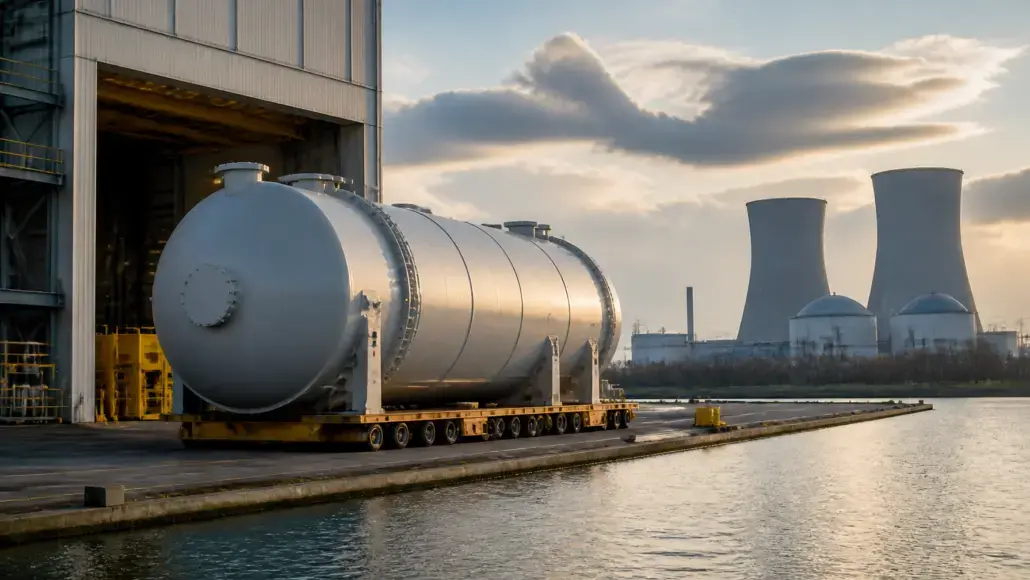
The traditional stick-built approach to nuclear construction involved thousands of workers performing complex tasks in the field, often in challenging weather conditions and subject to variable labor quality. Factory-built nuclear reactors represent a move toward a product-based model. In this framework, the majority of the reactor’s components—including the core, cooling systems, and containment structures—are manufactured in a controlled factory environment. These components are assembled into standardized modules, which are then transported by truck, rail, or barge to the final site for rapid installation.
This shift offers profound advantages in terms of quality control and efficiency. In a factory, processes can be automated using advanced robotics and precision engineering, significantly reducing the likelihood of defects that can lead to costly delays in the field. Furthermore, the use of standardized designs allows manufacturers to benefit from learning-by-doing. As more units are produced, the time and cost required for each subsequent reactor decrease, following a classic manufacturing cost curve. In 2026, the first dedicated nuclear gigafactories are coming online, capable of producing multiple reactor modules per year.
Accelerating Deployment and Reducing Financial Risk
One of the primary barriers to new nuclear power has been the high financial risk associated with long construction timelines. Investors are often wary of projects that tie up billions of dollars for years before generating a single kilowatt of electricity. Factory-built nuclear reactors address this challenge by dramatically shortening the onsite construction period. By parallel-tracking factory manufacturing and site preparation, the total project duration can be reduced from 10-15 years to just 3-5 years.
This speed-to-market significantly lowers the cost of capital and improves the internal rate of return for developers. Moreover, the modular nature of these systems allows for a phased deployment strategy. A utility can start with a single module and gradually add more capacity as demand grows, rather than committing to a massive 2-gigawatt plant from day one. This flexibility is particularly attractive for private industrial customers and smaller national grids, providing a scalable path to decarbonization that aligns with their financial and operational needs.
Technological Enablers of Modular Nuclear Power
The rise of factory-built nuclear reactors is being driven by several key technological innovations. Advanced manufacturing techniques, such as electron beam welding and 3D printing of high-grade metallic components, are allowing for the creation of complex reactor parts with unprecedented precision and speed. These tools enable the production of smaller, more compact reactor designs that are better suited for modular transport.
Digitalization also plays a critical role. The use of Building Information Modeling (BIM) and digital twins allows for the precise coordination of factory assembly and onsite installation. Every module can be virtually fitted before it leaves the factory, ensuring that connections are seamless and that all components meet the required specifications. In 2026, the use of digital threads that track each part from raw material to final installation is providing the level of transparency and traceability required by nuclear regulators, further streamlining the licensing process for modular designs.
Regulatory Adaptation to Factory-Based Licensing
The transition to factory-built nuclear reactors requires a parallel evolution in nuclear regulation. Traditionally, licensing was site-specific, requiring exhaustive reviews for every individual project. To support the modular revolution, regulatory bodies are moving toward design certification or type approval models. In this approach, a standardized reactor design is licensed once at the national level, and this license applies to all units produced in the factory.
In 2026, we are seeing the emergence of international regulatory cooperation, where different countries are working to harmonize their standards for modular reactors. The goal is to create a licensed once, deployed anywhere framework, which would allow manufacturers to export their reactor modules to global markets with minimal local regulatory friction. This harmonization is essential for creating a truly global market for factory-built nuclear reactors and for ensuring that the highest safety standards are maintained across all deployments.
The Role of Microreactors and SMRs in Modular Growth
Small Modular Reactors (SMRs) and microreactors are the natural vanguard of the factory-built movement. Their smaller size makes them inherently easier to transport and assemble. Microreactors, in particular, are being designed as plug-and-play units that can be housed in standard shipping containers. These systems are ideal for providing clean power to remote areas, military bases, and disaster relief operations.
As the industry gains experience with these smaller units, the principles of modular construction are also being applied to larger reactor designs. Even for mid-scale plants, the use of prefabricated modules for the non-nuclear balance of plant—such as turbines, cooling towers, and control rooms—is becoming the new industry standard. The success of factory-built nuclear reactors is thus creating a ripple effect that is modernizing the entire nuclear construction sector, making it more competitive with other low-carbon energy sources.
Overcoming Supply Chain and Logistics Challenges
Despite the clear benefits, the move to a factory-based model presents its own set of challenges. Building a secure and robust supply chain for nuclear-grade components is a massive undertaking. Manufacturers must ensure a steady supply of specialized steels, high-density fuels, and precision instruments. In 2026, we are seeing the development of specialized nuclear manufacturing hubs where suppliers are co-located with reactor assembly plants to minimize logistical costs and lead times.
Transportation also requires careful planning. Moving heavy, high-value reactor modules across borders and through complex terrain necessitates specialized logistics expertise and equipment. The industry is investing in new heavy-lift vessels and modular transporters designed specifically for the nuclear sector. Ensuring the physical security of these modules during transit is also a top priority, requiring close coordination with national security agencies.
Future Outlook: A New Era of Nuclear Scaling
As we look toward 2030, the vision of a standardized, factory-built nuclear fleet is well on its way to reality. The transition from bespoke construction to advanced manufacturing will be the defining theme of the nuclear industry in the coming decade. PowerGen Advancement believes that by reducing costs, shortening timelines, and improving quality, factory-built nuclear reactors will enable nuclear power to play a much larger role in meeting the world’s growing demand for clean, reliable energy.
The modular revolution is not just about changing how we build reactors. It’s about changing how we think about nuclear energy. It is moving from being a rare and expensive mega-project to being a reliable and accessible product that can be deployed wherever it is needed most. This shift is essential for achieving the scale of decarbonization required to address the climate crisis and for ensuring energy security in an increasingly volatile world.