



As the global community intensifies its efforts to decarbonize the energy sector, the role of advanced nuclear technology has become increasingly prominent. In 2026, the transition from conventional light-water reactors to generation IV nuclear reactors is no longer a distant theoretical goal but a rapidly unfolding reality. These next-generation systems promise to address the long-standing challenges of safety, waste management, and cost-competitiveness, positioning nuclear power as a flexible and indispensable component of the sustainable energy mix. PowerGen Advancement notes that the commercial progress made in recent years has set the stage for a new era of nuclear deployment that goes far beyond traditional baseload electricity generation.
Defining the Technological Leap of Generation IV
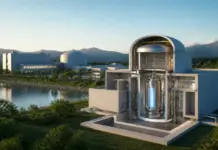
Generation IV nuclear reactors represent a suite of innovative reactor designs that differ fundamentally from the light-water reactors (LWRs) that dominate the current global fleet. These designs—which include Sodium-cooled Fast Reactors (SFRs), Very-High-Temperature Reactors (VHTRs), and Molten Salt Reactors (MSRs)—are characterized by their ability to operate at much higher temperatures and, in many cases, at lower pressures. This technological leap enables significantly higher thermal efficiency and opens up a wide range of industrial applications, such as high-temperature process heat for hydrogen production and chemical manufacturing.
The defining characteristic of generation IV nuclear reactors is their commitment to passive safety systems. Unlike older designs that rely on active pumps and human intervention during an emergency, Gen IV systems are designed to shut down and cool themselves naturally using laws of physics, such as gravity and natural convection. This inherent safety significantly reduces the risk of accidents and simplifies the complex safety infrastructure required for nuclear plants. Furthermore, many of these designs are capable of burning long-lived radioactive waste as fuel, offering a potential solution to one of the industry’s most persistent environmental concerns.
Commercial Milestones and Pilot Projects
The year 2026 has seen several key milestones in the commercialization of generation IV nuclear reactors. In China, the high-temperature gas-cooled reactor (HTGR) demonstration project has successfully completed its first full year of commercial operation, proving the viability of pebble-bed fuel technology at scale. In North America and Europe, several startups and established engineering firms are in the final stages of licensing their commercial-scale Gen IV designs. These projects are benefiting from a new regulatory approach that is more conducive to advanced technologies, allowing for faster iteration and deployment.
One of the most significant trends is the convergence of Generation IV technology with the Small Modular Reactor (SMR) concept. By building Gen IV designs in smaller, modular units, companies can reduce the massive upfront capital costs that have traditionally plagued large-scale nuclear projects. These modular generation IV nuclear reactors are being designed for factory assembly and rapid onsite installation, allowing for a more predictable and scalable deployment model. This shift toward modularity is attracting a new wave of private investment into the nuclear sector, as the risk profile of these projects becomes more manageable for commercial developers.
Future Applications Beyond Electricity Generation
The versatility of generation IV nuclear reactors is one of their most compelling attributes. Because they operate at much higher temperatures than conventional reactors, they are uniquely suited for providing carbon-free heat to heavy industries. For example, VHTRs can produce temperatures exceeding 700°C, which is ideal for the large-scale production of green hydrogen via high-temperature electrolysis. This capability allows nuclear power to play a direct role in decarbonizing hard-to-abate sectors like steel and cement production, where electricity alone is not a sufficient energy source.
Furthermore, the ability of certain generation IV nuclear reactors to operate in a flexible, load-following mode makes them an excellent complement to intermittent renewable energy sources like wind and solar. As the share of renewables on the grid increases, the need for dispatchable, low-carbon power becomes critical for maintaining grid stability. Gen IV systems can quickly adjust their output or divert their excess heat to thermal storage systems, providing a reliable and responsive backup for a renewable-heavy grid. This synergy between advanced nuclear and renewables is a key theme in 2026 energy planning.
Addressing the Challenges of the Nuclear Fuel Cycle
The successful commercialization of generation IV nuclear reactors also depends on advancements in the fuel cycle. Many Gen IV designs require High-Assay Low-Enriched Uranium (HALEU), which has a higher concentration of the isotope U-235 than traditional reactor fuel. In 2026, the global effort to establish a secure and diverse supply chain for HALEU has gained significant momentum, with new enrichment facilities coming online in the United States and Europe. Ensuring a stable fuel supply is essential for de-risking the deployment of these advanced reactors and attracting long-term commercial interest.
Moreover, the potential for generation IV nuclear reactors to utilize closed fuel cycles—where spent fuel is reprocessed and reused—is a major focus of ongoing research. This approach not only maximizes the energy extracted from uranium but also significantly reduces the volume and toxicity of the final radioactive waste. While the implementation of closed fuel cycles faces geopolitical and proliferation challenges, the technical progress being made in Gen IV designs is providing a clearer path toward a more sustainable and circular nuclear economy.
Regulatory Evolution and Public Perception
The commercial progress of generation IV nuclear reactors is inextricably linked to the evolution of nuclear regulation. Regulatory bodies are moving away from the prescriptive models designed for LWRs toward more technology-inclusive, performance-based frameworks. This shift allows for the unique safety and operational characteristics of Gen IV designs to be properly evaluated, facilitating a more efficient licensing process without compromising safety. International collaboration between regulators is also increasing, with the goal of harmonizing standards to enable the global deployment of standardized Gen IV reactor designs.
Public perception of nuclear power is also shifting in 2026, as the role of advanced nuclear in meeting climate goals becomes more widely understood. The inherent safety features of generation IV nuclear reactors and their potential to address waste concerns are helping to alleviate long-standing public fears. Continued transparency and engagement with local communities will be essential for maintaining this social license to operate. By demonstrating the tangible benefits of Gen IV technology—such as clean air, reliable energy, and high-quality jobs—the industry is building a stronger case for nuclear power as a pillar of the future energy system.
The Path Forward: Scaling for Impact
As we look toward 2030, the primary challenge for generation IV nuclear reactors will be scaling from demonstration projects to widespread commercial deployment. This will require continued government support in the form of production tax credits and loan guarantees, as well as a sustained commitment from the private sector to build the necessary manufacturing and supply chain infrastructure. The lessons learned from the first wave of Gen IV projects will be invaluable for optimizing subsequent designs and reducing costs through learning-by-doing.
The potential impact of generation IV nuclear reactors on the global energy transition is immense. PowerGen Advancement believes that by providing safe, reliable, and versatile carbon-free energy, these advanced systems can help to solve some of the most difficult challenges of the 21st century. The journey of Gen IV technology from the laboratory to the commercial market is a testament to human ingenuity and the enduring promise of nuclear energy as a force for good in the world.