



















Renewable energy finance has moved decisively away from government-guaranteed feed-in tariffs toward merchant power exposure, corporate power purchase agreements, and two-sided contracts for difference. WindEurope reported that European wind investments reached 45 billion euros in 2025, with institutional capital demanding higher scrutiny over revenue certainty. In this commercial landscape, a wind farm that operates with high mechanical uptime can still experience significant revenue shortfalls if outages coincide with periods of high electricity prices. Project lenders and asset managers are moving beyond legacy metrics toward sophisticated wind farm availability modelling to protect financial returns.
For decades, the standard benchmark in turbine supply and service agreements was time-based availability. This metric calculates the percentage of hours in a year that a turbine is mechanically ready to generate electricity, typically guaranteeing 95 to 97 percent uptime. However, time-based availability treats an hour of downtime during dead calm identically to an hour of downtime during peak storm winds. If maintenance occurs during high-wind hours, an asset owner can lose considerable electricity production while the contractor easily satisfies their contractual availability warranty.
The Shift from Time to Energy-Based Availability Metrics
To eliminate discrepancies between contractual compliance and actual financial yield, the wind industry is adopting energy-based availability frameworks established under the International Electrotechnical Commission standard IEC 61400-26. This standard categorizes operational states into specific energy allocation buckets:
- Actual generation delivered to the electrical off-take point.
- Technical derating losses caused by high temperatures, structural vibration, or component degradation.
- External curtailment losses imposed by transmission system operators due to grid congestion.
- Environmental curtailment driven by acoustic limits, shadow flicker regulations, or wildlife protection protocols.
- Unplanned technical downtime resulting from component failure and maintenance logistics.
Energy-based availability weights downtime by the theoretical wind resource available during each ten-minute SCADA interval. If a turbine trips when the wind speed is twelve meters per second, the lost generation represents rated capacity. If that same failure occurs at three meters per second, the lost generation is negligible.
By calculating production-weighted losses, asset owners gain an accurate understanding of lost generation value. Financial analysts can then trace specific revenue leaks to component failure categories, severe weather access restrictions, or electrical collection network outages.
Revenue-Weighted Modelling in Volatile Power Markets
While energy-based availability bridges the gap between mechanical uptime and kilowatt-hour generation, modern revenue forecasting requires an additional step: revenue-weighted availability. In contemporary wholesale power markets, electricity prices fluctuate hourly. During periods of widespread high wind production, wholesale power prices often drop significantly due to market cannibalization. Conversely, during moderate wind conditions when regional grid supply is constrained, clearing prices can spike to several hundred euros per megawatt-hour.
Revenue-weighted availability models correlate turbine-specific SCADA availability data directly with wholesale clearing prices:
- Hour-ahead and day-ahead electricity spot prices matched with ten-minute generation profiles.
- Captured price discounts reflecting the gap between project-level revenue and baseline grid average prices.
- Balancing market penalties incurred when unexpected mechanical trips create imbalance settlement fees.
- Derivative and hedge settlement obligations where fixed-volume physical delivery defaults trigger cash liabilities.
When an unexpected converter failure takes an 8 MW offshore turbine offline during peak power demand hours, the economic damage far exceeds the physical repair expense. The asset owner must purchase replacement power on the spot market to satisfy bilateral power purchase obligations. Revenue-focused availability models simulate these cash flow risks across thousands of probabilistic market and weather scenarios, enabling asset managers to negotiate more realistic debt-service coverage ratios with lending syndicates.
Monte Carlo Simulations and Maintenance Logistics Constraints
Modern availability modeling combines physical component failure distributions with realistic maintenance logistics constraints. A mechanical failure does not occur in an operational vacuum. The duration of downtime depends on spare parts availability, technician scheduling, and environmental access windows.
Advanced predictive models employ Monte Carlo simulation techniques to forecast project availability over multi-year operational horizons:
- Weibull distribution curves modeling the mean time between failures for pitch actuators, gearboxes, generators, and power electronics.
- Weather window simulations evaluating significant wave heights, swell periods, and surface wind speeds that limit crew transfer vessel or crane vessel access.
- Supply chain lead-time parameters reflecting current regional availability of major replacement components.
- Mean time to repair parameters accounting for technician mobilization, diagnostic troubleshooting, and heavy-lift rigging.
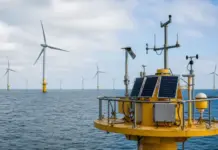
In marine environments, yield and availability models must incorporate environmental shutdown protocols, where real-time ecological sensing via Environmental Monitoring Technologies for Offshore Wind Development determines whether turbines can operate without violating marine protection mandates.
Incorporating these logistical constraints prevents financial models from overestimating winter availability. Offshore wind farms in the North Sea or along the US Atlantic coast frequently encounter multi-week stretches where wave heights exceed 1.5 to 2.0 meters, preventing crew transfer vessels from docking at turbine transition pieces. A minor fifty-euro sensor fault can idle a multi-million-euro asset for three weeks simply because technicians cannot safely step onto the ladder. Accurate availability models incorporate these seasonal weather dependencies into baseline financial forecasts.
Bankability Standards and Debt Sizing Rigour
The transition toward merchant and hybrid revenue structures has altered how banking syndicates evaluate wind project finance. Historically, financial institutions underwrote debt facilities based primarily on P50 annual energy production estimates adjusted with flat availability discounts. In modern underwriting, debt sizing hinges on stringent P90 and P99 statistical exceedance models that explicitly incorporate availability risk.
Sophisticated availability models provide lenders with granular visibility into cash flow resiliency under stressed conditions:
- Stress testing debt service coverage ratios against consecutive years of unfavorable wind conditions coupled with severe offshore access restrictions.
- Differentiating between contractual OEM liquidated damages and uninsurable economic losses stemming from grid curtailment.
- Allocating reserve account requirements based on component degradation probability rather than arbitrary fixed percentages of capital expenditure.
- Validating revenue hedging strategies to ensure merchant volumes can support fixed amortization schedules without debt restructuring.
Digital twin software architectures continuously ingest real-time SCADA operational logs, maintenance records, and market pricing feeds. By comparing simulated availability against empirical operating yields every quarter, asset owners refine their probability distributions, progressively narrowing the variance between projected financial returns and realized cash distributions.
Optimizing Maintenance Windows to Maximize Cash Flows
The ultimate commercial application of advanced availability modeling is dynamic maintenance scheduling. Rather than conducting scheduled preventative servicing on rigid calendar intervals, operators use predictive availability algorithms to identify the lowest-cost maintenance windows.
By integrating weather forecasts, wind resource predictions, and forward power curve projections, scheduling algorithms recommend maintenance tasks when financial opportunity costs are minimized:
- Scheduling scheduled inspections and oil flushes during low-wind summer doldrums when spot prices and wind generation are low.
- Deferring non-critical minor maintenance when forecast wind speeds approach rated generation capacity and power prices are elevated.
- Planning coordinated multi-turbine service campaigns to share mobilization costs for specialized lifting vessels and service teams.
- Adjusting temporary operational derates to preserve failing bearings until low-revenue market periods arrive.
This strategic alignment of physical asset health with wholesale market economics ensures that operational maintenance protects project equity. Wind farm availability modeling has evolved from an engineering accounting exercise into a central pillar of corporate treasury management, investment underwriting, and renewable power commercialization.