






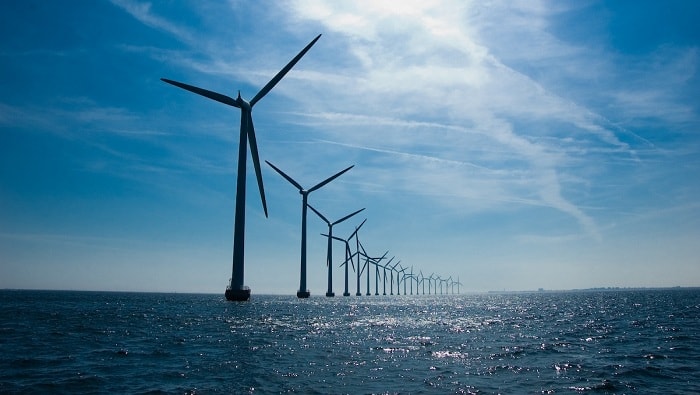




Offshore wind expansion has entered a scale where ecological stewardship and regulatory compliance directly dictate project timelines. WindEurope statistics indicate that Europe possessed 39 GW of offshore wind capacity at the end of 2025, with dozens of gigawatts progressing through consenting pipelines across the North Sea, the Baltic Sea, and international waters. As governments set ambitious marine decarbonization targets, regulatory agencies such as the US Bureau of Ocean Energy Management and European environmental ministries have instituted stringent wildlife protection standards. Developing capital-intensive marine infrastructure now requires continuous, scientifically defensible monitoring across all project phases.
Historically, environmental assessments relied on periodic vessel expeditions and manual observer teams. These manual surveys were constrained by sea states, daylight hours, and limited sample sizes, often leaving significant data gaps in environmental impact statements. To secure construction permits and maintain social license, developers are integrating automated offshore wind environmental monitoring systems. By utilizing autonomous sensing networks, artificial intelligence, and genomics, the offshore industry can observe marine ecosystems in real time without interrupting installation schedules.
Underwater Acoustic Monitoring and Noise Abatement
Foundation installation represents one of the most acoustically intensive phases of offshore wind construction. Impact piling for massive monopiles generates impulsive underwater sound waves that can exceed 200 decibels, posing severe risks of temporary or permanent auditory threshold shifts in marine mammals. Regulators enforce strict acoustic thresholds, such as the German Federal Maritime and Hydrographic Agency mandate capping sound exposure levels at 160 decibels at a distance of 750 meters from the pile.
Developers combine primary noise mitigation systems, such as double big bubble curtains and hydro-sound dampers, with real-time acoustic verification arrays:
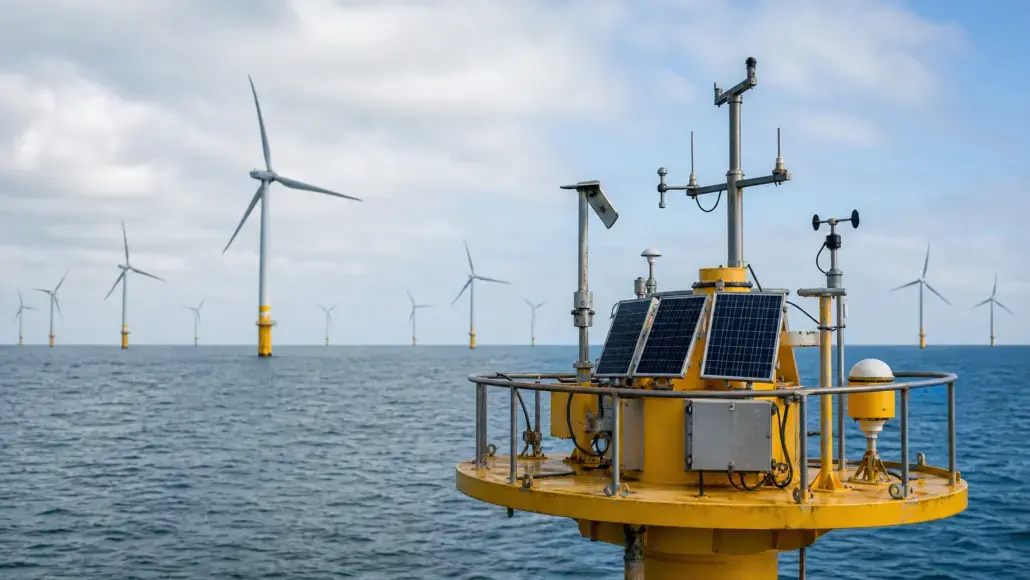
- Real-time passive acoustic monitoring buoys deployed in perimeter concentric rings around the installation vessel.
- High-frequency hydrophone clusters capable of detecting ultrasonic echolocation clicks from harbor porpoises and odontocetes up to 150 kHz.
- Low-frequency hydrophones tuned to track baleen whale vocalizations, including critically endangered North Atlantic right whales.
- Autonomous edge-computing processors running digital signal processing algorithms that classify detected vocalizations within seconds.
When marine mammal vocalizations enter designated clearance zones, automated alerts notify marine mammal observers and installation superintendents immediately. Rather than relying solely on visual sightings from high bridge decks, which are severely compromised in fog or heavy swells, acoustic telemetry ensures piling initiates only when safety exclusion zones are verifiably clear.
Avian and Bat Surveillance in the Rotor Swept Zone
Understanding avian interaction with rotating turbine blades represents another critical environmental hurdle, particularly along migratory flyways. Regulatory authorities frequently demand multi-year pre-construction surveys and post-construction mortality tracking to evaluate collision risks and displacement effects.
Modern offshore installations deploy multimodal surveillance platforms combining optical, thermal, and radar sensors mounted directly on offshore substations and turbine transition pieces:
- Dual-polarization marine radar systems tracking regional bird and bat movement, flight paths, and altitude profiles up to ten kilometers away.
- Thermal imaging and high-definition stereoscopic cameras that record bird flight behavior around the rotor swept zone continuously, day and night.
- Machine-vision algorithms trained on vast ornithological datasets to identify species, estimate wingspan, and calculate three-dimensional flight trajectories.
- Vibration and acoustic blade contact sensors embedded within turbine blades that record physical impact events to provide empirical collision verification.
These sensor suites enable dynamic micro-curtailment. Instead of imposing blanket seasonal shutdowns that destroy project economics, artificial intelligence models detect approaching flocks of protected species and automatically pitch turbine blades into an aerodynamic idle. Once the flock transits past the project boundary, normal power generation resumes automatically, protecting wildlife while preserving annual energy production.
Genomic Biodiversity Tracking via Environmental DNA
A significant innovation transforming marine ecological surveys is environmental DNA, commonly known as eDNA. All aquatic organisms shed cellular material into surrounding waters through skin, scales, mucus, and metabolic waste. By collecting sea water samples and extracting microscopic genetic fragments, researchers can determine which species inhabit or transit through the wind farm boundary.
Environmental DNA metabarcoding offers distinct advantages over traditional trawling or acoustic surveys:
- Non-invasive biological sampling that eliminates the need to capture, disturb, or harm marine fauna.
- High-throughput sequencing capable of identifying hundreds of bony fish, elasmobranch, invertebrate, and mammal species from a single one-liter water sample.
- Detection of elusive, rare, or cryptic species that evade traditional camera traps or acoustic arrays.
- Standardization across pre-construction baselines, construction piling phases, and long-term operational regimes.
Autonomous underwater gliders and uncrewed surface vessels equipped with automated water filtration cartridges now collect spatial eDNA samples over multi-week offshore deployments. These robotic samplers freeze or preserve DNA filters internally before returning to port. The resulting genomic data provides regulators with longitudinal biodiversity trends, proving whether wind farm foundations act as beneficial artificial reefs that enhance local biomass.
Subsea Benthic Surveys and Scour Ecosystems
The placement of steel foundations and rock scour protection alters the local seabed, transforming flat sandy sediments into hard-substrate habitats. Tracking this ecological succession requires advanced subsea imaging and autonomous inspection tools.
Autonomous underwater vehicles and remotely operated vehicles conduct recurring photogrammetric surveys across turbine foundations:
- High-resolution multi-beam bathymetry mapping scour hole dynamics and sediment transport around monopiles.
- Structure-from-motion photogrammetry creating three-dimensional digital reconstructions of biofouling colonization by mussels, anemones, and macroalgae.
- Magnetometer and side-scan sonar arrays ensuring inter-array power cables remain buried to prevent electromagnetic field exposure to benthic species.
- Video transect analysis evaluating benthic fish aggregation around rock dump armor layers.
Subsea sensors and ecological monitoring arrays operate alongside structural assets submerged in aggressive saline waters, where deploying proven Corrosion Protection Technologies for Offshore Wind Turbine Structures is vital to preserve the mechanical integrity of foundations.
Integrating subsea ecological data into geographic information platforms enables asset owners to demonstrate net-positive biodiversity outcomes. Major European offshore tenders now award evaluation points to developers that incorporate nature-inclusive designs, such as artificial nesting reefs, fish shelters, and oyster restoration modules integrated into scour protection stone. Automated underwater imaging verifies that these habitat enhancements function as intended, bridging industrial renewable energy production with marine environmental conservation.
Data Harmonization and Accelerated Permitting Timelines
The commercial value of continuous environmental monitoring manifests directly in the permitting lifecycle. Historically, environmental impact assessments required three to five years of fragmented field campaigns, often resulting in contentious legal challenges from environmental stakeholders that delayed financial close.
Cloud-based data platforms now ingest multi-sensor ecological feeds, standardizing raw observational records into verifiable compliance dashboards:
- Automated reporting pipelines delivering verified noise attenuation and marine mammal clearance records to government portals within twenty-four hours of installation.
- Public-facing environmental transparency dashboards providing open-access data to academic researchers and marine conservation non-governmental organizations.
- Cumulative impact modeling tools that synthesize regional monitoring datasets across adjacent wind farm clusters in shared marine basins.
- Machine-readable ecological baseline records that de-risk future project expansion phases and repowering permits.
By providing continuous, empirical proof of ecological protection, developers de-risk project schedules and eliminate contentious regulatory delays. Automated environmental monitoring transforms ecological compliance from a bureaucratic hurdle into an operational enabler of offshore wind commercialization.