














The performance and safety of any nuclear power plant are fundamentally determined by the fuel that powers its core. As the global energy transition places greater demands on nuclear energy for reliability and carbon-free generation, the industry is witnessing a revolutionary shift driven by advanced nuclear fuel technologies. In 2026, these innovations are not only enhancing the safety margins of existing reactors but are also enabling the deployment of next-generation reactor designs that operate at higher efficiencies and for longer durations. PowerGen Advancement notes that the evolution of nuclear fuel is a critical component in ensuring that nuclear power remains a competitive and sustainable pillar of the global energy mix.
The Drive for Accident-Tolerant Fuel (ATF)
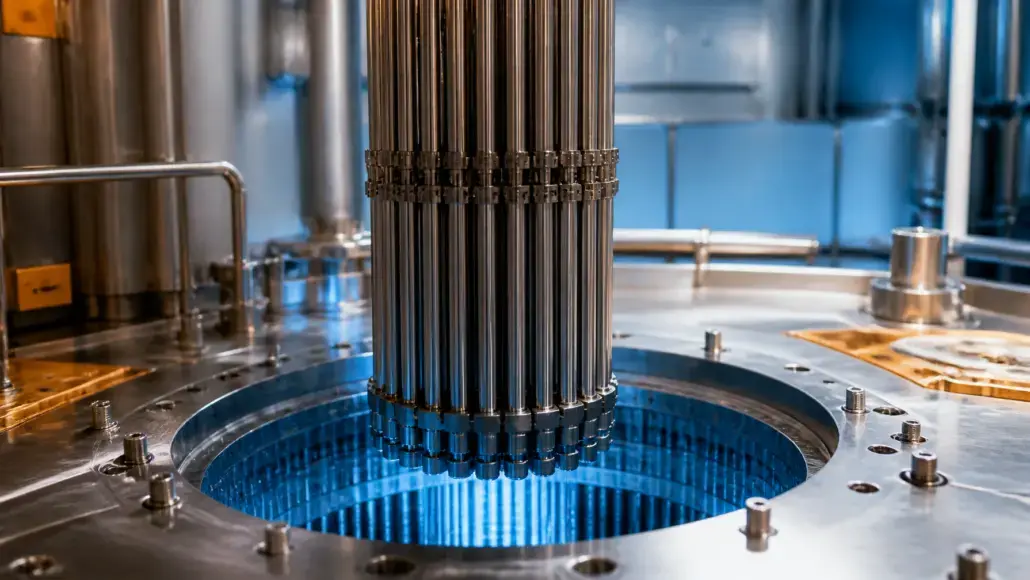
One of the most significant developments in the realm of advanced nuclear fuel technologies is the commercialization of Accident-Tolerant Fuel (ATF). Traditional nuclear fuel pellets are encased in zirconium alloy cladding, which can react with steam at very high temperatures to produce hydrogen—a major safety concern during severe accidents. ATF designs address this by using new cladding materials, such as chromium-coated zirconium or advanced steels, and new fuel pellet compositions like uranium silicide or doped uranium dioxide.
These materials are designed to withstand much higher temperatures for longer periods, providing operators with more time to respond in the event of a cooling loss. In 2026, ATF is being systematically loaded into existing light-water reactor fleets around the world. The benefits go beyond safety; because ATF can withstand more extreme conditions, it allows reactors to operate at higher power levels and for longer cycles between refueling outages. This improvement in operational efficiency directly translates to lower costs for consumers and a higher capacity factor for the plant, illustrating how safety and performance are inextricably linked in modern fuel design.
Enabling Next-Generation Reactors with TRISO Fuel
While ATF improves the current fleet, advanced nuclear fuel technologies are also the key to unlocking the potential of Generation IV reactors. Tri-structural Isotropic (TRISO) fuel is perhaps the most prominent example of this. TRISO fuel consists of a tiny kernel of uranium covered by three layers of carbon and ceramic materials. These layers act as a containment system for each individual fuel particle, ensuring that radioactive fission products remain trapped even at temperatures far exceeding those encountered in conventional reactors.
In 2026, TRISO fuel is the cornerstone of several advanced reactor designs, including high-temperature gas-cooled reactors and molten salt reactors. Its inherent robustness allows these reactors to operate at very high temperatures, which significantly increases their thermodynamic efficiency and makes them suitable for industrial heat applications. Furthermore, the modular nature of TRISO fuel—which can be formed into pebbles or hexagonal blocks—provides greater flexibility in reactor design and refueling strategies. The successful manufacturing and testing of TRISO fuel at scale have been instrumental in moving advanced nuclear projects from the laboratory to the commercial market.
High-Assay Low-Enriched Uranium (HALEU) and Fuel Density
Another critical frontier in advanced nuclear fuel technologies is the shift toward High-Assay Low-Enriched Uranium (HALEU). Conventional reactors use fuel enriched to about 5% U-235, whereas HALEU is enriched to between 5% and 20%. This higher enrichment provides several key benefits: it allows for smaller reactor cores, longer intervals between refueling, and better fuel utilization. HALEU is essential for many of the small modular reactors (SMRs) and microreactors currently being deployed, as it provides the high energy density needed for compact power systems.
To support this transition, 2026 has seen a major expansion in the global infrastructure for HALEU production. New enrichment facilities using advanced centrifuge and laser technologies are coming online, reducing the industry’s reliance on traditional supply chains. At the same time, researchers are exploring high-density fuels like metallic uranium and uranium nitrides, which contain more uranium atoms per unit volume than traditional oxide fuels. These high-density fuels, when combined with HALEU, allow for even more efficient reactor operations and contribute to a more sustainable and economically viable nuclear fuel cycle.
Closing the Loop: Reprocessing and Recycling Technologies
The long-term sustainability of nuclear energy depends on our ability to manage spent fuel and minimize waste. Advanced nuclear fuel technologies are playing a vital role in this effort through the development of closed fuel cycle systems. Advanced reprocessing technologies, such as pyroprocessing, allow for the extraction of unused uranium and plutonium from spent fuel, which can then be fabricated into new fuel for fast-spectrum reactors. This approach significantly increases the energy extracted from a given amount of uranium and reduces the volume and radioactivity of the waste that requires long-term storage.
In 2026, several nations are advancing their reprocessing capabilities as part of their national energy security strategies. While the geopolitical and non-proliferation challenges associated with fuel recycling remain complex, the technical progress in multi-recycle fuel designs is providing a clearer path forward. By treating spent fuel as a resource rather than a waste product, the industry is aligning itself with circular economy principles and addressing one of the public’s primary concerns regarding nuclear power. The development of fuels that can incorporate recycled materials is a testament to the innovative spirit of the nuclear science community.
Digitalization and Predictive Modeling in Fuel Design
The development of advanced nuclear fuel technologies is being accelerated by the use of advanced digital tools and predictive modeling. In 2026, researchers are using supercomputers and AI-driven simulations to model the behavior of new fuel materials under extreme conditions at a molecular level. This digital-first approach allows for the rapid testing of thousands of different fuel and cladding combinations, significantly reducing the time and cost of experimental validation.
Digital twins of nuclear fuel rods are also being used in operational reactors to monitor fuel performance in real-time. By analyzing data from sensors, operators can predict exactly how the fuel will respond to changes in power levels or coolant flow, allowing for even more precise and efficient reactor control. This integration of material science and digital intelligence is ensuring that the next generation of nuclear fuel is not only safer and more efficient but also more predictable and easier to manage throughout its entire lifecycle.
The Future: Toward Zero-Waste and Ultra-Efficient Fuels
Looking toward the 2030s, the goal of advanced nuclear fuel technologies is to achieve a truly zero-waste nuclear cycle. This includes the development of fuels that can effectively incinerate long-lived radioactive isotopes and the exploration of alternative fuel cycles, such as the thorium cycle. Thorium is more abundant than uranium and produces less long-lived waste, making it an attractive prospect for a sustainable nuclear future. While significant technical hurdles remain, the progress made in HALEU and TRISO fuel is providing the foundation for these even more advanced concepts.
The transformation of nuclear fuel is a silent revolution, occurring within the shielded cores of reactors, but its impact is felt throughout the entire energy system. PowerGen Advancement believes that by providing the energy density, safety, and efficiency needed for a low-carbon world, advanced fuels are ensuring that nuclear power remains a vital part of the solution to our global energy challenges. The era of advanced nuclear fuel has arrived, and it is set to redefine the performance standards of the industry for decades to come.