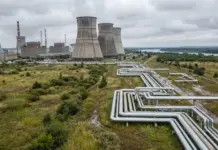

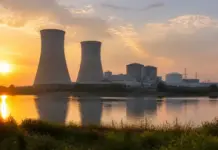



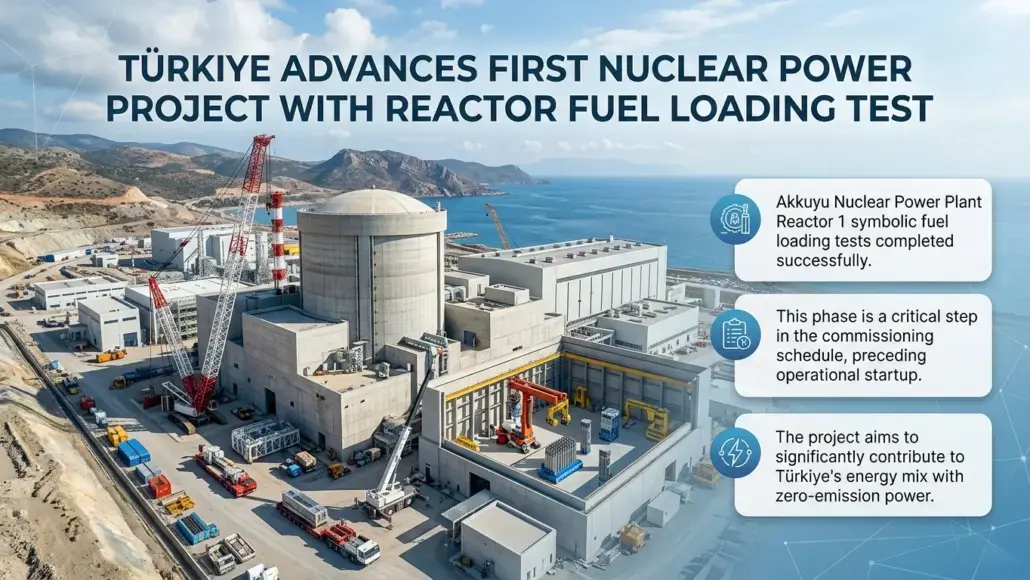
Türkiye has announced the completion of a pivotal phase in its inaugural nuclear power initiative, the Akkuyu Nuclear Power Plant. Fuel loading tests have been successfully conducted on the plant’s initial reactor unit, marking a significant advancement towards its operational commencement.
The symbolic loading of a nuclear fuel assembly into the pressure vessel of Akkuyu’s first reactor was performed as part of essential commissioning procedures. Türkiye ‘S Energy and Natural Resources Minister Alparslan Bayraktar highlighted this event as one of the most crucial stages in the entire commissioning schedule for the first unit.
The Akkuyu Nuclear Power Plant, situated in the southern province of Mersin, is being constructed by Russia’s state nuclear energy company Rosatom. This ambitious endeavor is guided by a 2010 accord and is set to feature four reactors, collectively offering an installed capacity of 4,800 megawatts. Each individual reactor is designed to generate 1,200 MW of power.
The comprehensive fuel loading tests spanned five days and were carried out under the diligent oversight of the Nuclear Regulatory Authority (NDK), as confirmed by the Energy and Natural Resources Ministry in a formal statement. These tests represent a thorough preparation and validation phase for the actual nuclear fuel loading process.
Sergei Butckikh, general manager of Akkuyu Nuclear JSC, elaborated that the procedures were tested under conditions that closely mirrored actual operating environments. During this critical operation, the facility’s mechanical, hydraulic, and thermal systems, alongside its overall structural integrity, underwent rigorous examination. The next immediate steps involve the installation of the first reactor’s upper equipment. Following the completion of assembly work, the unit will proceed through both cold and hot functional testing before it can officially enter operation.
Construction for the Akkuyu project commenced in 2018. While initial plans anticipated operations to begin in the previous year, the project encountered delays attributed to various challenges. These included disruptions caused by the global pandemic, issues with component deliveries after a German supplier faced complications, and financial considerations stemming from frozen Russian assets abroad. Minister Bayraktar had previously indicated in December that Russia had committed an additional $9 billion in financing for the Akkuyu Nuclear Power Project.
Once all four reactors at Akkuyu are operational, the plant is projected to fulfill between 10% to 15% of Türkiye’s total electricity demand. This will establish it as the nation’s preeminent single source of baseload power generation.
The Akkuyu facility is engineered for a 60-year operational lifespan, with provisions for potential extensions of an additional 20 years. A portion of the electricity generated will be sold to the government under a pre-determined fixed-price arrangement. The plant is anticipated to play a crucial role in meeting Türkiye’s escalating power requirements while providing a stable and reliable energy source that can effectively complement the growing integration of intermittent renewable energy sources, such as wind and solar power.
Türkiye’s strategic vision for energy independence extends beyond Akkuyu. Minister Bayraktar confirmed that the country is actively pursuing plans for two additional nuclear power plants, with potential sites identified in Sinop on the Black Sea coast and in the Thrace region. Negotiations for these future projects are currently underway with international partners, including South Korea’s Kepco and Canada’s AtkinsRealis. The national objective is to achieve a total nuclear capacity of 7.2 gigawatts by 2035 and expand this to 20 gigawatts by 2050. This expansion strategy includes plans to incorporate small modular reactors alongside conventional nuclear plants.