





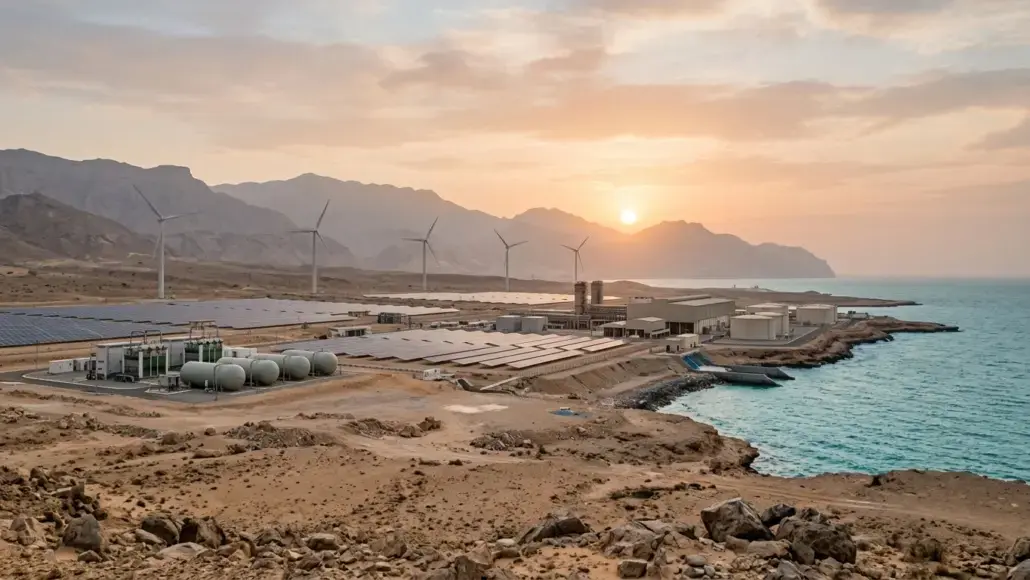
Oman has announced plans to develop a new integrated renewable energy and water project. This project combines renewable energy, desalinated water production, battery storage, and green hydrogen within a single infrastructure framework. The initiative is intended to bolster water security and support industrial advancement, while also facilitating the country’s shift toward sustainable power sources. The design is intended to serve as a scalable model for potential replication across the Middle East and Africa.
Deployment at the Sohar Industrial Hub
The inaugural phase of the integrated renewable energy and water project is slated for the coastal city of Sohar. As a primary industrial and port center, Sohar provides a strategic location for the new facility.
Water and Power Specifications
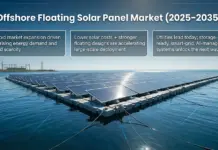
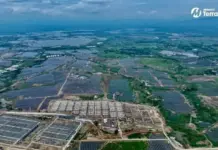
The integrated renewable energy and water project includes the construction of a desalination plant designed to produce 100,000 cubic meters of clean water daily. This supply will support industrial users and port operations to meet regional water demand. To ensure reliable power, the development will feature 250 MW of floating solar capacity. The use of floating solar panels allows for electricity generation on water surfaces, which optimizes land use in regions where available space is constrained.
Sustainability and Storage Integration
To maintain a consistent energy flow, the site will incorporate a 100 MWh battery energy storage system. This storage capacity is designed to manage excess electricity generated by the installation. Furthermore, the site will house a 50 MW green hydrogen production unit. By utilizing renewable energy for green hydrogen production, the facility aims to support future industrial and clean energy needs.
Long-Term Economic and Environmental Impact
The integration of renewable energy, water treatment, battery storage, and green hydrogen production is expected to improve overall operational efficiency. This approach seeks to provide a dependable supply of clean water and electricity for industries. The implementation of this infrastructure involves collaboration between technology providers, engineering firms, financial institutions, and energy developers to support ongoing industrial expansion.