


















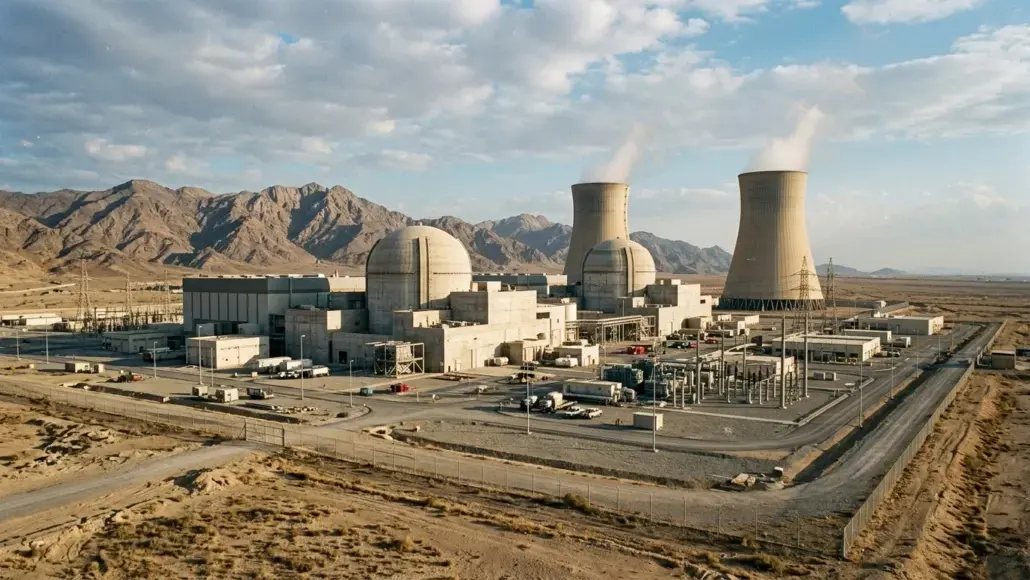
The United States and Saudi Arabia have finalized a landmark nuclear energy cooperation deal that enables the Gulf kingdom to move forward with the development of a civilian nuclear programme. Described by the U.S. energy department as a peaceful nuclear co-operation agreement, the arrangement is expected to provide great access for American companies in the Saudi nuclear energy program.
While the complete text of the agreement has not been released publicly, reports from U.S. media indicate that the framework could eventually permit Saudi Arabia to enrich uranium. Such material can be used as fuel for power plants, but it can also be used to make nuclear bombs. According to experts, such a provision would represent a first for the United States and could increase concerns about future nuclear proliferation in a region already regarded as unstable. The nuclear energy cooperation deal is also accompanied by a bilateral safeguards agreement, according to the U.S. Department of Energy.
In a statement, the U.S. Department of Energy said, “Together, these two agreements lay the legal foundation for a decades-long, multi-billion-dollar partnership that advances several priority economic and strategic objectives, including nuclear nonproliferation.”
Saudi Arabia also issued its own statement, noting that the agreement represents an extension of existing co-operation between the two countries in the energy sector, while highlighting that it follows the Saudi leader’s visit to Washington in November 2025. The nuclear energy cooperation deal further strengthens the existing energy relationship between the two countries and establishes a framework for future cooperation within the civilian nuclear sector.
Regional Security Context and Strategic Implications
The announcement comes against the backdrop of heightened tensions involving the United States, Israel and Iran, where the nuclear issue has remained central to the months-long U.S.-Israeli conflict with Iran. The United States and Israel have maintained that one of the reasons for their February attacks on Iran was to prevent Tehran from developing a nuclear weapon, an allegation that Iran continues to reject.
The announcement also coincides with escalating fighting between the U.S. and Iran. Saudi Arabia, a longstanding U.S. ally, hosts several U.S. military bases that have been targeted by Iranian attacks. The development also follows the announcement made two days earlier by the Houthis in Yemen regarding a “maritime blockade” against the kingdom.
Although detailed provisions of the nuclear energy cooperation deal have not been disclosed, earlier media reports suggested that following a joint study conducted with the United States, Saudi Arabia could receive permission to enrich uranium domestically at a US-built enrichment facility instead of relying on imported fuel supplies. Such a facility could involve billions of dollars in commercial opportunities for US companies participating in its construction.
Beyond the commercial and strategic benefits anticipated from the agreement, another factor believed to have influenced its timing is the reported discussions between Saudi Arabia and both Russia and China regarding similar nuclear cooperation arrangements. The agreement therefore represents a significant diplomatic achievement for Saudi Arabia and carries the potential to reshape power dynamics across the Middle East, although any such changes are unlikely to occur immediately.