
















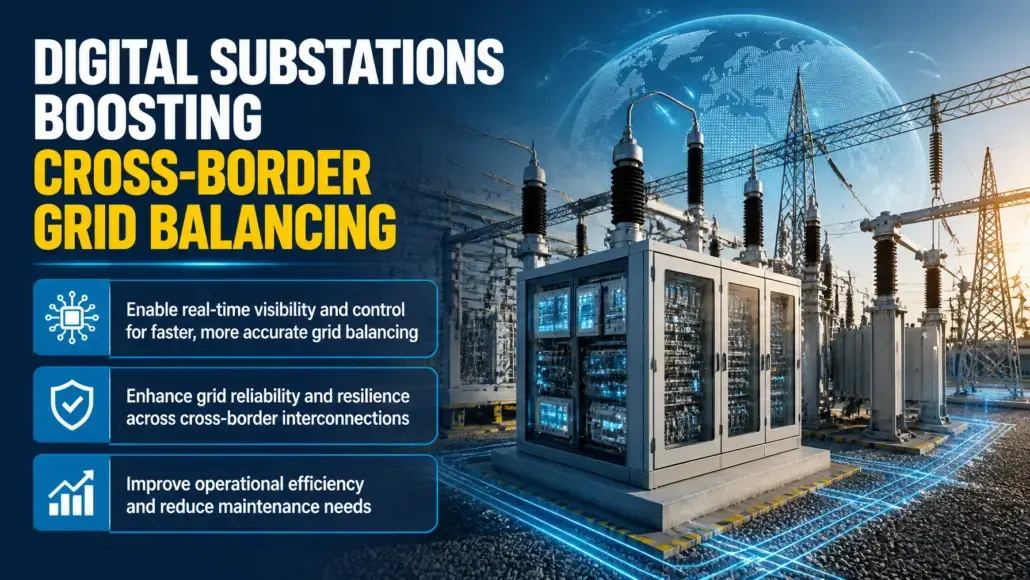
The modernization of the electrical grid is often discussed in terms of generation and transmission, but the nodes connecting these systems are undergoing an equally profound and necessary transformation. Substations, the critical points where voltage is stepped up or down for transport and distribution, are moving away from traditional copper based analog systems toward fully digital architectures. In 2026, digital substations have become a fundamental requirement for high volume cross border power trading, enabling near instantaneous grid balancing, enhanced operational security, and a level of flexibility that legacy systems simply cannot provide.
In a traditional substation, thousands of individual copper wires carry analog signals between primary equipment like transformers and the control rooms where protection and control devices are housed. This physical complexity is not only expensive and time consuming to install but also prone to physical degradation, electrical interference, and signal loss over time.
Digital substations replace these literal miles of wires with sophisticated fiber optic networks, utilizing a process bus to communicate data in real time using standardized digital protocols. PowerGen Advancement notes that this shift significantly reduces the physical footprint of the substation and allows for much faster, more accurate, and more comprehensive monitoring of grid conditions.
Market Momentum and the Global Adoption of Standards
The economic shift toward digital grid infrastructure is accelerating as the energy transition places more demands on existing networks.
Leading technology providers are at the forefront of this digital rollout, providing the hardware and software that make these systems possible:
- Hitachi Energy has deployed its SAM600 v3.0 process interface units, which allow traditional primary equipment to be integrated into a modern digital architecture without a complete overhaul.
- Siemens Energy is advancing its SIPROTEC 5 protection relays with native process bus firmware, which were recently supplied for the 700 MW Celtic Interconnector between Ireland and France.
- ABB has extended its REX640 protection platform and MicroSCADA X automation suite to handle the unique challenges of decentralized and multi directional cross border networks.
- GE Vernova is securing major contracts for large scale international projects, including the 2 GW Eastern Green Link 1, utilizing its GridOS orchestration suite for real time management.
- Schneider Electric has introduced upgraded Easergy P5 relays with native cyber secure process bus integration to protect critical infrastructure from both physical and digital threats.
Enabling High Speed Grid Balancing and Efficiency
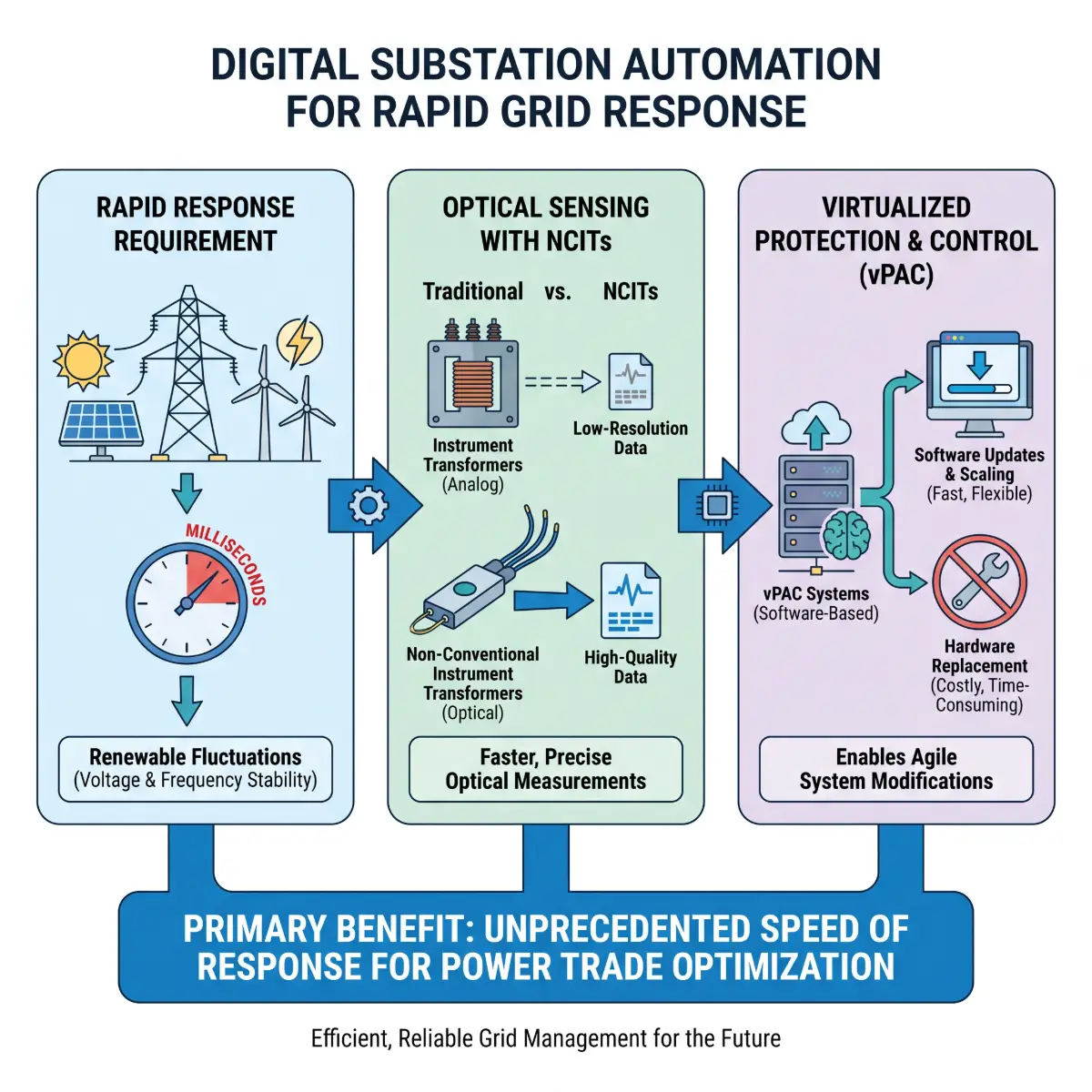
The primary benefit of digital substatios in a power trade context is the unprecedented speed of response:
- Rapid Response Requirement: Substations must react within milliseconds to renewable energy fluctuations to regulate voltage and preserve grid frequency stability.
- Optical Sensing with NCITs: Non-Conventional Instrument Transformers provide faster, more precise optical voltage and current measurements compared to traditional instrument transformers.
- Virtualized Protection & Control (vPAC): High-quality data from NCITs feeds directly into vPAC systems, enabling system updates and scaling via software modifications rather than costly, time-consuming hardware replacements.
This high speed automation is particularly vital for the converter stations that serve as the nodes for HVDC interconnectors in the North Sea. These links carry immense amounts of power between national grids, and any significant delay in substation response could lead to instability across the entire interconnected network. By integrating AI driven dynamic line rating into the substation control system, operators can safely increase the transfer capacity of these links by up to 30 percent during favorable weather conditions, maximizing the economic and environmental value of the infrastructure.
Digital substations also offer significant improvements in cybersecurity, which is a major concern for cross border infrastructure. While connecting a substation to a digital network introduces new risks, modern digital architectures are built with security at their core. Native encryption, multi factor authentication for all access points, and continuous AI driven monitoring of network traffic allow for a more resilient defense against sophisticated cyber threats compared to legacy analog systems that were never designed for the modern digital age.
The Future of Intelligent and Autonomous Grid Nodes
As the energy transition continues to gather pace, substations will evolve from relatively passive nodes to active, intelligent hubs of the grid. In 2026, the industry is already seeing the deployment of edge computing within the substation, where data is processed locally to make immediate, autonomous decisions without waiting for instructions from a central control center. This decentralization is essential for managing the millions of distributed energy resources, such as rooftop solar panels and electric vehicle chargers, that are rapidly becoming an integral part of the global grid.
The reduction in physical cabling and materials also makes digital substations significantly more sustainable. A digital substation typically requires 80 percent less copper cabling than a traditional one, which not only saves money but also significantly reduces the environmental impact of its construction. Furthermore, the use of sulfur hexafluoride (SF6) free switchgear in many new digital substations helps to reduce the greenhouse gas footprint of the grid infrastructure itself. As grid operators face increasing pressure to meet both operational and sustainability targets, the move toward full automation is no longer a luxury but a strategic necessity.
Strategic Resilience and Global Connectivity
Looking toward the 2030s, digital substation will be the foundation upon which the ‘Internet of Energy’ is built. The ability to seamlessly connect different national grids and manage the flow of power with high precision will be the key to a truly global renewable energy market. This connectivity will allow for the sharing of resources across continents, smoothing out the peaks and troughs of generation and demand on a global scale.
The strategic resilience provided by digital substations is a powerful incentive for nations to invest in this technology. By having a grid that can automatically heal itself and adapt to changing conditions in real time, nations can ensure a more reliable and secure supply of power for their citizens and industries. As we move closer to the mid century decarbonization goals, PowerGen Advancement observes that the digital substation will remain one of the most critical, if often overlooked, components of the global energy transition, ensuring that clean power can always find its way to where it is needed most.
References
- “Global Digital Substation Market Outlook 2026” – Fortune Business Insights
- “Substation Automation Market Size and Trends” – Market Research Future
- “IEA World Energy Investment 2025” – International Energy Agency
- “Hitachi Energy SAM600 Technology Update” – Hitachi Energy
- “Siemens Energy Celtic Interconnector Project Report” – Siemens Energy
- “GE Vernova Eastern Green Link 1 Contract Announcement” – GE Vernova
- “Schneider Electric EcoStruxure Substation Operation Report” – Schneider Electric
- “IEC 61850 Standard Impact on Grid Modernization” – International Electrotechnical Commission