







The global energy transition is currently facing a critical bottleneck that is not related to engineering or finance, but to the very molecules that power the next generation of nuclear energy. High-assay low-enriched uranium (HALEU) has emerged as the essential fuel for a new wave of advanced nuclear reactors, including Small Modular Reactors (SMRs) and microreactors. In 2026, the race to establish a secure and diverse supply of HALEU has become a matter of national energy security and technological leadership. As the industry moves away from conventional light-water reactors, PowerGen Advancement notes that the availability of this high-performance fuel will dictate the pace at which advanced nuclear technologies can be deployed at scale.
Defining HALEU: The Sweet Spot of Nuclear Enrichment
To understand the importance of high-assay low-enriched uranium, one must first understand the spectrum of uranium enrichment. Natural uranium contains only about 0.7% of the fissile isotope U-235. The vast majority of today’s commercial power reactors use fuel enriched to between 3% and 5% U-235, which is classified as Low-Enriched Uranium (LEU). On the other end of the spectrum is Highly Enriched Uranium (HEU), enriched to 20% or more, which is primarily used for research reactors and naval propulsion, and is subject to intense non-proliferation controls.
HALEU occupies the critical sweet spot between 5% and 20% enrichment. This higher concentration of fissile material provides significant advantages for reactor design and operation. It allows for higher power density, meaning reactors can be made smaller and more compact while still producing a significant amount of electricity. It also enables longer fuel cycles, reducing the number of times a reactor needs to be shut down for refueling. For many advanced designs, including those that use liquid metal or molten salt coolants, HALEU is not just an advantage; it is a fundamental requirement for the physics of the reactor to work efficiently.
Enabling the SMR and Microreactor Revolution
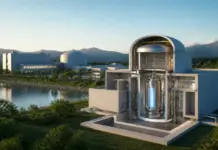
The primary driver for the demand for high-assay low-enriched uranium is the burgeoning market for Small Modular Reactors (SMRs) and microreactors. These systems are designed to be factory-built and transportable, providing clean energy to remote locations, industrial sites, and distributed grids. Because these reactors have smaller cores than traditional plants, they need the higher energy density provided by HALEU to achieve the necessary criticality and burnup rates. Without HALEU, the economic and operational case for many SMR designs begins to weaken, as they would require more frequent refueling and larger containment structures.
In 2026, the first wave of commercial SMRs is reaching the deployment phase, and their success is inextricably linked to the HALEU supply chain. Microreactors, which are even smaller and often designed for plug-and-play operations, are even more dependent on HALEU to maintain a long operational life without intervention. By providing a concentrated source of energy that can last for a decade or more, HALEU-powered microreactors are transforming how we think about energy resilience for critical infrastructure and remote mining operations. The nuclear battery concept is only possible thanks to the unique properties of HALEU.
Overcoming the Supply Chain Bottleneck
The major challenge facing the industry is that, until recently, there was no commercial production of high-assay low-enriched uranium in the West. Historically, the primary source of HALEU was Russia, a situation that became geophysically and geopolitically untenable in recent years. This has led to a massive, coordinated effort by governments in the United States, Europe, and Asia to build new enrichment capabilities. In 2026, we are seeing the results of these investments as new HALEU production facilities come online, utilizing advanced centrifuge technology and, in some cases, laser enrichment.
Establishing a domestic HALEU supply chain involves more than just enrichment; it also requires new facilities for deconversion (turning enriched uranium gas into solid form) and fuel fabrication. These steps are technically complex and subject to stringent safety and security regulations. The industry is also exploring innovative ways to produce HALEU, such as down-blending existing stockpiles of HEU from government sources. While this provides a temporary boost, the long-term goal remains a stable, commercial-scale production capacity that can meet the growing needs of the global advanced nuclear market.
Economic and Strategic Value of HALEU
The economic benefits of high-assay low-enriched uranium extend beyond just enabling new reactor types. Because HALEU allows for better fuel utilization—meaning more energy is extracted from a given amount of uranium—it can lead to lower overall fuel costs over the life of a reactor. It also reduces the volume of spent fuel produced per unit of energy, simplifying the logistics and costs of waste management. These efficiencies are critical for making nuclear power more cost-competitive with other forms of low-carbon generation.
Strategically, leadership in HALEU production is becoming a marker of technological prowess. Nations that control the fuel supply for the next generation of reactors will have a significant influence on the global energy market and international nuclear standards. This has led to a resurgence of government interest in nuclear fuel cycles, with billions of dollars in subsidies and loan guarantees being directed toward fuel innovation. The HALEU economy is creating thousands of high-skilled jobs in chemistry, physics, and advanced manufacturing, revitalizing an industrial sector that had been stagnant for decades.
Non-Proliferation and Safety Considerations
Working with high-assay low-enriched uranium requires a rigorous approach to safety and non-proliferation. While HALEU is still classified as low-enriched uranium and is not suitable for nuclear weapons, its higher enrichment levels mean that it must be handled with greater care than conventional 5% enriched fuel. This includes enhanced physical security for enrichment and fabrication sites, as well as specialized transportation containers. In 2026, the industry is working closely with international bodies like the IAEA to establish new safeguards and standards specifically tailored to the HALEU cycle.
The safety of HALEU fuel itself is often superior to traditional fuel types. Many HALEU-based fuels, such as TRISO particles or metallic alloys, are designed to be extremely robust and heat-resistant. This inherent safety, combined with the smaller fuel loads of SMRs and microreactors, significantly reduces the potential impact of any operational incident. By focusing on both security and safety, the industry is ensuring that the benefits of HALEU can be realized without compromising the global non-proliferation regime.
The Future: HALEU as a Global Commodity
As we look toward the 2030s, high-assay low-enriched uranium is expected to become a standard global commodity, traded similarly to conventional nuclear fuel today. The diversification of supply will lead to more stable pricing and reduced geopolitical risk for reactor operators. As more advanced reactors come online, the demand for HALEU will continue to scale, potentially reaching thousands of metric tons per year.
The journey of HALEU from a niche material to a mainstream industrial fuel is a testament to the essential role of innovation in the energy transition. PowerGen Advancement believes that by providing the fuel needed for safe, clean, and flexible nuclear energy, HALEU is helping to solve the climate crisis and ensure a more resilient energy future for all. The next generation of reactors is no longer just a promise on a blueprint; it is being fueled today by the unique power of HALEU.