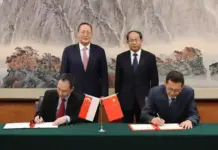

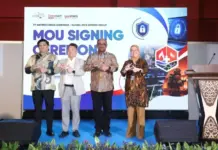


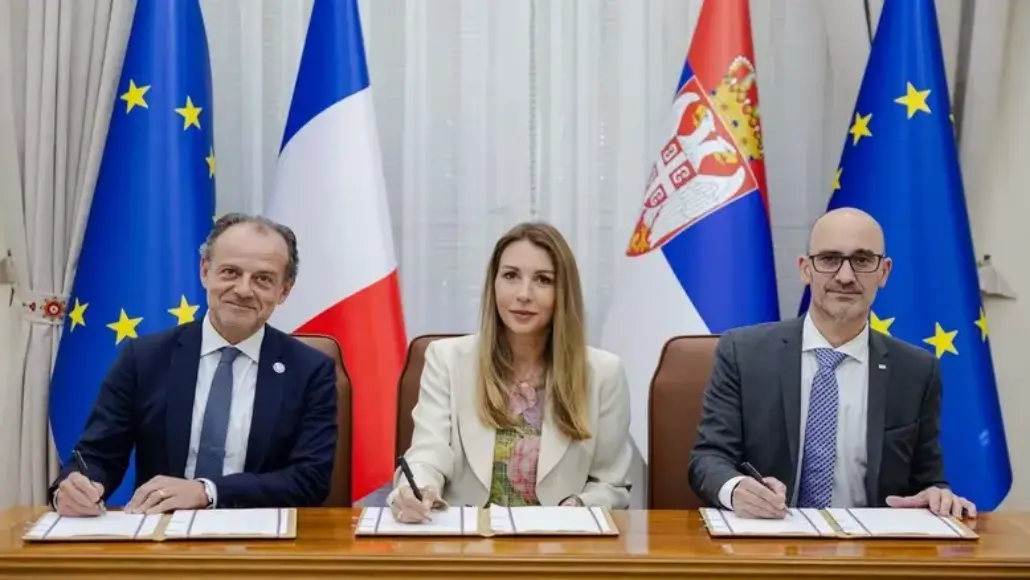
Serbia has officially initiated the first phase of its civilian nuclear programme after signing partnership agreements with French electric utility company Electricite de France (EDF) and development agency Agence Française de Développement (AFD), according to Serbia’s energy minister Dubravka Djedovic Handanovic. The agreements mark the beginning of efforts to strengthen the country’s institutional and professional readiness for the civilian nuclear programme, laying the groundwork for future decision-making on nuclear energy development.
As part of the agreements, EDF and AFD will assist Serbia in developing the professional expertise and institutional framework required for the civilian nuclear programme. Their support will include preparing a series of relevant studies designed to evaluate the programme’s implementation, Handanovic said in a social media post.
“Our goal is to complete all the necessary studies by the middle of next year so that we can make an informed decision on the further development of the nuclear programme,” Handanovic said.
Studies, Funding and Regulatory Framework to Shape Nuclear Development
As per reports, AFD is providing Serbia with a grant worth 500,000 euro ($573,000) to strengthen the professional and organisational capabilities needed to prepare, develop and manage the first phase, as well as part of the second phase, of the civilian nuclear programme. The funding is intended to support the country’s institutional preparation as it progresses through the early stages of nuclear development.
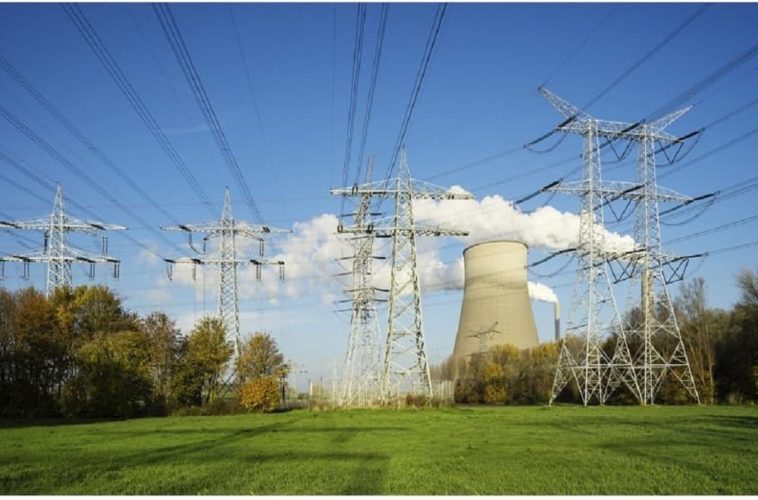
Following the reversal of its ban on constructing nuclear power plants in November 2024, Serbia received the results last year of a preliminary technical study examining the potential use of nuclear energy. Conducted by EDF, the study concluded that nuclear energy could be integrated into Serbia’s existing transmission system over the next 15-20 years. Handanovic also said last year that Serbia requires about 30 million euro to complete the first two phases of its nuclear programme in line with International Atomic Energy Agency (IAEA) guidelines.
According to IAEA, the first two phases in the development of a country’s nuclear programme include a pre-feasibility study, preparatory works for contracting and construction of a nuclear power plant (NPP), and establishment of legal and regulatory frameworks. Following the two phases, the construction of a NPP may begin.
Serbia expects to start the construction of a NPP by 2035. In support of its long-term plans, Serbia has already signed several memorandums and cooperation agreements with South Korea, France, the United States, and Russia to exchange knowledge and experience in nuclear energy. The country also plans to cooperate with the UAE’s Emirates Nuclear Energy Company (ENEC) as part of the development process.