
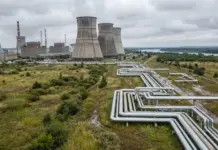


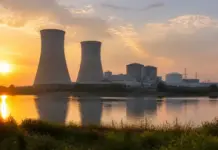


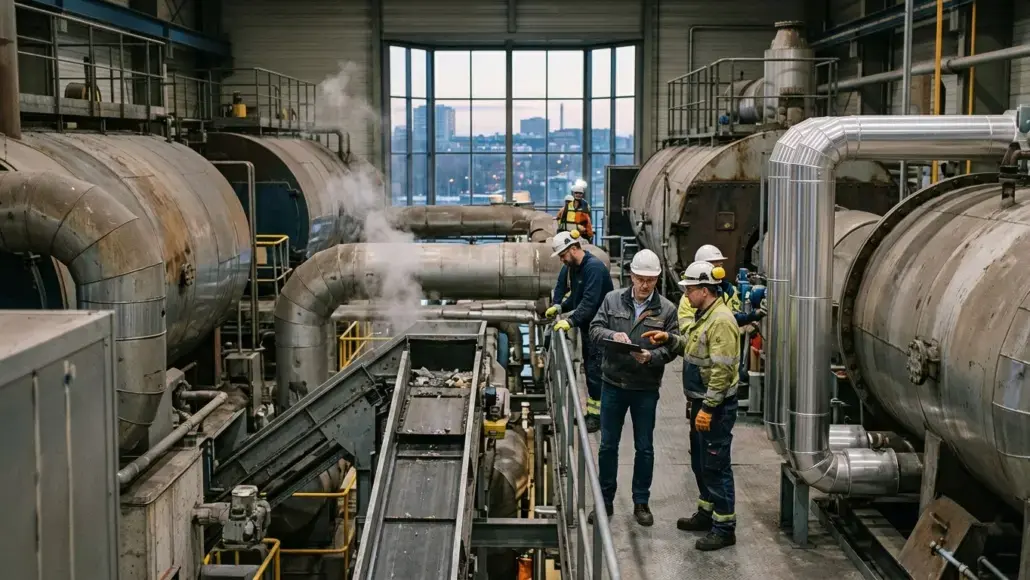
Many of the world’s most critical Waste to Energy (WtE) facilities were constructed several decades ago. While these plants have provided invaluable service in managing municipal waste and generating power, they are now reaching a point where aging infrastructure threatens their operational efficiency and reliability. The decision to either decommission a facility or invest in its modernization is a complex financial and technical challenge. However, for many municipalities, Waste to Energy asset life extension offers a more sustainable and cost-effective alternative to building a new facility from scratch. This process of Waste to Energy asset life extension involves a strategic combination of deep maintenance, component retrofitting, and digital modernization.
The Economic and Environmental Case for Life Extension
Building a new WtE plant is a massive undertaking, often requiring years of planning, permitting, and a capital investment that can reach hundreds of millions of dollars. In contrast, a well-planned life extension program can revitalize an existing facility for a fraction of that cost. Beyond the financial savings, there is a strong environmental argument for modernization. By reusing the existing civil structures, foundations, and grid connections, we significantly reduce the embodied carbon associated with new construction.
Furthermore, an aging plant that is operating inefficiently is a missed opportunity for energy recovery. Extending the Asset Life for Aging Waste to Energy Plants allows for the integration of modern efficiency-boosting technologies that were not available when the plant was first built. This means that a refurbished facility can often generate more power from the same amount of waste, improving its carbon footprint and its revenue potential simultaneously. In the context of a circular economy, extending the life of our existing industrial assets is the ultimate form of reuse.
Comprehensive Boiler and Grate Refurbishment
The heart of any WtE plant is the boiler and the combustion grate, and these are also the components most subject to wear and tear. Constant exposure to high temperatures and corrosive flue gases eventually takes a toll on the metal surfaces. A central pillar of Waste to Energy asset life extension is the systematic refurbishment of these core components. This often involves replacing large sections of the boiler tubes with modern, corrosion-resistant alloys or applying advanced protective coatings like Inconel cladding.
The combustion grate itself can also be modernized. Newer designs offer better control over waste movement and air distribution, leading to more complete combustion and reduced emissions. By upgrading the grate’s mechanical drive and the air injection system, operators can improve the plant’s flexibility, allowing it to handle a wider range of waste compositions. These mechanical interventions are essential for ensuring that the plant can operate reliably for another 15 to 20 years without the risk of catastrophic failure.
Upgrading Control Systems and Digital Infrastructure
Perhaps the most dramatic improvements in WtE technology over the last 20 years have occurred in the field of automation and digital control. Many older plants still rely on analog systems or early-generation digital controllers that lack the processing power and connectivity of modern solutions. A vital step in Extending Asset Life for Aging Waste to Energy Plants is the complete digital heart transplant of the facility.
Replacing an obsolete control system with a modern Distributed Control System (DCS) allows for far more precise management of the combustion and energy recovery processes. This modernization enables the use of advanced process control (APC) algorithms that can optimize the plant in real time, responding to changes in waste quality or grid demand. Additionally, the integration of modern sensors and data historians provides the foundation for predictive maintenance, which is a key tool for managing Waste to Energy asset life extension. By identifying potential issues before they cause a shutdown, operators can significantly increase the plant’s availability and its total lifetime value.
Modernizing Flue Gas Treatment for Compliance
Environmental regulations have become significantly more stringent since most aging WtE plants were first commissioned. To continue operating, these facilities must often undergo major upgrades to their flue gas treatment (FGT) systems. This might involve the installation of new fabric filters, the addition of activated carbon injection for mercury removal, or the implementation of Selective Catalytic Reduction (SCR) for advanced NOx control.
Modernizing the FGT system is not just about compliance; it is also an opportunity to improve the plant’s energy efficiency. Newer FGT designs often have a lower pressure drop, reducing the power consumption of the induced draft fans. In some cases, the upgrade might include heat recovery stages that capture thermal energy from the flue gas to preheat the boiler feedwater. By integrating these environmental and efficiency goals, the life extension project ensures that the plant remains a good neighbor and a high-performing asset for the long term.
Turbine Overhauls and Electrical System Modernization
While the boiler produces the steam, the steam turbine and generator are responsible for turning that steam into revenue. As part of a life extension program, the turbine should undergo a comprehensive overhaul to restore its internal clearances and improve its efficiency. In some cases, it may be possible to replace the internal rotors or blades with modern aerodynamic designs that can extract more work from the same steam flow.
The plant’s electrical infrastructure, including transformers, switchgear, and protection relays, also requires attention. These components are critical for safety and for the reliable export of power to the grid. Modernizing the electrical system ensures that the plant can meet the increasingly complex requirements of grid operators, such as the ability to provide frequency response or reactive power support. This ensures that the aging plant remains a versatile and valuable participant in the modern energy market.
The Role of Maintenance Culture in Asset Longevity
Technological upgrades are essential, but they must be supported by a culture of rigorous, data-driven maintenance. Extending the Asset Life for Aging Waste to Energy Plants requires a shift from run-to-fail to a more sophisticated reliability-centered maintenance (RCM) approach. This involves using condition monitoring data to determine the optimal timing for interventions, ensuring that every dollar spent on maintenance provides the maximum possible benefit to the plant’s lifespan.
Training the workforce to use these new digital tools and to understand the complexities of the modernized systems is equally important. A plant is only as good as the people who operate it. By investing in staff development, owners ensure that their modernized Waste to Energy asset life extension strategies are executed with precision and care, protecting the long-term health of the facility.
Planning for the Next Generation of Waste Challenges
When extending the life of a plant, it is important to look forward, not just backward. The composition of municipal waste is changing, with more emphasis on plastic reduction and increased organic waste separation. A successful life extension project will build in the flexibility to handle these shifts in the waste stream. This might involve modular upgrades that can be added as the waste profile changes over the next decade.
Additionally, considering the future integration of carbon capture technologies can ensure that the plant remains relevant in a net-zero world. Even if carbon capture is not installed immediately, capture-ready designs can be implemented during the refurbishment, leaving space and connection points for future additions. This forward-looking approach ensures that the investment in Extending Asset Life for Aging Waste to Energy Plants provides a truly sustainable pathway for the facility’s future.
Conclusion
Extending the Asset Life for Aging Waste to Energy Plants is a strategic imperative for a world that needs both reliable waste management and clean energy. By combining mechanical refurbishment with digital modernization and environmental upgrades, we can transform aging facilities into high-performing assets for the 21st century. The process of Waste to Energy asset life extension proves that with the right expertise and investment, our existing infrastructure can be a powerful engine for the circular economy. PowerGen Advancement believes that as we continue to bridge the gap between our current waste challenges and our future sustainability goals, the revitalization of our WtE fleet will remain a cornerstone of resilient and responsible urban planning.