

















For large-scale industrial operations, energy is often the single most significant operational cost and the primary driver of their carbon footprint. Traditional energy procurement involves buying electricity from the grid and generating steam or heat using onsite fossil fuel boilers. However, this fragmented approach is inherently inefficient, as a large portion of the energy is lost as waste heat at the power plant or during transmission. The solution for many forward-thinking industries, particularly those in the forestry, food processing, and textile sectors, is the implementation of biomass combined heat and power (CHP) systems. PowerGen Advancement sees these cogeneration plants as a highly efficient, sustainable, and reliable sources of both thermal and electrical energy from a single, renewable fuel source.
The Core Concept of Cogeneration and Thermal Efficiency
The fundamental advantage of biomass combined heat and power lies in its ability to capture and utilize the heat that would otherwise be rejected to the environment in a conventional power-only plant. In a typical electrical generation cycle, only about 30 to 40 percent of the fuel’s energy is converted into electricity. The remaining 60 to 70 percent is lost as waste heat. By utilizing this heat for industrial processes—such as drying, pasteurization, or space heating—a CHP system can achieve an overall fuel utilization rate of 80 to 90 percent.
This leap in efficiency has profound implications for industrial competitiveness. For a factory that requires a constant supply of high-pressure steam, generating that steam as a byproduct of electricity production significantly reduces the net cost of both. This thermal-led approach to power generation ensures that the plant’s output is perfectly aligned with the industrial site’s needs, creating a highly optimized energy ecosystem that is far superior to reliance on external grid power alone.
Integrating Biomass CHP into Industrial Workflows
The successful deployment of a biomass combined heat and power system requires a deep understanding of the industrial facility’s load profile. Unlike the grid, which can absorb fluctuations in demand, an onsite CHP plant must be carefully sized to meet the specific thermal baseload of the factory. If the plant is too large, it will produce excess heat that cannot be used; if it is too small, the industry will still rely heavily on supplementary boilers.
Modern CHP systems are designed with high levels of modularity and control. Some utilize back-pressure turbines, which are ideal for industries that need large amounts of low-pressure steam. Others use extraction-condensing turbines, which offer more flexibility to vary the ratio of heat to power output. This flexibility is essential for industries with seasonal demand shifts, such as food processors that peak during harvest periods. By integrating the CHP control system with the factory’s production management software, companies can ensure that their energy production always matches their operational reality.
Fuel Flexibility and the Use of Onsite Residues
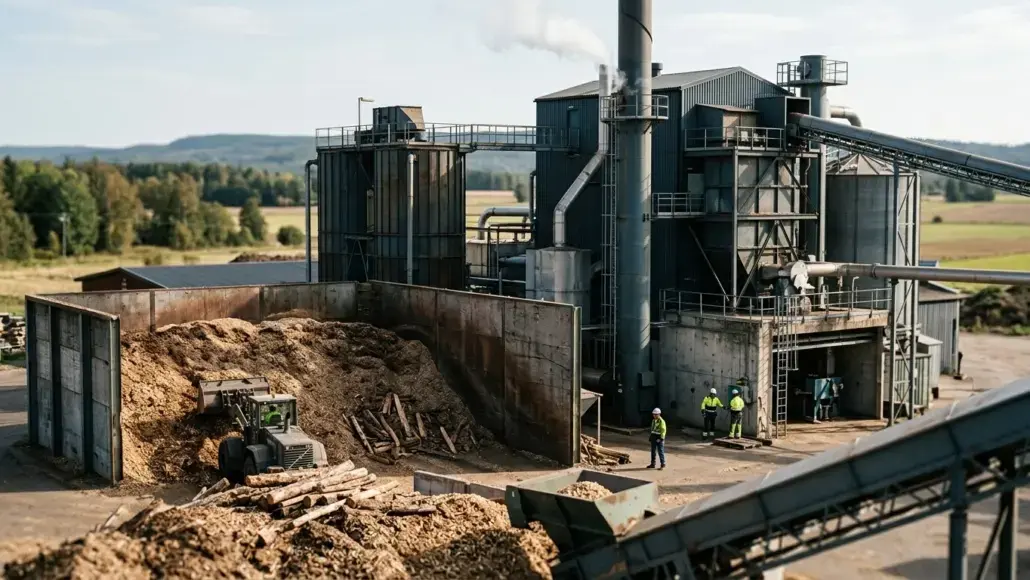
One of the most compelling arguments for biomass combined heat and power in an industrial setting is the ability to use the industry’s own waste as fuel. Sawmills can use bark and sawdust; paper mills can use black liquor and wood residues; and agricultural processors can use husks or straw. This closed-loop approach to energy eliminates the cost and carbon footprint of transporting waste offsite while simultaneously providing a free or low-cost fuel source for the CHP plant.
Even for industries that do not produce their own biomass waste, the use of locally sourced forestry or agricultural residues provides a stable and often more affordable alternative to natural gas or heating oil. By diversifying their energy source, companies protect themselves from the volatility of global fossil fuel markets. This energy security is a vital component of long-term industrial planning, allowing businesses to fix their energy costs for years at a time.
Environmental Impact and the Path to Net-Zero Manufacturing
As global supply chains increasingly demand low-carbon or net-zero products, the energy source of a factory has become a key competitive differentiator. Biomass is considered carbon-neutral when sourced sustainably, as the CO2 released during combustion is equal to the amount absorbed by the plants during their growth. Implementing a biomass combined heat and power system allows a manufacturer to dramatically reduce their Scope 1 and Scope 2 emissions in a single step.
Beyond carbon, modern biomass CHP plants are equipped with advanced emission control technologies that ensure high air quality. High-efficiency baghouse filters and selective catalytic reduction (SCR) units remove particulates and nitrogen oxides, ensuring that the facility meets the most stringent environmental standards. For industries located near residential areas, this commitment to clean operation is essential for maintaining a positive relationship with the local community and ensuring long-term operational viability.
Economic Viability and Return on Investment
While the initial capital investment for a biomass combined heat and power system is higher than for a simple gas boiler, the long-term economic benefits are substantial. The combination of fuel cost savings, reduced electricity bills, and potential income from selling excess power back to the grid creates a compelling financial case. In many regions, governments also provide incentives for high-efficiency cogeneration or for the use of renewable thermal energy, further shortening the payback period.
Additionally, a CHP system can provide valuable behind-the-meter services to the grid, such as demand response or peak shaving. By reducing the factory’s reliance on the grid during times of high demand, the company can avoid expensive peak pricing and even receive payments from grid operators for helping to maintain system stability. These secondary revenue streams further enhance the ROI of the biomass investment.
Resilience and Energy Independence
For critical industrial processes, a power outage can be disastrous, leading to ruined batches, damaged equipment, and lost revenue. A biomass combined heat and power system provides a layer of resilience that grid-connected facilities lack. If the main grid goes down, a well-designed CHP plant can operate in island mode, providing the essential power and heat needed to keep the factory running or to perform a safe and controlled shutdown.
This energy independence is increasingly valued in an era of aging grid infrastructure and more frequent extreme weather events. By generating their own power and heat onsite, manufacturers take control of their most critical resource. This stability allows for more confident business expansion and long-term investment, as the company is no longer at the mercy of external infrastructure failures.
Technological Advancements in Small-Scale CHP
While large-scale CHP has been common for decades, recent technological advancements have made biomass combined heat and power viable for smaller industrial and commercial users. Technologies such as Organic Rankine Cycle (ORC) systems and biomass-powered Stirling engines allow for efficient energy recovery at much smaller scales than traditional steam turbines.
These smaller systems are often delivered as containerized or plug-and-play units, reducing the complexity and time of onsite installation. This democratization of CHP technology allows a wider range of businesses—from mid-sized dairies to regional hospitals—to benefit from the efficiency and sustainability of biomass cogeneration. As these technologies continue to mature and drop in price, they will play an increasingly important role in the decentralization of our energy systems.
Conclusion
Biomass combined heat and power is more than just an energy technology; it is a fundamental tool for industrial efficiency and sustainability. By capturing the full value of a renewable fuel source, industries can lower their costs, slash their emissions, and secure their operational future. The integration of cogeneration into the heart of manufacturing processes represents the highest expression of resource efficiency, proving that industrial growth and environmental responsibility can indeed go hand in hand. PowerGen Advancement believes that as we move toward a greener global economy, the widespread adoption of biomass CHP will be a vital pillar in the creation of a resilient and low-carbon industrial sector.