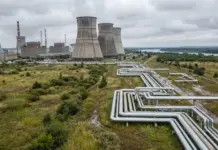
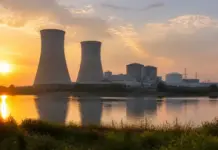
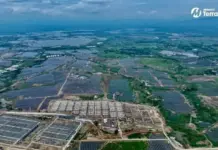
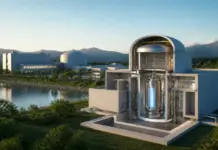
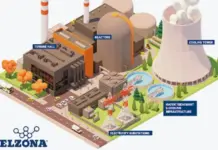

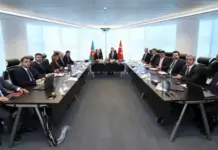
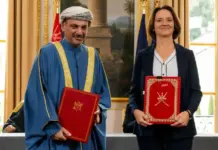
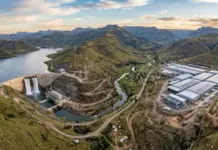
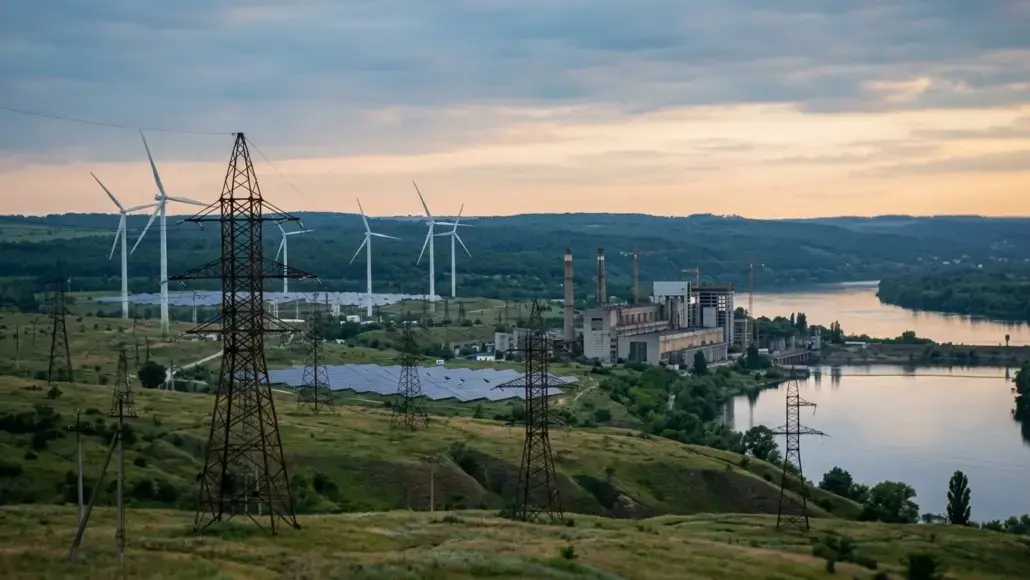
Ukraine is pursuing an ambitious plan to restore its electricity generation system, with a goal of reaching 54GW power capacity by 2035. The target would return the country’s generation capability to the level that existed before Russia’s aggression began in 2014. Speaking at URC2026 in Gdańsk, Ukraine’s Energy Minister Denys Shmyhal outlined the government’s vision for rebuilding and modernizing the national energy sector.
Under the long-term strategy, nuclear energy is expected to provide approximately 50% of total generation capacity, while renewable energy sources will account for 30%. Gas-fired generation is projected to contribute the remaining 20%.
As part of its immediate priorities, Ukraine is also seeking to restore and construct more than 10 GW of power generation capacity before the next heating season. The effort is aimed at strengthening energy resilience following repeated Russian attacks on critical power infrastructure.
International Agreements and Financing Drive Energy Expansion
According to Shmyhal, Ukraine secured around 30 international agreements in the energy sector during URC2026 and finalized financing arrangements for energy-related projects valued at almost €2 billion. These developments will help Ukraine with its 54GW power capacity restoration goal.
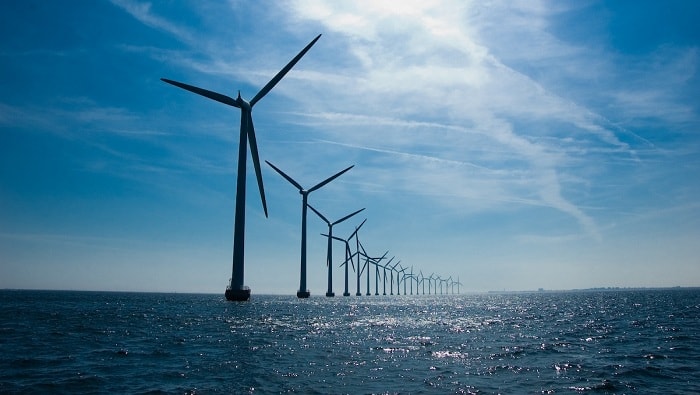
- Ukraine signed common terms with German developer Notus Energy for a €65 million loan supporting a 120 MW wind farm project.
- DTEK and GE Vernova reached an agreement to develop a new 650 MW combined-cycle gas power plant at the Burshtyn power plant site, with the project carrying a value of €900 million. DTEK is also collaborating with the UK’s Octopus Energy Group on solar power and battery storage developments worth €100 million.
- A €191.2 million financing agreement was concluded between IFC, the EBRD, BSTDB, BII Ukraine and Swedfund for the construction of a 189 MW wind farm being developed by Galnaftogaz subsidiaries.
- The EBRD signed letters of intent with Germany and Norway for contributions of €45 million and €10 million respectively to the RAMP-UP program. Developed jointly by the EBRD and the World Bank, the mechanism is intended to support 1 GW of new renewable energy capacity and could mobilize up to €1.5 billion in investment.
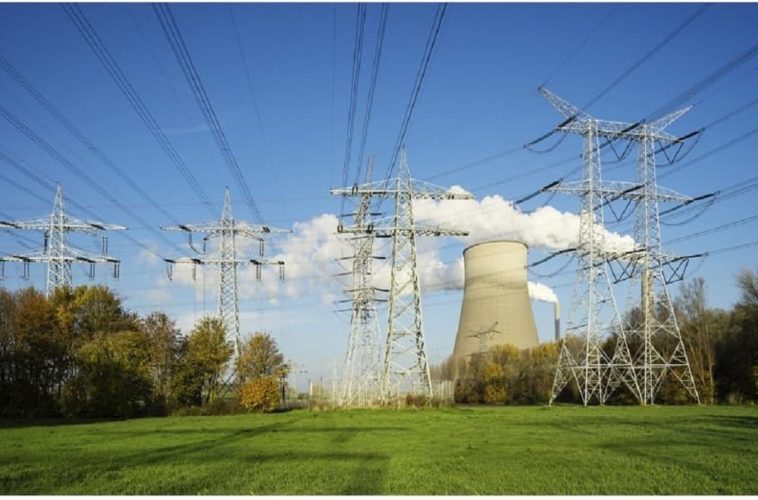
- Further support for the sector includes a €90 million state-guaranteed loan for Ukrenergo to reconstruct substations and improve corporate governance. Separately, an €11 million grant from the German government through KfW will help the company procure critical equipment needed for energy infrastructure repairs.
- Ukraine also entered into an agreement with Norway and the Netherlands for a €44.6 million grant to Ukrnafta.
- Naftogaz signed several memorandums with Siemens Energy, GEK TERNA Group, DP Pumps and ORLEN. Agreements with ORLEN cover LNG supplies to Ukraine and cooperation on sustainable development, decarbonization, and ESG. Naftogaz and Ukrnafta additionally signed a memorandum with Dutch company CQUESTRA BV to launch a Ukrainian-Polish cross-border CO₂ transportation and geological storage project valued at €8.53 million.
- Energoatom and the Czech company ŠKODA JS signed a new memorandum expanding cooperation on the development of new nuclear capacity and the modernization of Ukraine’s nuclear infrastructure.
- The EBRD signed a mandate letter for long-term debt financing for the second stage of the Power One decentralized generation project implemented by Dragon Capital and energy company Negen. This phase will support nearly 170 MW of generation capacity across six sites in Ukraine and has a budget exceeding €90 million.
- Lithuania committed €4 million for solar panels and energy storage systems at social infrastructure facilities, including schools and hospitals.
- Kovel Porto Industrial Park and Poland’s HANPLAST agreed to develop a solar power plant and energy storage system with a total budget of €42 million, with the contractor taking a 20% ownership stake.
- Sweden will provide Ukraine with almost SEK 1.5 billion, equivalent to about €140 million, in 2026 to reinforce the energy sector ahead of the next heating season. Of this amount, SEK 1.37 billion will be directed to the Energy Support Fund, SEK 100 million to the Civil Defense Fund, and SEK 20 million to the International Atomic Energy Agency. Overall, Ukraine secured more than €550 million in Gdańsk for energy resilience measures and heating-season preparations.
- The Nordic Environment Finance Corporation will also restart lending to Ukrainian communities to facilitate green reconstruction efforts. Approximately €117 million is expected to be mobilized for investment projects, including up to €7.15 million for technical assistance and up to €70 million in guarantees.
Collectively, these agreements support Ukraine’s strategy of rebuilding a more decentralized, diversified and resilient energy system. Through investments in nuclear modernization, renewable generation, gas-fired capacity, storage technologies and international financing, the country is advancing toward its goal of restoring 54GW power capacity.