
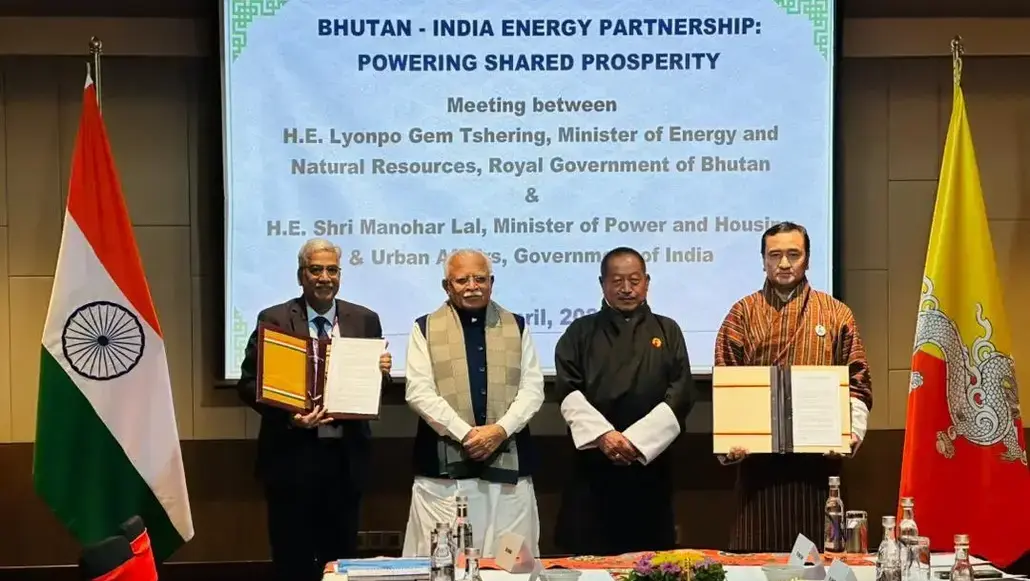
India’s Union Minister for Power and Housing & Urban Affairs, Manohar Lal Khattar, made a four-day official visit to Bhutan, highlighting a renewed phase in the long-standing bilateral relationship between the two nations. The visit underscores a strengthened energy partnership and reflects continued alignment built on mutual trust, shared priorities, and cooperation across key sectors, particularly energy and sustainable development. This evolving energy partnership highlights the strategic importance both countries place on collaboration aimed at supporting long-term growth and stability.
During the visit, Khattar met with Bhutan’s Prime Minister, Tshering Tobgay, where both sides reiterated their commitment to deepening engagement in clean energy initiatives and sustainability efforts. Their discussions emphasized a shared ambition to build a resilient, low-carbon future through closer coordination. In a separate meeting with Gem Tshering, Bhutan’s Minister for Energy and Natural Resources, talks focused on reinforcing ongoing hydropower collaboration while identifying new opportunities in renewable energy development and regional power trade. These engagements further reinforced the central role of the energy partnership in driving bilateral progress.
A significant development from the visit was the creation of an enhanced bilateral institutional framework mechanism. This structure is intended to support systematic coordination and periodic review of joint initiatives while expanding cooperation into emerging areas such as non-hydro renewable energy, cross-border transmission infrastructure, project financing, and capacity building. The framework is expected to provide a more organized approach to advancing the energy partnership and ensuring efficient execution of collaborative projects.
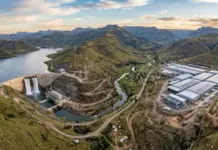
The visit also resulted in the signing of two major agreements, further strengthening the energy partnership. The first was a Tariff Protocol for the 1020 MW Punatsangchhu-II Hydroelectric Project, a milestone in hydropower cooperation. The project was jointly inaugurated by Narendra Modi and Jigme Khesar Namgyel Wangchuck on November 11, 2025, and began exporting surplus power to India in September 2025 under a mutually agreed tariff structure. The second agreement, a Methodology for Reactive Energy Accounting, establishes a technical framework aimed at improving grid stability, enhancing efficiency in cross-border electricity exchange, and streamlining bilateral power trade mechanisms. Together, these developments are expected to open new pathways for cooperation, reinforcing India–Bhutan ties and advancing regional energy security and sustainable growth.