






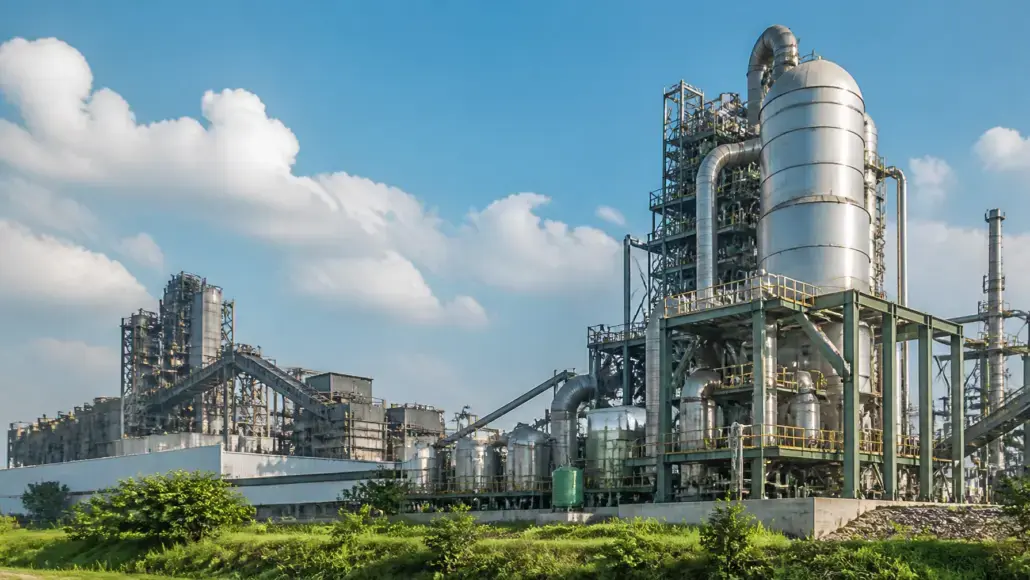
The global effort to mitigate climate change has reached a critical juncture where the focus is shifting from target-setting to the heavy lifting of industrial transformation. In this context, carbon capture, utilization, and storage (CCUS) has transitioned from being a theoretical luxury to an absolute necessity. For sectors like cement, steel, and chemical manufacturing—where emissions are an inherent part of the chemical process rather than just a byproduct of energy use—carbon capture projects represent the only viable path to net-zero. However, the deployment of this technology at the required scale is currently stalled not by a lack of engineering prowess, but by the absence of robust, repeatable business models. For CCUS to fulfill its potential, the industry must move away from bespoke, high-risk pilot schemes toward standardized, bankable frameworks that can attract the trillions of dollars in private capital needed for global decarbonization.
The Evolution of Economics in Carbon Capture Projects
Historically, the economic justification for carbon capture projects was largely tied to Enhanced Oil Recovery (EOR). PowerGen Advancement notes that by injecting captured CO2 into aging oil fields to boost production, developers could offset the high cost of the capture technology. While EOR provided an early proof-of-concept, it is no longer sufficient as a primary driver in a world focused on absolute emission reductions. The new generation of business models must find value in the act of sequestration itself. This requires a fundamental shift in how we perceive carbon—from an industrial waste product to a liability that must be managed, or a commodity with intrinsic environmental value. Strengthening the business case for carbon capture today means navigating a complex landscape of tax credits, carbon markets, and voluntary corporate commitments, all while managing the significant operational risks associated with long-term geological storage.
The Rise of the Transport and Storage (T&S) Hub Model
One of the most promising developments in the sector is the decoupling of the capture process from transport and storage. In the early days, a single company would manage the entire chain, from the flue gas stack to the injection well. This full-chain approach is incredibly capital-intensive and carries immense technical risk. The emerging business model is the Hub and Spoke system, where a specialized provider offers Transport as a Service (TaaS). Under this model, multiple industrial emitters (the spokes) capture their own CO2 and pay a fee to a central operator (the hub) that manages the pipeline network and the permanent storage sites. This specialization allows for significant economies of scale, as a single large-scale pipeline is far cheaper than several smaller ones. For investors, these T&S hubs resemble traditional utility or midstream oil and gas assets, offering predictable, long-term returns backed by multiple customer contracts.
Reducing Cross-Chain Risks Through Specialization
The specialization inherent in the hub model also helps to mitigate cross-chain risk—the danger that a failure in one part of the CCUS chain will strand assets in another. For instance, if a storage site is temporarily closed, a capture facility could be left with nowhere to send its CO2. Conversely, if a major emitter goes bankrupt, the pipeline operator loses revenue. By aggregating multiple emitters and potentially multiple storage sites, hubs diversify these risks. Business models for these carbon capture projects often include complex send-or-pay or store-or-pay contracts, which are designed to ensure that the financial burden of a technical failure is shared equitably among all stakeholders. This risk-sharing is a prerequisite for attracting project finance, as it provides lenders with the assurance that debt service will continue even in the face of localized operational disruptions.
Policy as the Bedrock of CCUS Business Frameworks
In the current market, policy is the single most important factor determining the viability of carbon capture projects. In the United States, the 45Q tax credit has been a game-changer, providing a fixed dollar amount for every ton of CO2 permanently stored. This credit effectively sets a floor price for carbon, giving developers a reliable revenue stream that is independent of volatile carbon markets. Similarly, in Europe, the combination of high EU Allowance (EUA) prices and direct government grants for infrastructure is creating a supportive environment for large-scale projects like Northern Lights in Norway or Porthos in the Netherlands. However, for the industry to truly scale, business models must eventually transition away from a total reliance on subsidies. The long-term goal is a market where the cost of carbon capture is lower than the cost of emitting, driven by carbon taxes, border adjustment mechanisms, and the premium for green industrial products.
Integrating CCUS into the Voluntary Carbon Market
Beyond government mandates, the voluntary carbon market (VCM) is beginning to offer a secondary revenue stream for carbon capture projects. As multinational corporations commit to net-zero or even carbon negative goals, the demand for high-quality, permanent carbon removal is skyrocketing. Unlike nature-based solutions like reforestation, which carry risks of reversal due to fire or land-use changes, the geological storage of CO2 is considered the gold standard of permanence. Business models that can accurately quantify and certify these removals can command a significant premium in the VCM. Investors are increasingly looking for projects that can stack these various revenue streams—combining government tax credits with the sale of high-integrity carbon removal credits to enhance the internal rate of return (IRR).
The Role of Product Premiums and Green Procurement
A less discussed but equally vital component of future business models is the role of the end-consumer. If a construction firm is willing to pay more for zero-carbon cement, or if a government mandates the use of low-carbon materials in public infrastructure projects, the cost of carbon capture can be passed down the value chain. This green premium model is already taking hold in the steel industry, where several major car manufacturers have signed agreements to purchase green steel at a higher price point. For carbon capture projects, this means that the offtake agreement is not just for the CO2, but for the decarbonized product itself. Strengthening the link between capture activities and the final market for green goods is essential for creating a self-sustaining economic ecosystem that does not rely forever on the public purse.
Addressing the Liability and Long-Term Stewardship Challenge
One of the most significant hurdles to securing investment in carbon capture projects is the question of long-term liability. Who is responsible for the CO2 once it is underground? If a leak were to occur fifty years after a project has finished, the potential financial and environmental consequences are enormous. Current business models are addressing this through a combination of private insurance, industry-funded indemnity pools, and eventual hand-off to government stewardship. In many jurisdictions, the government agrees to take over the long-term monitoring and liability of a storage site after a specified period of successful operation. This transfer of liability is a critical de-risking mechanism. Without it, the risk of infinite tail liability would make it virtually impossible for private companies to ever fully exit a project, deterring the very institutional capital the industry needs to grow.
The Importance of Standardized Monitoring and Verification
To underpin any business model, there must be absolute trust in the data. Monitoring, Reporting, and Verification (MRV) is the technical foundation upon which the financial house is built. Investors, regulators, and carbon credit buyers all need to know exactly how much CO2 was captured, transported, and successfully stored. The development of standardized MRV protocols is currently a major focus for the industry. By automating data collection and using satellite and seismic monitoring, developers can provide real-time assurance of their project’s performance. A robust MRV strategy not only ensures compliance with tax credit requirements but also protects the brand reputation of the emitters and the storage operators, which is an increasingly important factor in the ESG-driven investment landscape.
Building the Financial Infrastructure for a Net-Zero Industry
The technology to capture and store carbon has been around for decades, but the financial architecture to deploy it at the scale of millions of tons per year is only just being built. Carbon capture projects are no longer just about engineering. They are about innovative contracting, strategic policy alignment, and sophisticated risk management. PowerGen Advancement believes that by embracing models that favor hub-based infrastructure, diversified revenue streams, and clear liability frameworks, we can transform CCUS from a cost center into a vital industrial service. The path to a net-zero future requires us to build a carbon management industry that is as large and efficient as the oil and gas industry it is designed to mitigate. Strengthening our business models today is the only way to ensure that the carbon capture projects of tomorrow are ready to meet the challenge of the climate crisis. The molecules are ready; now the money must follow.