





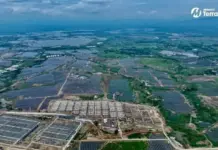






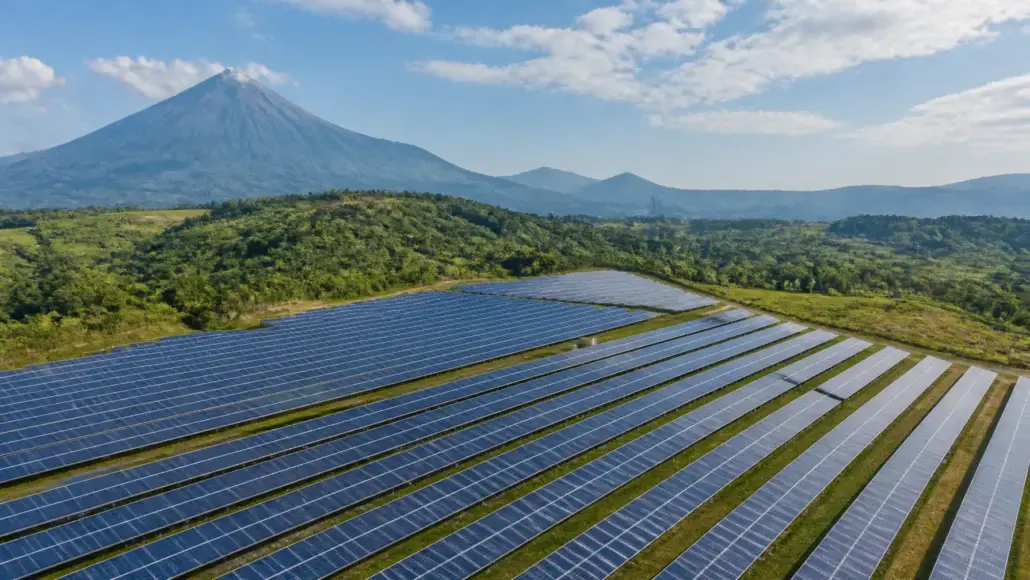
Indonesia officially launched its ambitious 100 GWp Solar Power Program, setting out a three-year plan to add around 33 GWp of solar capacity each year. The 100 GWp solar program is expected to open significant opportunities for renewable energy developers, investors, equipment suppliers, and independent power producers (IPPs). Its first project bundle represents 5.3 GWp and is expected to attract around USD 71.3 billion in investment. Spread across 15 locations, the projects will deploy a combination of ground-mounted, rooftop, and floating solar technologies, establishing a broad development pipeline under the 100 GWp solar program.
Seven projects with a combined capacity of about 4.7 GWp have already reached the tender-ready stage. The largest of these is the floating PLTS Jatiluhur project, which has a capacity of 1,688 MWp. It is followed by the 1,250 MWp PLTS Cirata floating solar project and the 636 MWp PLTS Jatigede project.
Other tender-ready developments are the 605 MWp PLTS Madura project, which incorporates battery energy storage system (BESS) integration; the 300 MWp PLTS Gilimanuk project; the 118 MWp PLTS Buleleng project; and the 69 MWp PLTS Lahan Bank Tanah project. These developments will be offered to IPPs through competitive tenders. Where competitive pricing cannot be achieved, Indonesia’s sovereign wealth fund Danantara is expected to participate in supporting project development.
TKDN and BESS Key to Project Development
Bidders will need to account for local content requirements, known as TKDN, which are expected to be introduced through a phased approach. BESS integration is also expected to be an important element, especially where energy storage can lower system costs and enhance grid flexibility. The program estimates that effective energy storage integration could deliver potential annual savings of around IDR 73.9 trillion.
Land, Permitting and Local Partnerships
Land acquisition and permitting remain important areas for the program. Indonesia is working on a single-window process intended to simplify approvals and accelerate project development. International developers are also expected to explore partnerships with local companies, while local partners will be required to hold SBUJPTL certification.
Large Tender Pipeline Emerging for Renewable Energy Industry
The success of the 100 GWp solar program will ultimately depend on competitive auction structures, bankable power purchase agreements, local participation, streamlined approvals, and access to financing. With several major projects already advancing toward tender, Indonesia’s 100 GWp solar program is positioned to create a significant pipeline of opportunities for the global renewable energy industry.