


The global search for sustainable baseload power is increasingly turning its gaze toward the deepest and most consistent flows of our planet: the massive, unidirectional ocean currents. Unlike tidal streams, which ebb and flow with the tide, ocean current energy harvests the relentless momentum of systems like the Gulf Stream, the Kuroshio Current, and the Agulhas Current. These underwater rivers transport vast volumes of water at near-constant speeds, offering a capacity factor that can exceed 80%—a figure unheard of in the worlds of solar and wind. For the energy industry, unlocking ocean current energy represents the ultimate frontier in marine renewables, promising a source of electricity that is as reliable as traditional thermal power plants but with a zero-carbon footprint and minimal visual impact.
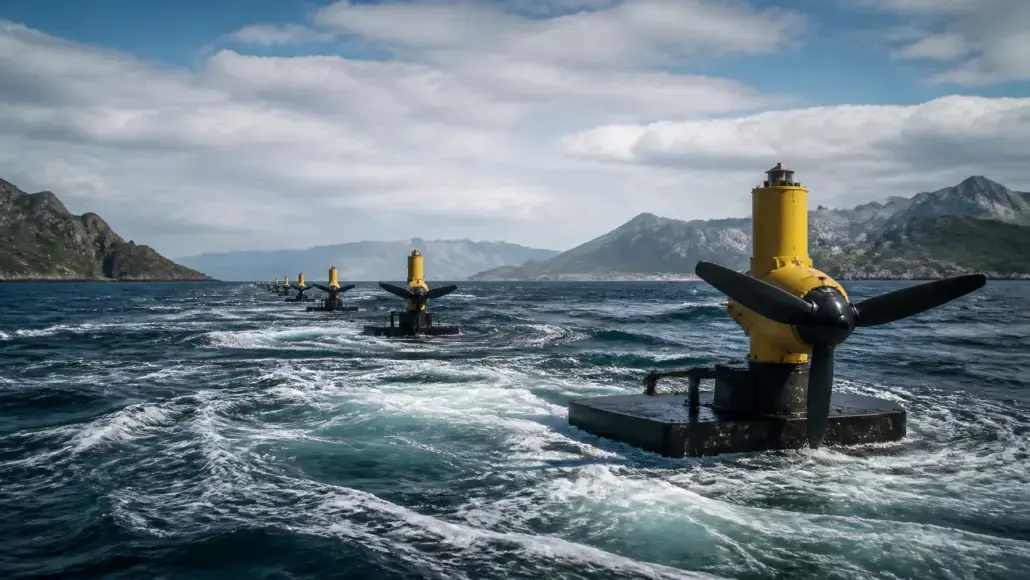
The technical potential of ocean current energy is staggering. Because seawater is approximately 830 times denser than air, the kinetic power density of a 2-meter-per-second ocean current is equivalent to a wind speed of over 18 meters per second. This allows for the use of relatively compact turbines to capture enormous amounts of energy from a small physical footprint. However, the engineering required to harvest this power is daunting. Ocean currents are typically located in deep waters far from the coast, requiring turbines that can operate autonomously at depths of hundreds of meters for years at a time. This has led to the development of specialized horizontal-axis marine current turbines (HAMCT) and innovative tethered subsea kites that can fly through the current to multiply the relative flow speed and maximize energy yield.
Advanced Turbine Architectures and Tethered Kites
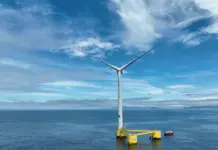
PowerGen Advancement notes that the archetypes of ocean current energy technology are evolving to meet the unique challenges of the open ocean. Fixed seabed-mounted turbines are often impractical in deep-water currents due to the astronomical cost of installation and the technical difficulty of anchoring structures in depths exceeding 100 meters. Instead, the industry is focusing on floating and tethered systems. Floating platforms utilize twin-rotor designs that are anchored to the seabed but operate in the upper, high-velocity layers of the water column. These systems use active buoyancy control to maintain their optimal depth and can be surfaced for maintenance using standard towing vessels, significantly reducing the operational risks and costs associated with deep-sea interventions.
An even more radical innovation in ocean current energy is the use of tethered subsea kites. These devices feature a hydrodynamic wing with a small hydrokinetic turbine attached. As the current flows past the wing, the kite is steered in a high-speed figure-eight trajectory, which multiplies the relative flow speed over the turbine by up to 10 times. This allows for efficient energy extraction even in low-velocity currents (between 1.2 and 2.5 meters per second) that would be unviable for traditional fixed horizontal-axis turbines. This technological flexibility greatly expands the geographical range of harnessable ocean current energy, making it a viable option for many coastal nations that lack high-velocity tidal streams.
Subsea Power Transmission and Cable Resilience
One of the most significant hurdles for ocean current energy is the logistics of power export. Because these currents are often located far offshore, transporting the electricity back to the grid requires long-distance subsea transmission lines. This necessitates the use of High Voltage Direct Current (HVDC) technology with Voltage Source Converters (VSC) to minimize energy losses over the vast distances involved. Furthermore, the dynamic power umbilical cables that connect the floating or tethered turbines to the subsea collection hubs must be designed for extreme durability. They are subjected to constant dynamic loads and multi-axis flexing from the current itself, requiring advanced fatigue-resistant materials, bend-stiffeners, and lazy-wave buoyancy modules.
Innovation in wet-mateable subsea connectors is also critical for the commercialization of ocean current energy. These components allow for the connection and disconnection of turbines under high-pressure, deep-sea conditions without the need for complex dry-docking or the use of expensive heavy-lift crane vessels. By creating modular subsea power hubs, operators can deploy large arrays of current-harvesting devices, sharing the cost of the main export cable and improving the overall bankability of the project. This modularity is essential for bringing the Levelized Cost of Energy (LCOE) of ocean current power down to competitive levels, comparable to other offshore energy sources.
Resource Characterization and Metocean Modelling
Successful ocean current energy development relies on high-resolution resource characterization and sophisticated metocean modelling. Unlike tidal flows, which are deterministic, ocean currents can be influenced by large-scale climatic patterns like El Niño and localized eddies. Developing a reliable energy production forecast requires the integration of numerical circulation models (such as TELEMAC-3D or Delft3D) with satellite-derived sea surface temperature and altimetry data. This allows developers to identify the sweet spots where current velocity is highest and most stable, ensuring that the turbines are positioned for maximum efficiency.
Furthermore, the industry is using Acoustic Doppler Current Profilers (ADCPs) to build long-term data sets of the water column’s velocity profile. This data is essential for designing the structural integrity of the turbines and for optimizing the mooring spreads. By understanding the multi-year variability of the currents, investors can better assess the financial risk and long-term yield of ocean current energy projects, providing the certainty needed to attract large-scale capital to the sector.
AI, Autonomy, and Environmental Stewardship
The future of ocean current energy is inextricably linked to digitalization and autonomy. Because these assets are located in remote and hostile deep-ocean environments, they must be capable of self-diagnosis and autonomous operation for extended periods. AI-driven control systems are used to manage the pitch and yaw of the blades and the steering of tethered kites, optimizing energy capture in real-time. Digital twins are utilized to monitor structural integrity and predict component wear, allowing for predictive maintenance that can be scheduled months in advance to coincide with favorable weather windows and vessel availability.
Furthermore, ocean current energy projects must be developed with a deep commitment to environmental stewardship and marine biodiversity. The potential impact on pelagic fauna—such as the risk of blade strikes for large migratory species or the disruption of acoustic environments for cetaceans—must be carefully managed through proactive monitoring. The industry is deploying advanced monitoring systems, including passive acoustic monitoring (PAM) and active sonar, to track the movement of marine animals around the turbines. By using AI to automatically adjust turbine speeds or trigger safe shutdowns when animals are in the vicinity, the industry can ensure that the transition to clean ocean power does not come at the expense of marine health.
Strategic Imperatives for Unlocking Deep-Ocean Power
The realization of ocean current energy as a significant and reliable part of the global energy mix requires a massive leap in engineering, investment, and international policy. For the energy sector, the goal is to harness the most consistent and powerful renewable resource on the planet to provide sustainable baseload power.
Ocean current energy offers an unparalleled source of 24/7 predictable, baseload renewable electricity with capacity factors exceeding 80%. By integrating advanced floating platforms, tethered subsea kites, and AI-driven control systems, the industry is overcoming the technical and logistical challenges of the deep-sea environment. The success of this transition depends on the development of resilient subsea transmission networks, the implementation of robust metocean modelling, and the ability to demonstrate long-term durability in one of the most hostile environments on Earth.
To lead in the ocean current energy sector, stakeholders must prioritize international collaboration on technical standards (like IEC TC 114) and the creation of a specialized marine engineering supply chain. The move toward deep-water renewables requires a holistic strategy that includes not only the energy converters but also the HVDC infrastructure, autonomous monitoring, and environmental protection protocols needed to operate them at scale. PowerGen Advancement believes that by investing in these technologies today, the global community can unlock the vast, silent power of the world’s underwater currents, providing a resilient and zero-carbon foundation for the global energy system.