














The commercial viability of the marine renewable energy sector is fundamentally dependent on the science of durability and material integrity. Wave and tidal energy devices operate in some of the most corrosive and physically demanding environments on Earth, where high salinity, extreme hydrodynamic pressures, and relentless cyclic loading are the norm. PowerGen Advancement notes that for a wave energy converter (WEC) or a tidal stream turbine to be economically successful, it must achieve a service life of 20 to 25 years without the need for frequent, prohibitively expensive offshore interventions or premature component replacement. This has driven a revolution in marine energy materials, moving beyond traditional shipbuilding steels and toward a new generation of high-performance composites, super-alloys, and biomimetic coatings that can withstand the unique challenges of the deep sea.
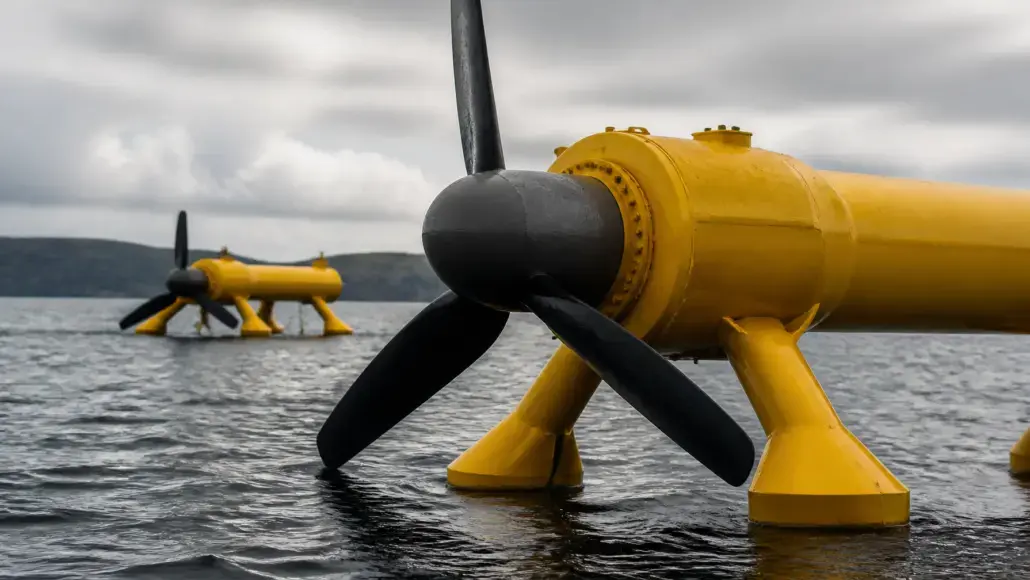
At the structural core of modern marine energy devices, the transition to advanced composite materials is perhaps the most significant trend. Carbon Fiber Reinforced Polymers (CFRP) and Glass Fiber Reinforced Polymers (GFRP) are now the materials of choice for tidal turbine blades and WEC hulls. These materials offer a superior strength-to-weight ratio compared to traditional steel, which is critical for reducing the inertia of rotating components and the overall displacement of floating platforms. More importantly, composites are inherently immune to the electrochemical corrosion that plagues metallic structures in seawater. However, using these materials in the marine energy materials sector requires deep expertise in resin chemistry and laminate design to prevent hydrothermal aging—the slow absorption of seawater that can lead to matrix plasticization, delamination, and loss of structural integrity over decades of operation.
Corrosion Resistance and the Role of Super-Alloys
While composites handle the large-scale structural elements, the moving parts, mechanical seals, and high-stress fasteners of marine energy devices require the use of advanced metallic alloys. The industry has increasingly turned to Super Duplex Stainless Steels (SDSS, such as UNS S32750) and Titanium Grade 5 (Ti-6Al-4V) for critical components. These marine energy materials offer exceptional resistance to pitting and crevice corrosion, even in the stagnant, low-oxygen environments often found in subsea joints or under mechanical seals. For components subject to high-velocity water flow and localized pressure drops, such as tidal turbine tips, Nickel-Aluminum Bronze (NAB) is frequently used due to its excellent erosion-corrosion resistance and inherent antimicrobial properties, which help to mitigate the early stages of biological encrustation.
The protection of these metallic components also relies on sophisticated cathodic protection systems designed to meet NACE/AMPP standards. By integrating sacrificial zinc or aluminum anodes and Impressed Current Cathodic Protection (ICCP), engineers can ensure that any exposed metal remains electrochemically stable. However, the use of these systems must be carefully balanced with environmental regulations, particularly concerning the leaching of heavy metals into sensitive marine ecosystems. This has led to the development of Thermal Spray Aluminum (TSA) coatings, which provide a robust, long-lasting barrier that combines the benefits of a physical coating with the electrochemical protection of an anode, significantly extending the maintenance intervals for subsea and splash-zone assets.
Biomimetic and Non-Toxic Anti-Fouling Solutions
One of the most insidious challenges in the marine energy materials sector is biofouling—the rapid accumulation of barnacles, mussels, and algae on submerged surfaces. Biofouling can increase the hydrodynamic drag of a turbine blade or WEC hull by up to 60%, drastically reducing energy efficiency and increasing the structural loads on the entire mooring system. Traditional anti-fouling paints, which rely on the slow release of toxic biocides like copper or TBT, are increasingly restricted by global environmental standards like the IMO’s AFS Convention. In response, the industry is pioneering the use of foul-release coatings (FRC) and biomimetic surface topographies.
These advanced marine energy materials utilize silicone or fluoropolymer-based elastomers that create an ultra-smooth non-stick surface, making it difficult for marine organisms to establish a firm attachment. When organisms do attach, the hydrodynamic forces of the water flow during operation are often enough to wash them away. Furthermore, researchers are exploring engineered micro-textures that mimic the skin of sharks (riblets) or the shell of certain mollusks, which have evolved to remain clean in the ocean. By integrating these zwitterionic polymer brushes and micro-structured surfaces, marine energy devices can maintain their hydrodynamic performance for years without the use of harmful chemicals, aligning technological progress with environmental stewardship and preserving marine biodiversity.
Fatigue Management and Hydro-Elastic Tailoring
The relentless cyclic loading from waves and turbulence makes structural fatigue the primary failure mode for marine energy infrastructure. Advanced marine energy materials allow for hydro-elastic tailoring—a design technique where the composite layup of a turbine blade is engineered to passively twist under extreme fluid loads. This passive load shedding reduces the peak bending moments on the root of the blade and the main shaft, extending the fatigue life of the entire powertrain. By carefully selecting the orientation of carbon fibers, engineers can create a blade that is stiff enough for efficient energy capture in moderate flows but flexible enough to furl in high-flow storm conditions.
Furthermore, managing the interface between different materials—such as the connection between a composite blade and a metallic hub—requires specialized high-performance adhesives and transition pieces. These components must withstand extreme shear forces while preventing galvanic corrosion between dissimilar materials. The development of advanced epoxy resins and specialized primers has been essential for creating these durable multi-material bonds, ensuring that the structural integrity of the device is maintained throughout its multi-decadal deployment on the seabed.
Smart Materials and Structural Health Monitoring
The future of marine energy materials is also becoming smart through the integration of embedded sensors. The use of Fiber Bragg Grating (FBG) optical sensors cured directly into the composite layup allows for real-time structural health monitoring (SHM). These sensors provide continuous data on strain, moisture ingress, and interlaminar delamination, allowing the turbine’s control system to adjust its operation in real-time to avoid damaging loads. This enables a move toward condition-based maintenance, where operators can perform targeted repairs based on actual material health rather than relying on arbitrary and often conservative schedules.
Moreover, the industry is exploring the use of thermoplastic resins (such as PEEK or liquid thermoplastic acrylics) for composite structures. Unlike traditional thermoset resins, thermoplastics can be melted and reformed, making them fully recyclable at the end of the device’s life. They also offer enhanced toughness and water-droplet impact resistance, which is critical for surviving the high-velocity cavitating flows at the tips of tidal turbine blades. This shift toward circular economy principles ensures that the marine energy sector remains sustainable throughout the entire lifecycle of its materials, from production to decommissioning, providing a clean energy solution that is as responsible as it is powerful.
Strategic Takeaways for Marine Material Durability
The development of advanced marine energy materials is the fundamental cornerstone of a reliable, safe, and cost-effective ocean power sector. For the global energy industry, success depends on the ability to master the complex chemistry and mechanics of the subsea environment.
The use of high-performance composites, super-alloys, and non-toxic foul-release coatings is essential for achieving the 20- to 25-year service life required for commercial marine energy devices to reach grid parity. By integrating advanced marine energy materials, the industry can mitigate the twin threats of corrosion and biofouling, significantly reducing OPEX and improving the long-term bankability of ocean power projects. The success of this transition depends on the continued validation of these materials in real-world marine conditions and the adoption of smart SHM technologies.
To lead in the next generation of marine engineering, stakeholders must prioritize the development of recyclable materials and the elimination of toxic biocides to meet tightening environmental regulations. The move toward thermoplastics, hydro-elastic tailoring, and biomimetic surfaces is a significant step in aligning the marine energy sector with global sustainability goals. By investing in these advanced materials and digital integrity monitoring today, the industry can build a resilient and environmentally responsible marine energy infrastructure that is ready for the immense challenges of the deep sea, providing a powerful source of renewable energy for a carbon-constrained future. The convergence of material science and digital structural health monitoring is the final piece of the puzzle for the commercialization of ocean power.
PowerGen Advancement highlights that as the industry moves from demonstration projects to utility-scale arrays, the ability to guarantee a 25-year service life on the seabed will be the primary driver of investor confidence. By mastering the chemistry and mechanics of the subsea environment, the marine energy sector is carving out a permanent and vital place in the global renewable energy mix, ensuring that the power of the tides and waves is harnessed safely and sustainably for generations to come.