






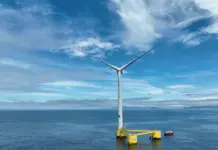



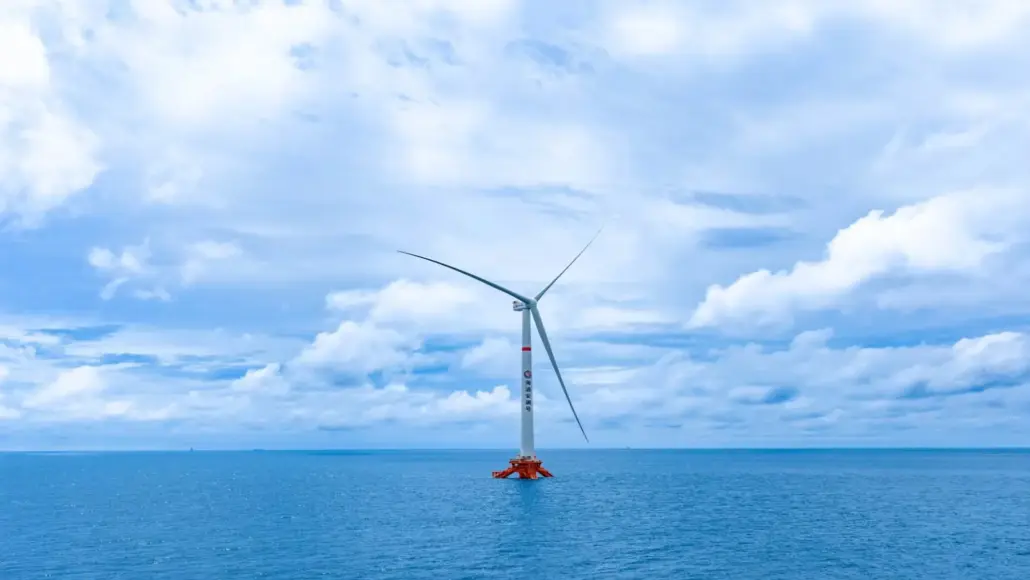
China has taken a significant step forward in deep-water energy technology with the operational launch of a 16-megawatt (MW) floating wind platform designed to power offshore oil operations. The state-owned energy company China National Offshore Oil Corporation (CNOOC) announced that the Haiyou Anlan floating wind platform has begun delivering electricity to the Lufeng Oilfield through a subsea cable system spanning 4.3 kilometers.
Engineering Excellence in Extreme Conditions
The 16MW floating wind platform represents a major advancement in offshore renewable energy infrastructure. Located 136 kilometers off the coast in the Pearl River Mouth Basin, the platform has been engineered to withstand severe weather conditions, including the extreme wind pressures associated with typhoons common to the South China Sea region.
The installation demonstrates capability in challenging maritime environments where traditional fixed-bottom wind turbines cannot operate effectively. The 16MW floating wind platform technology allows energy generation in deeper waters where conventional offshore infrastructure faces operational constraints.
Energy Generation and Environmental Impact
The floating wind platform is projected to generate approximately 54 million kilowatt-hours of electricity annually. Beyond renewable energy generation alone, the system incorporates storage capabilities and conventional fuel backup to manage wind variability and ensure consistent power delivery to offshore operations.
The operational approach combines multiple energy sources—wind generation, energy storage, and traditional fuel systems—to create a reliable power supply for the Lufeng Oilfield. This integrated model addresses one of the primary challenges in renewable energy deployment: maintaining consistent output despite natural weather fluctuations.
Environmental benefits form a critical component of the initiative. The 16MW floating wind platform is expected to displace approximately 15,000 cubic meters of fuel oil consumption annually while reducing carbon dioxide emissions by an estimated 35,000 tons per year at the oilfield facility.
Offshore Wind Technology and Future Development
The successful deployment of floating wind platform technology signals expanding possibilities for renewable energy integration within the offshore energy sector. The ability to locate and operate wind generation systems in deep-water environments has historically presented significant engineering challenges. This installation demonstrates viable solutions for accessing wind resources previously considered difficult to harness.