




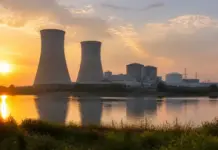



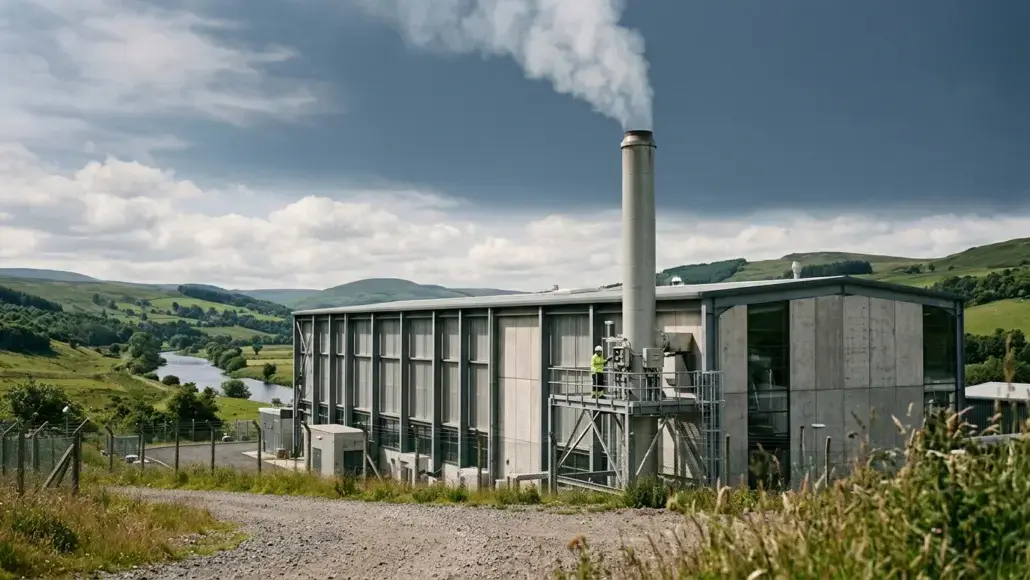
The perception of Waste to Energy (WtE) facilities has undergone a significant transformation over the last few decades. Once viewed with skepticism regarding their environmental impact, modern plants are now among the cleanest industrial facilities in the world. PowerGen Advancement highlights that this change is driven by a combination of stringent international regulations and remarkable technological advancements in flue gas treatment. Today, the focus on reducing emissions in modern waste to energy operations is not just about meeting legal requirements. It is about demonstrating that energy recovery is a clean, safe, and indispensable part of the urban infrastructure. Advanced Waste to Energy emissions control systems now ensure that the air leaving the stack is often cleaner than the ambient air in many urban environments.
The Complexity of Flue Gas from Waste Combustion
Municipal solid waste is a highly complex fuel, containing a wide variety of materials including plastics, organic matter, paper, and metals. When this mixture is combusted, it produces a flue gas that contains not only standard pollutants like nitrogen oxides (NOx) and sulfur dioxide (SO2) but also traces of heavy metals, acid gases, and organic compounds like dioxins and furans. Managing this complex cocktail of emissions requires a multi-stage approach that begins in the furnace and continues through a sophisticated cleaning train.
Effective Waste to Energy emissions control starts with optimized combustion. By maintaining high temperatures (typically above 850°C for at least two seconds) and ensuring adequate turbulence, the plant can destroy the vast majority of organic pollutants at the source. This “primary measure” is the first line of defense, significantly reducing the burden on the downstream cleaning systems. Modern furnaces use advanced infrared sensors and computational fluid dynamics to ensure that these conditions are met consistently, regardless of the waste’s composition or moisture content.
Removing Acid Gases and Particulate Matter
Once the flue gas leaves the boiler, the first major stage of cleaning involves the removal of acid gases such as hydrogen chloride (HCl) and sulfur dioxide. This is typically achieved through “scrubbing” processes, which can be wet, semi-dry, or dry. In these systems, a reagent—often lime or sodium bicarbonate—is injected into the gas stream. The reagent reacts with the acid gases to form solid salts, which can then be easily captured.
Particulate matter, including fine fly ash and the salts formed during acid gas removal, is captured using high-efficiency fabric filters, also known as baghouses. These filters can remove more than 99.9 percent of dust and fine particles, ensuring that the visible “smoke” often associated with older facilities is a thing of the past. The maintenance and monitoring of these filter systems are critical aspects of Waste to Energy emissions control, as any leak or failure can quickly lead to an exceedance of emission limits.
Advanced NOx Control and Dioxin Removal Strategies
Nitrogen oxides are a major concern for any combustion process, as they contribute to smog and acid rain. In WtE plants, NOx is managed through Selective Non-Catalytic Reduction (SNCR) or Selective Catalytic Reduction (SCR). SNCR involves injecting ammonia or urea directly into the furnace, while SCR uses a catalyst at lower temperatures. SCR is more expensive but can achieve much higher removal efficiencies, making it the gold standard for facilities located in densely populated or environmentally sensitive areas.
For the removal of mercury and persistent organic pollutants like dioxins, activated carbon is injected into the flue gas stream. The high surface area of the carbon particles allows them to adsorb these pollutants with incredible efficiency. The carbon, now laden with contaminants, is then captured in the fabric filters along with the other solids. This comprehensive approach to Waste to Energy emissions control ensures that even the most challenging trace pollutants are safely sequestered and prevented from entering the atmosphere.
Continuous Emission Monitoring Systems (CEMS)
In a modern WtE facility, environmental compliance is not measured once a year; it is measured every second. Continuous Emission Monitoring Systems (CEMS) are installed in the stack to provide real-time data on the concentrations of various pollutants. This data is often transmitted directly to environmental regulators, providing a level of transparency and accountability that is unique to the waste management sector.
CEMS is a vital tool for plant operators, as it provides immediate feedback on the effectiveness of the Waste to Energy emissions control systems. If a pollutant concentration begins to trend upward, the control system can automatically adjust the reagent injection rates or the combustion parameters to correct the issue before a limit is exceeded. This high level of automation and data integration is what allows modern plants to operate so close to zero-emission levels while maintaining high throughput and energy efficiency.
The Transition Toward Carbon Capture and Sequestration
As the world focuses on net-zero targets, the WtE sector is looking beyond traditional pollutants and toward the management of greenhouse gases. Carbon dioxide (CO2) is an inherent byproduct of combustion, and WtE facilities are now exploring the integration of Carbon Capture and Storage (CCS) technologies. By capturing the CO2 from the flue gas, a WtE plant can significantly lower its carbon footprint.
Since a large portion of municipal waste is biogenic (derived from plants and organic matter), capturing the carbon from its combustion can actually result in “negative emissions.” This makes the facility a carbon sink, actively removing CO2 from the atmosphere’s carbon cycle. The captured carbon can be stored in geological formations or used in industrial processes, such as the production of sustainable aviation fuels. This evolution of Waste to Energy emissions control represents the next frontier of clean energy recovery, turning waste management into a powerful tool for global climate action.
Managing the Residues of Emission Control
The process of cleaning the flue gas produces solid residues, often referred to as Air Pollution Control (APC) residues or fly ash. Because these residues contain the concentrated pollutants captured from the gas stream, they must be managed with extreme care. In many jurisdictions, APC residues are classified as hazardous waste and must be treated before disposal.
Common treatment methods include stabilization and solidification using cement or chemical binders, which prevents the pollutants from leaching into the environment. Some advanced facilities are even exploring the use of plasma vitrification, which turns the ash into a safe, inert glass-like material that can be used in construction. By managing these residues responsibly, the WtE plant ensures that the pollutants removed from the air are not simply transferred to the land, fulfilling the promise of truly comprehensive Waste to Energy emissions control.
Community Trust and the “Clean Stack” Philosophy
The ultimate success of any emission reduction program is measured by the trust of the local community. Many modern WtE facilities go beyond legal requirements, implementing a “clean stack” philosophy that aims for emission levels well below the strictest limits. Some plants even display their real-time emission data on public monitors outside the facility, inviting neighbors to see the results of their Waste to Energy emissions control efforts for themselves.
This transparency is essential for overcoming the “Not In My Backyard” (NIMBY) sentiment that often plagues industrial projects. When the public can see that the facility is a clean, well-managed, and beneficial part of their city, it paves the way for broader acceptance of energy recovery as a sustainable solution. In this way, technical excellence in emission control becomes the foundation for social and political viability.
Conclusion
Reducing emissions in modern Waste to Energy operations is a technical triumph that has redefined the role of waste management in the 21st century. Through the integration of advanced combustion controls, high-efficiency scrubbing, and real-time monitoring, the sector has proven that it can recover energy from our waste with minimal environmental impact. As we move toward a future of carbon capture and even more sophisticated cleaning technologies, Waste to Energy emissions control will continue to set the standard for industrial clean air performance. PowerGen Advancement notes that by protecting the air we breathe while managing the waste we produce, these facilities are helping to build the clean, sustainable cities of tomorrow.