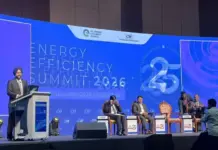
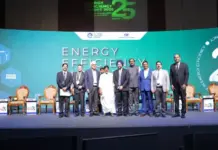
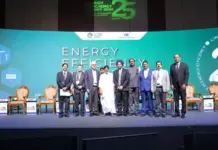


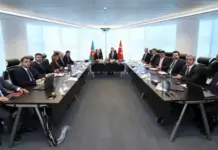

Korea Water Resources Corporation (K-water) announced on the 29th June 2026 that it recently convened a “Public-Private Cooperation Meeting for the Revitalization of the Floating Solar Industry” at the Daejeon Convention Center (DCC) in Yuseong-gu, Daejeon. More than 60 representatives from government agencies, public institutions, and related industries attended the gathering, which focused on advancing cooperation across the sector.
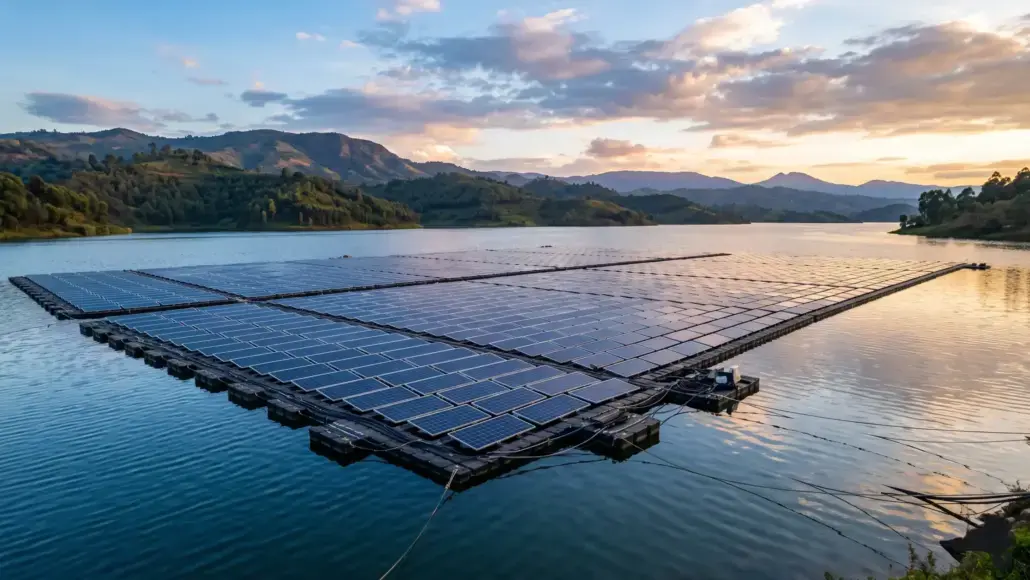
The meeting served as a preliminary discussion ahead of the launch of a public-private consultative body for floating solar power, which is scheduled to begin operations in the second half of the year. The initiative follows last year’s industry meeting, during which private-sector participants highlighted the need for a formal communication channel to facilitate regular discussions on policy and industry-related matters. As part of its broader renewable energy strategy, K-water plans to expand renewable energy facilities utilizing water infrastructure to 10GW by 2030. Of the total planned capacity, 6.5GW is expected to be developed through floating solar power projects. The corporation identified the reduction of administrative and technical challenges during project execution, along with stronger public-private cooperation, as critical priorities for achieving these objectives.
Industry Stakeholders Review Policy Trends and Project Progress
Representatives from organizations including the Ministry of Climate, Energy and Environment and Korea Energy Agency participated in the meeting. The event also brought together manufacturers supplying modules, floaters, and transformers, as well as companies specializing in design, construction, and supervision services. During the session, Korea Water Resources Corporation presented updates on the status of its floating solar power projects and ongoing research and development activities. Korea Energy Agency also provided attendees with information on recent policy developments, including changes related to the restructuring of the renewable energy supply system.
Discussions Focus on Costs, Investment and Supply Chain Stability
A subsequent discussion examined several challenges affecting the sector. Participants addressed increasing project costs linked to higher raw material prices, the influence of changes in the policy environment on private investment and R&D activities, and approaches aimed at strengthening supply chain stability. Attendees also outlined key issues that should be prioritized by the public-private consultative body once it is formally established later this year. In addition, views were exchanged regarding the structure and operational framework of the organization.
K-water stated that the feedback gathered during the meeting will be reflected in the establishment and operation of the consultative body, with the objective of creating an effective cooperation system for the industry.
Bongkeun Oh, Head of the Renewable Energy Division at Korea Water Resources Corporation, stated, “To expand the adoption of floating solar power, a cooperative system in which public institutional support and private technological capabilities are organically combined is essential.”
“We will continue to engage directly with the field to ensure that the public-private consultative body launching in the second half of the year operates as a practical platform for regulatory improvement and enhancement of industrial competitiveness,” he added.