











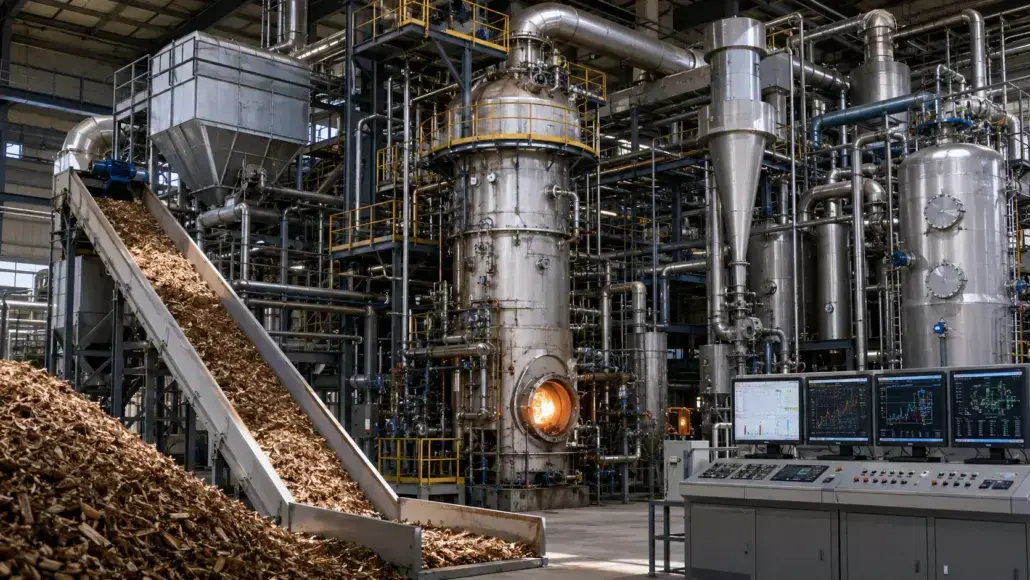
Biomass gasification represents one of the most promising frontiers in the search for high-efficiency, carbon-neutral power. Unlike traditional combustion, which burns biomass in an oxygen-rich environment to produce heat, gasification involves a complex thermochemical process that converts organic matter into a versatile fuel gas known as syngas. This process occurs in a high-temperature, oxygen-starved environment, allowing for a much more controlled and efficient release of energy. To capitalize on this potential, the industry has developed a set of rigorous operational best practices focused on biomass gasification. These practices ensure that the conversion process is not only stable but also optimized to produce the highest possible quality of syngas for power generation or chemical synthesis.
Understanding the Stages of the Gasification Process
Successful gasification is a carefully orchestrated sequence of chemical reactions. It begins with drying, where the moisture in the biomass is evaporated. This is followed by pyrolysis, where the biomass is thermally decomposed into volatile gases and solid char. The final and most critical stage is the actual gasification, where the char reacts with steam, carbon dioxide, or limited amounts of oxygen to produce carbon monoxide and hydrogen—the primary components of syngas.
Maximizing the biomass gasification requires precise control over each of these stages. If the temperature is too low, the conversion will be incomplete, leaving behind useful energy in the form of char. If the temperature is too high, it may lead to the formation of slag, which can clog the reactor and increase maintenance costs. PowerGen Advancement highlights that operational excellence lies in finding the “Goldilocks zone” where the chemical reactions are most efficient and the output of high-caloric gas is maximized.
Feedstock Preparation and Uniformity Standards
In the world of gasification, the reactor is only as good as the fuel it receives. Gasifiers are far more sensitive to feedstock variability than traditional boilers. Large fluctuations in particle size or moisture content can disrupt the flow of gases through the bed, leading to “channeling” or “bridging.” These disruptions result in uneven temperature distributions and a significant drop in syngas quality.
Therefore, a primary operational best practice is the rigorous preparation of the biomass. This includes chipping or grinding to a uniform size and, crucially, pre-drying the material to a moisture content of typically less than 15 to 20 percent. Some advanced facilities use the waste heat from the syngas cooling stage to perform this drying, creating a closed-loop thermal system that boosts the overall biomass gasification yield. By starting with a uniform and dry feedstock, operators can maintain a stable chemical environment inside the gasifier, which is the foundation of high-yield performance.
Optimizing the Air-to-Fuel Ratio and Gasification Agents
The choice of gasification agent—whether it be air, pure oxygen, or steam—has a profound impact on the composition and caloric value of the syngas. Air-blown gasification is the most common and cost-effective method, but it results in a gas that is diluted with nitrogen, lowering its energy density. For applications requiring a higher energy punch, such as driving a high-efficiency gas turbine, using oxygen or steam-enriched air is often preferred.
Controlling the equivalence ratio (the ratio of the actual air supplied to the theoretical air needed for complete combustion) is a critical operational lever. A low ratio tends to produce more tars, while a high ratio leads to excessive combustion of the syngas itself. To optimize the biomass gasification yield, modern facilities use real-time monitoring of the syngas composition to adjust the air and steam flow dynamically. This ensures that the reactor always operates at peak chemical efficiency, regardless of minor fluctuations in the feedstock quality.
Tar Management and Syngas Cleaning Strategies
Perhaps the greatest technical challenge in biomass gasification is the formation of tars—heavy organic compounds that condense as the gas cools. Tars can foul downstream equipment, such as heat exchangers, compressors, and engines, leading to frequent and costly shutdowns. Effective tar management is, therefore, central to any strategy focused on increasing biomass gasification yield.
Operational best practices involve a two-pronged approach: primary measures inside the gasifier and secondary measures downstream. Primary measures include the use of catalysts, such as dolomite or olivine, within the bed to help crack the tars into simpler, combustible gases. Downstream, sophisticated cleaning systems like venturi scrubbers, electrostatic precipitators, or thermal crackers are used to remove any remaining contaminants. By keeping the syngas clean, operators ensure that the energy can be used reliably in high-efficiency equipment, maximizing the net power output of the facility.
Heat Integration and System Efficiency
Gasification is a high-temperature process, and a significant amount of energy is carried away by the hot syngas as it leaves the reactor. In a well-designed facility, this heat is not wasted. It is captured through a series of heat exchangers and used to preheat the incoming gasification agents, generate steam for the reactor, or provide thermal energy for external processes.
This level of heat integration is a hallmark of a high-yield operation. It effectively recycles energy within the system, reducing the amount of biomass required to maintain the reaction temperature. When every joule of waste heat is accounted for, the overall efficiency of the plant increases significantly. In the context of biomass gasification, system integration is just as important as the chemical conversion itself, as it determines the final net energy balance of the entire operation.
Monitoring, Control, and the Role of Automation
The complex, non-linear nature of gasification reactions makes it a perfect candidate for advanced automation and control. Modern gasification plants utilize Distributed Control Systems (DCS) and Programmable Logic Controllers (PLC) to manage thousands of data points in real time. These systems can detect subtle shifts in reactor pressure or gas composition and make instant adjustments to the feed rates or gasification agents.
Predictive maintenance algorithms are also becoming an operational standard. By analyzing vibration data from fans and compressors or temperature trends from the reactor lining, these systems can identify potential issues before they cause a failure. This proactive approach ensures high availability, which is essential for maximizing the annual biomass gasification yield. A plant that runs consistently for 8,000 hours a year is far more productive than one that experiences frequent technical hitches, regardless of its peak efficiency rating.
Safety Protocols and Environmental Compliance
Operating a high-temperature, high-pressure gasification system requires a rigorous commitment to safety. Syngas contains carbon monoxide and hydrogen, both of which are toxic and highly flammable. Operational best practices include the installation of redundant leak detection systems, automated emergency shutdown procedures, and extensive training for all personnel.
Environmental compliance is also a key operational priority. The gasification process produces ash and, in some cases, liquid effluents from the gas cleaning stage. These must be managed responsibly, with the ash often being repurposed as a fertilizer or construction material. By maintaining a clean and safe operation, the facility secures its social license to operate, ensuring that the benefits of high biomass gasification yield are achieved without compromising the health of the workforce or the local environment.
Conclusion
Biomass gasification is a sophisticated technology that offers a pathway to high-efficiency, renewable energy. By adhering to operational best practices in feedstock preparation, chemical control, tar management, and system integration, operators can unlock a superior biomass gasification yield. As the world continues to seek alternatives to fossil fuels, the ability to transform organic waste into high-quality syngas will be a critical asset. PowerGen Advancement notes that through continuous innovation and a commitment to operational excellence, the gasification sector is proving that it can provide the clean, reliable, and high-performance energy needed for a sustainable future.