




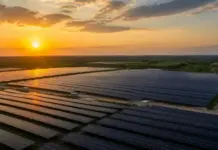


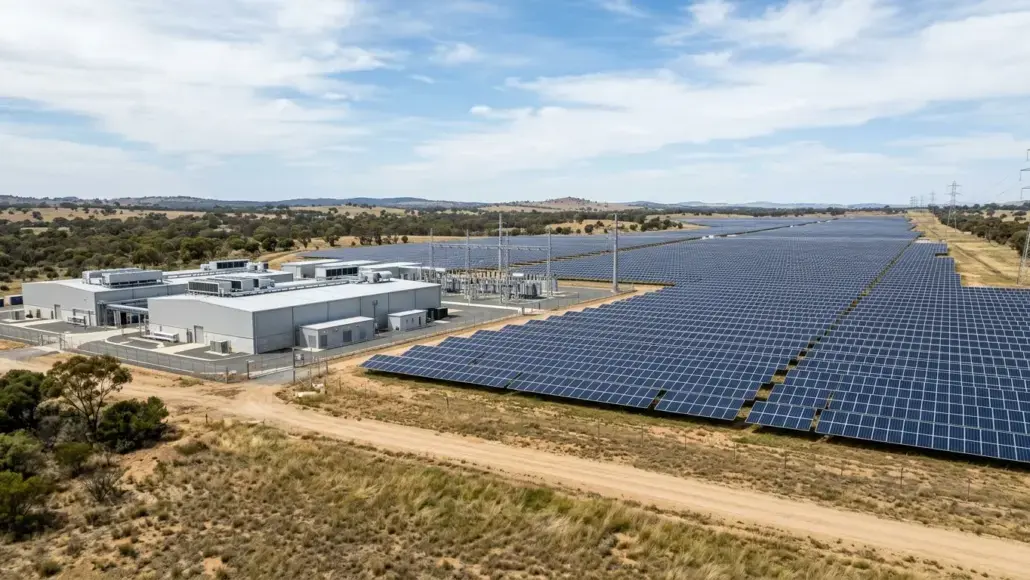
The 25-megawatt Mulwala Solar Farm located in New South Wales is on the cusp of connecting to Australia’s national electricity grid. This development signals a significant addition of renewable capacity to the National Electricity Market, particularly as demand for data-driven services continues to escalate.
New South Wales is set to receive a boost in renewable power as the 25-megawatt Mulwala Solar Farm, a collaborative initiative involving Google, AirTrunk, and European Energy Australia, nears its operational launch. The project, first announced in 2023, is in its final stages of completion and is preparing to integrate with the national grid. Upon commencement, it will contribute fresh clean energy capacity to Australia’s National Electricity Market. This advancement arrives at a time when the surge in cloud computing, artificial intelligence, and data storage is increasing electricity consumption across the region.
For Google, this solar farm is an integral component of its Digital Future Initiative. This program strategically aligns the company’s technological expansion within Australia with investments in infrastructure, skill development, and energy solutions. The Mulwala Solar Farm is designed to synchronize the growth of digital operations with the development of new renewable energy generation, rather than solely depending on existing grid infrastructure. Google stated, “Today, alongside AirTrunk and European Energy Australia, we announced that the 25-megawatt Mulwala Solar Farm in New South Wales is nearing completion and preparing to join the grid.”
This project represents a convergence of critical elements within the energy and technology sectors. Google is actively working to mitigate the environmental impact of its operations. AirTrunk stands as a prominent data centre operator across the Asia-Pacific region. European Energy Australia contributes its specialized expertise in renewable energy development. Together, these partners are positioning the solar farm as a key contributor to a wider transformation in how digital infrastructure is constructed and powered. Data centres are increasingly recognized as vital economic assets, underpinning cloud services, AI workloads, financial systems, public sector modernization, and enterprise operations. Simultaneously, they face mounting scrutiny from investors, regulators, and consumers who seek clarity on their electricity consumption, grid impact, and emissions. The announcement highlighted, “First announced in 2023, this project will add new clean energy capacity to Australia’s National Electricity Market.”
This aspect is crucial for executives. The procurement of renewable energy by corporations gains greater significance when it directly supports the establishment of new generation capacity. Such initiatives can effectively reduce operational emissions while simultaneously aiding the broader decarbonization of the grid. The Mulwala Solar Farm exemplifies this, demonstrating how a corporate Australia solar farm can contribute to national energy goals.
Australia’s energy market is navigating a complex transition away from fossil fuels, with new solar, wind, storage, and transmission capacity remaining central to this shift. Projects backed by corporations can accelerate investment, particularly when substantial energy consumers commit to their demand. The Mulwala Solar Farm also addresses a governance challenge for technology companies. While digital services are expanding rapidly, current climate commitments necessitate tangible evidence of energy sourcing. In many cases, purchasing renewable energy certificates alone is no longer sufficient for stakeholders. Google has set a clear objective to operate on 24/7 carbon-free energy, a more rigorous standard than annual offsets, focusing on continuous clean electricity utilization.
Initiatives like the Mulwala Solar Farm play a vital role in bridging the gap between climate aspirations and operational realities. Google further commented, “As part of our Digital Future Initiative, this solar farm helps match growing digital needs with new renewable energy, supporting Australia’s broader grid decarbonization. It also brings us closer to our aim of operating on 24/7 carbon-free energy.”