





Canada’s federal government has officially introduced a comprehensive nuclear energy strategy designed to significantly bolster the nation’s power capacity. The plan outlines the construction of at least 10 new large-scale reactors across the country and a concerted effort to expand nuclear reactor exports over the next 15 years. This initiative aligns with the broader federal objective to double electricity capacity by 2050, a goal the government maintains is impossible without a heavy reliance on zero-emission power sources to mitigate environmental consequences.
“If our goal is to double our grid and build a low-carbon economy in less than 25 years, there is no credible plan to do that without nuclear energy and the clean, reliable baseload power is provides,” said Canada’s Energy Minister Tim Hodgson, at the unveiling of the new nuclear energy strategy.
The Role of Nuclear Power in the Artificial Intelligence Sector
Beyond traditional residential and industrial needs, nuclear power is being identified as a critical component for the advancement of artificial intelligence. Experts and government officials view reactors as a stable source of zero-emission power capable of meeting the immense energy requirements of large-scale data centers.
Technical Framework and Domestic Implementation
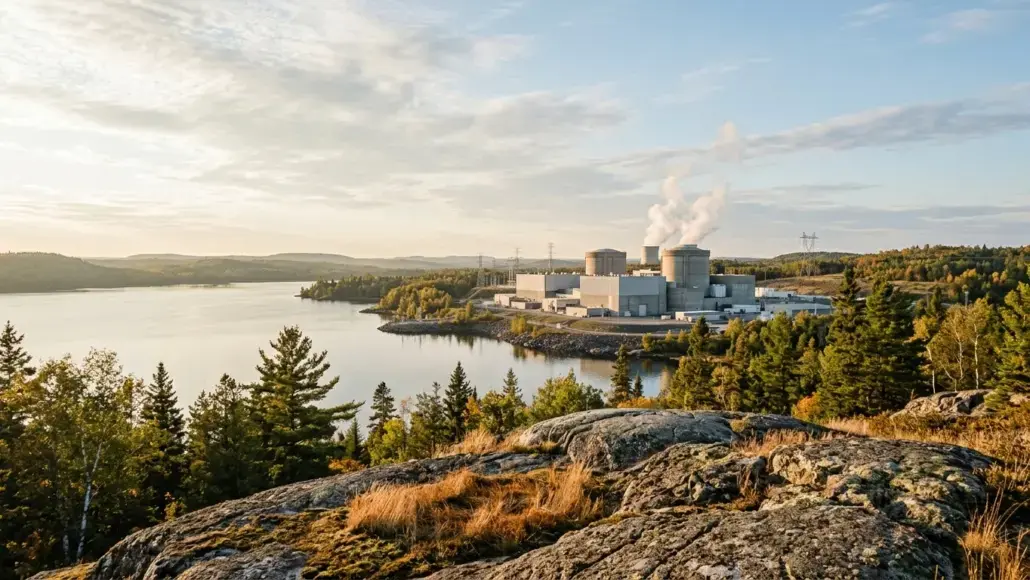
The cornerstone of this new Canada energy policy is the Canada Deuterium Uranium (CANDU) reactor. The federal government holds the licensing and intellectual property rights for this technology. These reactors are distinct because they utilize natural uranium fuel, which eliminates the need for uranium enrichment. This characteristic helps in lowering operational costs and reduces risks associated with nuclear weaponization. Currently, 17 of these reactors provide approximately 13 per cent of the nation’s electricity, with several others operating internationally.
The roadmap for Canada’s nuclear energy strategy includes specific milestones for domestic growth. The government intends to have two new large-scale reactors under construction by 2035, with an additional five in the planning or development stages by 2040. Furthermore, the strategy mandates the commercial rollout of at least one reactor outside of Ontario and the development of a domestically produced microreactor by 2035. These microreactors are slated for deployment in remote communities during the latter half of the 2030s.
Global Trade and Nuclear Reactor Exports
On the international stage, the government is looking to aggressively expand its footprint. The plan aims to secure at least four new international markets for reactor sales by 2040. Additionally, the government intends to engage with six to ten other nations that are looking to establish nuclear energy programs. This push for nuclear reactor exports is framed as a strategic move to position the country as a preferred partner for technology and raw materials, especially as nations in Europe and Asia seek alternatives to traditional suppliers.
The strategy also includes a goal to double the export of enriched uranium supplies over the next decade. The government views these international partnerships as more than just transactions, noting that they establish durable geopolitical and commercial relationships that serve broader foreign policy interests. This approach is expected to benefit the uranium mining industry in Saskatchewan, which already accounts for a significant portion of global output.
Financial Projections and Economic Considerations
Implementing such a vast infrastructure project involves significant financial commitments. Officials from Natural Resources Canada indicated that the construction of the proposed reactors could exceed $100 billion. The government has stated that these projects will be funded through a combination of private financing, capital investments, and Indigenous equity participation. While no new public funding was announced during the strategy’s launch, a new federal financing policy is expected by April 2027. This policy will detail the requirements for accessing loan streams and investments from the national infrastructure bank.
The strategy also emphasizes the need for project proponents to develop long-term solutions for nuclear waste management and disposal. To support innovation, the plan seeks to increase private research and development funding for fission and fusion technologies to between $500 million and $700 million by 2032, which would represent a doubling of current investment levels.