



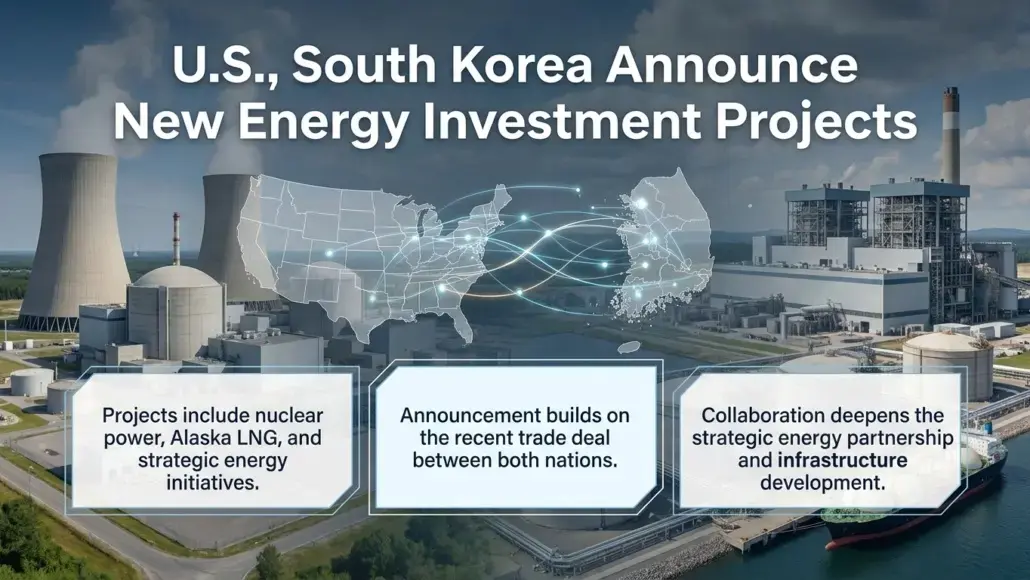
The governments of the United States of America and the Republic of Korea have jointly announced three major initiatives under the Korea- U.S. Strategic Investment Memorandum of Understanding. The initiatives cover the strategic investment project known as ‘Project Star’, the Korea – U.S. Nuclear Power Plant Projects referred to as ‘Project Power’, and cooperation on the Alaska LNG project, known as ‘Project North’.
The announcement regarding the energy investment projects follows the Trade Deal between South Korea and the United States announced on 30th July 2025, and the Strategic Investment MOU signed on 14th November 2025. Together, the initiatives are intended to strengthen stable and resilient supply chains through increased cooperation in strategic industrial sectors, including energy.
The governments said the energy investment plan will deepen the strategic partnership between the two countries while demonstrating their shared commitment to implementing the Trade Deal. The announcement also seeks to create greater stability and balance in the bilateral trade and investment relationship and expand cooperation across supply chains. Both sides intend to continue working together in good faith to implement the Trade Deal, with the broader energy investment programme forming part of those efforts.
Texas Power Project Targets Data Center Demand
Under Project Star, both sides intend to proceed with a $22.3 billion natural gas power facility (6,472 MW) in Encinal, Texas, which will supply power to co-located data centers. The facility will have a direct connection between the generating facility and the offtaker. Commercial operation of Phase 1 is scheduled to begin in 2029, while the full facility is expected to come online in stages by 2032. Developer Related Companies and U.S. power company NextEra Energy will lead the project, while Lewis Energy Group, a major natural gas producer in Texas, will provide related infrastructure, including the site, gas, and water. Korea and the United States also plan to expand the involvement of Korean companies across equipment, engineering and construction, and long-term operation and maintenance.
In addition, the United States, in good faith, intends to provide Korean companies the opportunity to supply Korean equipment, including turbines, to other similar projects in the United States. The countries said Korean technological capabilities and supply chain strengths are expected to support stable and efficient implementation. Both sides also plan to promote business-to-business cooperation and continue necessary efforts toward successful implementation and expanded participation by Korean companies. With world-class partners and strong demand for power in Texas, the project was assessed to meet the commercial reasonableness standard under the Strategic Investment MOU, and both sides will make every effort to implement it successfully.
Eight Nuclear Plants Planned Under Project Power
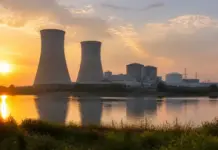
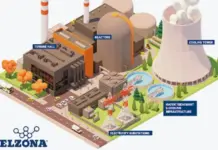
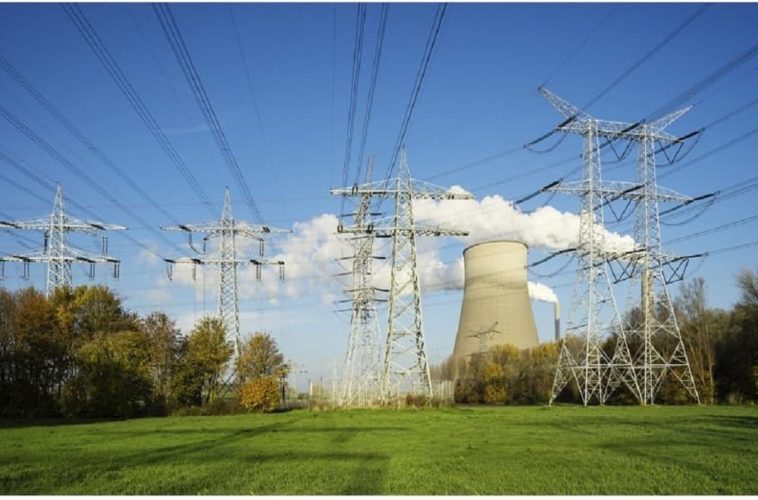
Project Power establishes a broad agreement aimed at finalizing investment projects in the U.S. nuclear power sector. Korea and the United States have agreed to a comprehensive cooperation framework covering eight large-scale nuclear power plants, comprising two APR1400s and six AP1000s. The projects are intended to expand baseload power capacity and strengthen U.S. energy security. The initiative also seeks to contribute to the goal set forth in the U.S. Nuclear Energy Executive Order (May 2025) of having 10 new large reactors with complete designs under construction by 2030. The two countries intend to combine U.S. technological expertise with Korea’s supply chain capabilities and leverage successful deployment cases in the United States to broaden strategic, long-term cooperation in the global nuclear power market.
Project Power signatories include both governments, Westinghouse Electric Company (WEC), Korea Electric Power Corporation, and Korea Hydro & Nuclear Power Co., Ltd. The parties agreed to leverage Korea’s construction capabilities to supply the electricity required by the U.S.. Funding allocated under Project Power totals $120 billion out of $200 billion. Of this amount, $100 billion is slated for construction costs (overnight costs), while $20 billion is allocated for contingency reserves, which are counted toward the investment amount.
To support prompt construction and completion of the eight nuclear power plants, Korea and the United States have agreed to cooperate on transferring a $10 billion advance payment by the end of the year, primarily to facilitate the immediate purchasing of long-lead items and subject to all applicable domestic legal requirements.
Korean companies will also pursue potential investment in a significant minority interest in WEC, with the arrangement intended to facilitate the sharing of commercial gains from large-scale nuclear power plant projects. Detailed terms and conditions will be finalized through commercial negotiations.
Alaska LNG Cooperation Moves Forward
The United States and Korea have also agreed to commence work on the Alaska LNG project, subject to meeting commercial reasonableness under the Strategic Investment MOU and all applicable domestic legal requirements. As the project is developed, the United States will facilitate the favorable involvement of Korean vendors and suppliers. The United States also intends to provide assurances, to the extent possible, regarding offtake agreements at economically viable prices, granting Korea priority access to Alaska LNG produced by this project.