












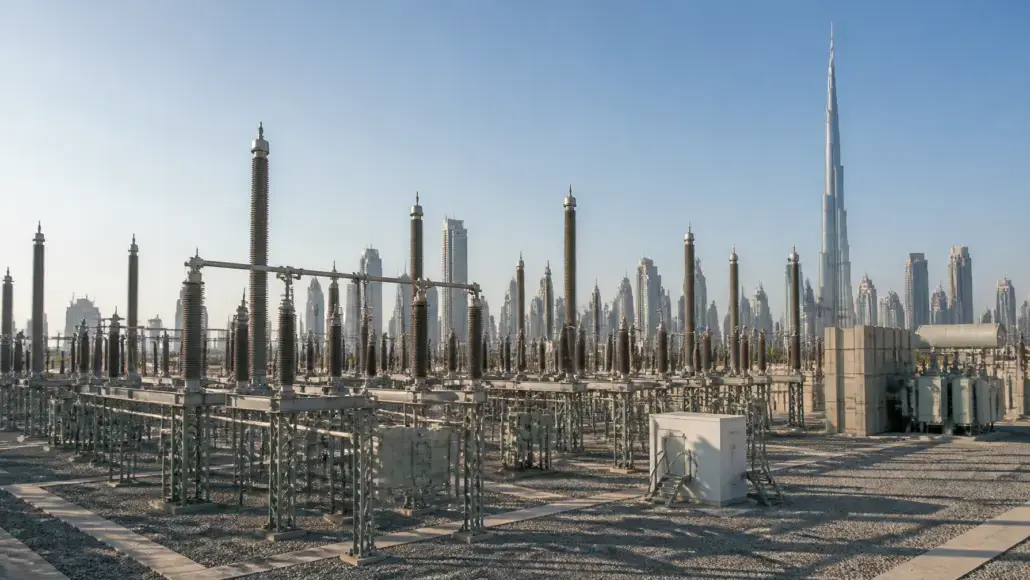
The Dubai Electricity and Water Authority (DEWA) has introduced a standardized and digitally optimized design for its 132kV power transmission substations, representing a significant advancement in strengthening the efficiency, resilience, and sustainability of the Dubai’s electricity network. This digital substation design represents a comprehensive approach to modernizing critical infrastructure while addressing the region’s rising energy needs.
The new framework has been developed to streamline the planning, engineering, and construction processes for power transmission substations by establishing consistent technical and engineering specifications. This standardized methodology is positioned to support Dubai’s rapidly increasing energy demand while accelerating the development of essential power infrastructure and reducing capital expenditure.
Key Performance Improvements Through Digital Substation Design
The implementation of this digital substation design delivers measurable operational and financial benefits. According to the authority, the optimized design can reduce the substation delivery timeline by more than two months, while lowering construction costs by approximately AED 5 million per installation. These cost reductions are achieved through infrastructure simplification and a reduction in the number of components required for each substation.
The optimization eliminates approximately 8,000 electronic components and roughly 140 kilometres of copper wiring per station. The building footprint has been reduced by about 220 square metres, contributing to more efficient land utilization. Additionally, each site can conserve approximately 12,720 gallons of water annually, primarily through enhancements to auxiliary and cooling systems.
Environmental and Energy Consumption Benefits
The power grid efficiency improvements extend to environmental performance metrics. Each substation is expected to reduce annual energy consumption by around 182 MWh through enhanced operational efficiency. This translates into a reduction of nearly 447 tonnes of carbon dioxide emissions per station annually, supporting broader sustainability objectives within the power sector.
International Recognition and Strategic Integration
The initiative has garnered international recognition, securing a top 6-star rating at the International Best Practice Competition. This acknowledgment underscores the project’s contribution to advancing infrastructure efficiency and implementing innovative methodologies in power system development.
Saeed Mohammed Al Tayer, Managing Director and Chief Executive Officer of DEWA, emphasized that the standardized digital substation design represents a critical component of Dubai’s smart energy transition. He noted that this approach creates opportunities for broader integration of Fourth Industrial Revolution technologies, including artificial intelligence and the Internet of Things, into the electricity grid infrastructure.
Implementation and Future Deployment
The smart grid technology approach has already been applied to 90 power transmission substations throughout Dubai, with 23 substations commissioned during the first half of 2026. The initiative supports Dubai’s broader objective of developing a smart, sustainable, and future-ready urban environment.
By integrating standardization, digital technologies, resource efficiency, and advanced grid infrastructure, the authority aims to strengthen the reliability of electricity services while preparing the emirate’s power grid efficiency systems for future energy requirements.