

















The UK government has announced a significant £28 million energy storage challenge designed to accelerate the development of long-duration energy storage technologies. Launched on 20th August 2026, the Ultra-Long Duration Energy Storage (Ultra-LDES) Challenge aims to support UK innovators in creating technologies capable of storing and supplying clean electricity for at least 100 continuous hours. This energy storage challenge represents a critical component of the government’s broader strategy to modernize the nation’s electricity infrastructure and reduce reliance on gas-fired generation.
The Need for Long-Duration Energy Storage Solutions
Wind and solar energy have become the cheapest forms of electricity generation available in the UK. However, their intermittent nature creates a fundamental challenge: generation varies based on weather conditions and time of day. When renewable electricity generation falls short of demand, alternative technologies are necessary to maintain grid stability. An energy storage challenge of this magnitude addresses this gap by enabling the capture of excess renewable electricity during periods of high generation for release when the system requires it most.
The Ultra-Long Duration Energy Storage Challenge is funded through UK Research and Innovation (UKRI) and forms part of the government’s comprehensive effort to increase electricity system flexibility while reducing dependence on volatile international gas markets. Technologies supported through this energy storage challenge must deliver clean electricity for 100 hours or more, equivalent to at least four days of continuous supply, a threshold that reflects real-world grid needs.
Government Support and Funding Structure
Administered by UKRI, the energy storage challenge concentrates on two primary technology areas, each addressing distinct approaches to long-duration storage.
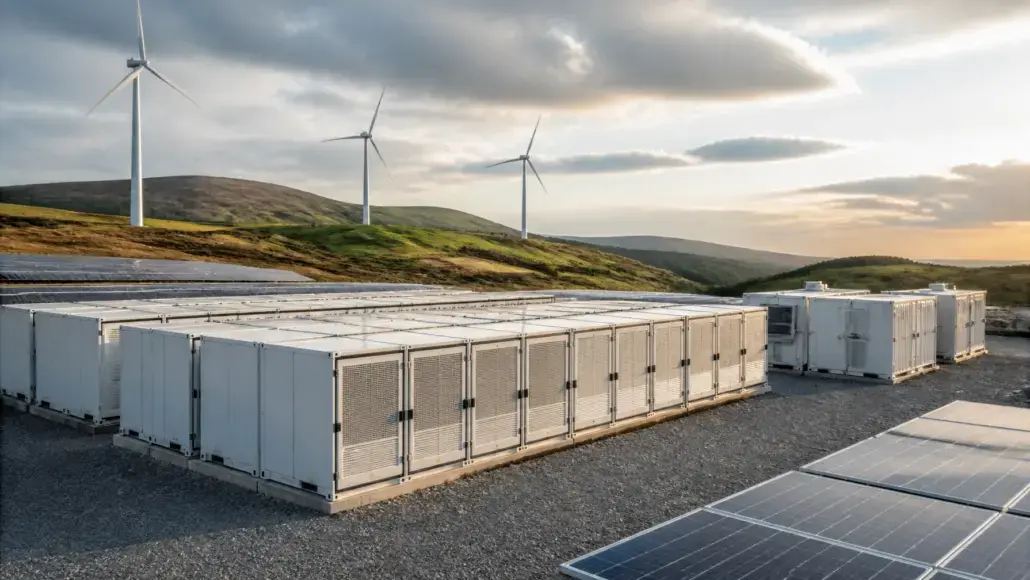
The first focus area supports electrochemical storage technologies capable of supplying electricity beyond the 100-hour threshold. These battery technologies have not yet achieved large-scale commercial deployment, representing a significant opportunity for innovation.
Within this category, UKRI has launched a dedicated competition providing up to £3 million for project development studies. These studies are specifically designed to bring cost-effective battery technologies closer to commercial viability, accelerating their path to grid deployment.
The second area addresses underground hydrogen storage systems, which would store hydrogen for extended periods and release it when required by the energy grid. According to government estimates, underground hydrogen storage could reduce total UK energy system costs by between £14 billion and £50 billion over the period from 2035 to 2050.
Strategic Vision and Industry Impact
Energy Minister Michael Shanks emphasized the Long Duration Energy Storage programme’s importance, stating that the effort would help prosper technology needed to domestically generate clean electricity and reduce reliance on gas generation.
Science Minister Chris McDonald added that solving the energy storage challenge of storing renewable electricity could improve energy security while contributing to lower energy bills over the longer term.
Jenny Hill, UKRI’s Clean Energy Challenge Director, underscored that developing effective storage technologies would be an important component of the UK’s transition towards a cleaner and more secure electricity system, while simultaneously supporting skilled employment and attracting private investment.
Broader Clean Energy Framework
The Ultra-LDES Challenge represents the completion of the government’s £102 million Clean Energy Challenges programme. This broader initiative combines the £28 million energy storage challenge with the £74 million Consumer-led Flexibility Challenge, which focuses on technologies that shift electricity consumption towards periods when power is cheaper and more readily available, thereby reducing pressure on the electricity system.
Both programmes operate within the Research and Development Missions Accelerator Programme (R&D MAP), through which the UK government commits to investing at least £500 million by 2030 in research and development. Projects supported through R&D MAP are expected to work collaboratively with industry, academia, and the third sector to leverage an additional £1.5 billion in private investment by 2030, multiplying the impact of public funding.
Market Context and Regulatory Support
The energy storage challenge announcement aligns with ongoing regulatory efforts to support long-duration storage deployment. The UK energy regulator Ofgem is currently consulting on plans to support 16 long-duration electricity storage projects, including investment that could enable the country’s first new pumped-storage hydropower projects in more than 40 years. These complementary initiatives demonstrate coordinated policy support for expanding the UK’s storage capacity and grid flexibility.
The government views these interconnected initiatives as part of a comprehensive strategy to expand domestic clean energy generation, increase system flexibility, and reduce exposure to volatility in international gas markets.