












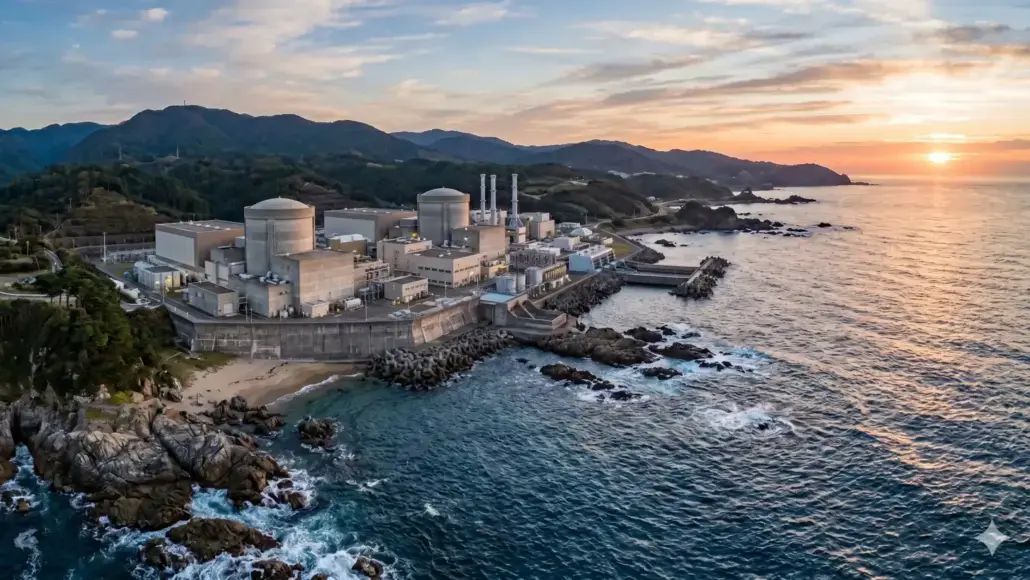
Japan’s Ministry of Economy, Trade and Industry unveiled a significant nuclear reactor replacement plan on 5th June 2026, proposing concrete targets for updating the nation’s aging atomic energy infrastructure. The proposal calls for replacing between two to five nuclear reactors during the 2040s, with an expanded scope of 11 to 14 nuclear reactors targeted for replacement by the 2050s. This marks the first time since the 2011 Fukushima nuclear disaster that Japan has established such specific numerical targets for its nuclear reactor replacement initiatives.
The ministry presented these figures at a panel meeting, emphasizing the strategic importance of the nuclear reactor replacement plan in maintaining investor confidence and attracting skilled professionals to the nuclear industry. The announcement reflects Japan’s evolving approach to energy security, particularly as the nation faces anticipated growth in electricity consumption driven by technological advancement and industrial expansion.
Japan’s energy landscape has undergone considerable transformation since the catastrophic tsunami-induced Fukushima Daiichi nuclear disaster of March 2011. Rather than continuing to reduce reliance on nuclear power, the government has progressively shifted its strategy toward maximizing utilization of this energy source. The revised basic energy plan, finalized in 2025, establishes an ambitious objective of sourcing 20 percent of the nation’s electricity from nuclear power by 2040.
Achieving this target of replacing 14 nuclear reactors requires more than simply restarting existing reactors that have been temporarily offline. The nuclear reactor replacement plan represents a critical component of this broader energy strategy, particularly as Japan anticipates increased electricity demand driven by the proliferation of artificial intelligence applications and other advanced technologies throughout the economy.
The replacement proposal for 14 nuclear reactors likely derive from industry estimates projecting a significant power generation shortfall by the 2040s. Electric power companies forecast that Japan will face a deficit of approximately 5.5 million kilowatts of capacity, roughly equivalent to the output of five nuclear reactors. This projection underscores the urgency of implementing the nuclear reactor replacement plan to prevent potential energy security challenges.
Currently, Japan operates under regulatory frameworks that cap reactor operating lifespans at 60 years. Several facilities across the country have already been opearting for 50 years, making decommissioning and replacement essential considerations. At present, 24 reactors are undergoing decommissioning work at 11 nuclear power stations nationwide.
The government has identified specific potential locations for nuclear reactor construction. The Mihama power station in Fukui Prefecture and the Sendai complex in Kagoshima Prefecture have been mentioned as possible sites for deploying new nuclear reactor facilities as part of the comprehensive nuclear reactor replacement program.