




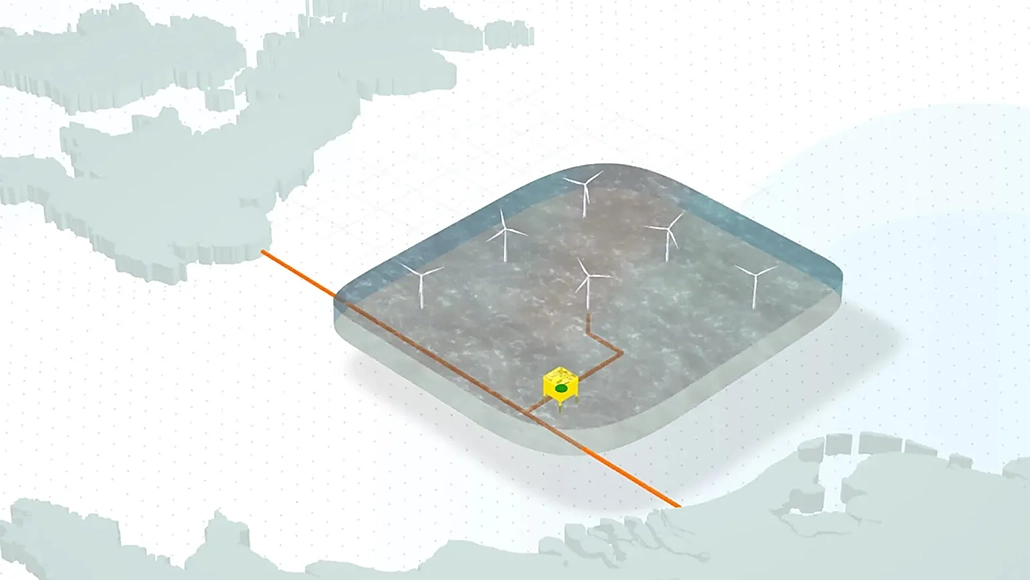
The Netherlands is set to establish a new offshore electricity bidding zone dedicated to wind farms connected to the planned 1.8 GW LionLink hybrid interconnector, which will link the Dutch and UK power grids. The LionLink initiative, launched in April 2023, is being developed by transmission system operators (TSO) TenneT and National Grid. Progress on the project has continued steadily, with its inclusion in the Dutch Offshore Wind Energy Development Framework at the start of 2025, while in the UK, National Grid submitted an application for the interconnector to the energy market regulator Ofgem. More recently, the TSOs formalized their cooperation through a joint development agreement (JDA), outlining the pathway toward a final investment decision (FID), including procurement structures, governance arrangements, and planning frameworks.
The newly defined offshore electricity bidding zone will cover the Nederwiek 3 wind farm sites, specifically Nederwiek 3a and 3b, which will connect to TenneT’s offshore platform and, in turn, link to LionLink. This policy move was confirmed in a parliamentary letter dated March 31 from Stientje van Veldhoven-van der Meer, the Dutch Minister of Climate and Green Growth. The rationale behind creating a separate offshore market structure is to address structural congestion, aligning with EU guidance that bidding zones should not include persistent congestion. “In the case of the LionLink project, structural congestion will occur on the connection between the offshore platform and the Dutch coast. TenneT demonstrated this in a report that was approved by the Authority for Consumers and Markets (ACM) on 25 March 2025,” the Minister says in the letter.
At present, the Netherlands operates under a single bidding zone, but the new offshore electricity bidding zone will function independently, with its own pricing mechanism. According to the Minister’s letter, the absence of direct electricity demand within this zone is expected to result in a lower average electricity price on an annual basis compared to the existing Dutch bidding zone. Consequently, wind farms developed in the Nederwiek 3 area may see comparatively reduced revenues. Despite this, the broader LionLink project, alongside the creation of the offshore electricity bidding zone, is projected to deliver significant societal benefits. These include generating revenue for TenneT that could help reduce grid tariffs and enhance electricity supply security. Additionally, combining the interconnector with the offshore wind export cable into a single landing point is expected to ease pressure on limited landing space while lowering investment costs.
The Minister also highlighted that financial support mechanisms may be considered for Nederwiek 3 offshore wind farms, acknowledging the potential impact of lower revenues. This possibility has been welcomed by the Dutch wind energy trade association NedZero. While emphasizing the importance of price certainty under current market conditions, the Minister noted that any subsidies would depend on future variables such as electricity demand, pricing trends, and production costs. Funding would be sourced from the offshore wind reserve outlined in the coalition agreement, although this could introduce constraints on rollout timelines. Prior to the tender process, the Netherlands Environmental Assessment Agency (PBL) will provide guidance on the maximum bid to help determine the required budget. A revised offshore wind roadmap is expected before the end of the year, detailing progress toward national targets.